
Major Types of Forest Trees and Where They Grow
Forests are vital parts of Earth’s natural systems, supporting biodiversity, regulating water and climate, and providing homes to countless species. Collectively, trees cover a significant portion of the planet: forests account for about 31% of the world’s land area, offering space for trees, animals, plants, and entire ecological communities.
But forests are not uniform. Across different regions, climate conditions, soils, and disturbance patterns shape the types of trees that grow there. That variation matters because native species are better adapted to local conditions and contribute more effectively to forest resilience and long-term health. For example, the trees planted in the dry mountains of the West differ greatly from those growing in the Southeast’s warmer, fire-shaped ecosystems.
In this blog, we’ll look at major types of forest trees and where they grow, explaining how regional conditions influence species selection and why choosing the right tree for the right place supports ecological stability and future resilience.
How Forest Trees Are Categorized
Before exploring specific regions, it helps to understand the core frameworks for grouping trees in forest ecosystems. Most trees in forests fall into a few broad categories based on their leaf type, growth habit, and wood density.
Coniferous Trees
Conifers produce seeds in cones and typically have needle-like or scale-like leaves. Most are evergreen, retaining their foliage year-round. They dominate boreal forests and high-elevation environments where cold temperatures and short growing seasons make broad leaves impractical. Common examples include pine, spruce, fir, and larch.
Broadleaf Trees
Broadleaf trees have wide, flat leaves and produce seeds enclosed in fruit or nuts. They are the dominant tree type in tropical forests and make up a large portion of temperate forests. Most broadleaf trees in temperate regions are deciduous, though many tropical broadleaf species are evergreen.
Hardwoods vs. Softwoods
These terms refer to wood density and are loosely tied to tree type. Hardwoods generally come from broadleaf trees; oak, maple, ash, and teak are examples. Softwoods come from conifers, such as pine, spruce, and fir. This distinction matters in forestry and timber industries, though ecologically, both types play equally important roles in forest health.
Canopy Trees vs. Understory Trees
Forest structure is layered. Canopy trees, the tallest species, form the upper layer that captures most of the sunlight. Understory trees grow beneath the canopy in lower light conditions. Both layers contribute to biodiversity and habitat complexity, and many forest ecosystems depend on this vertical structure to support the full range of species that live within them.
The Three Major Types of Forests Where Trees Grow
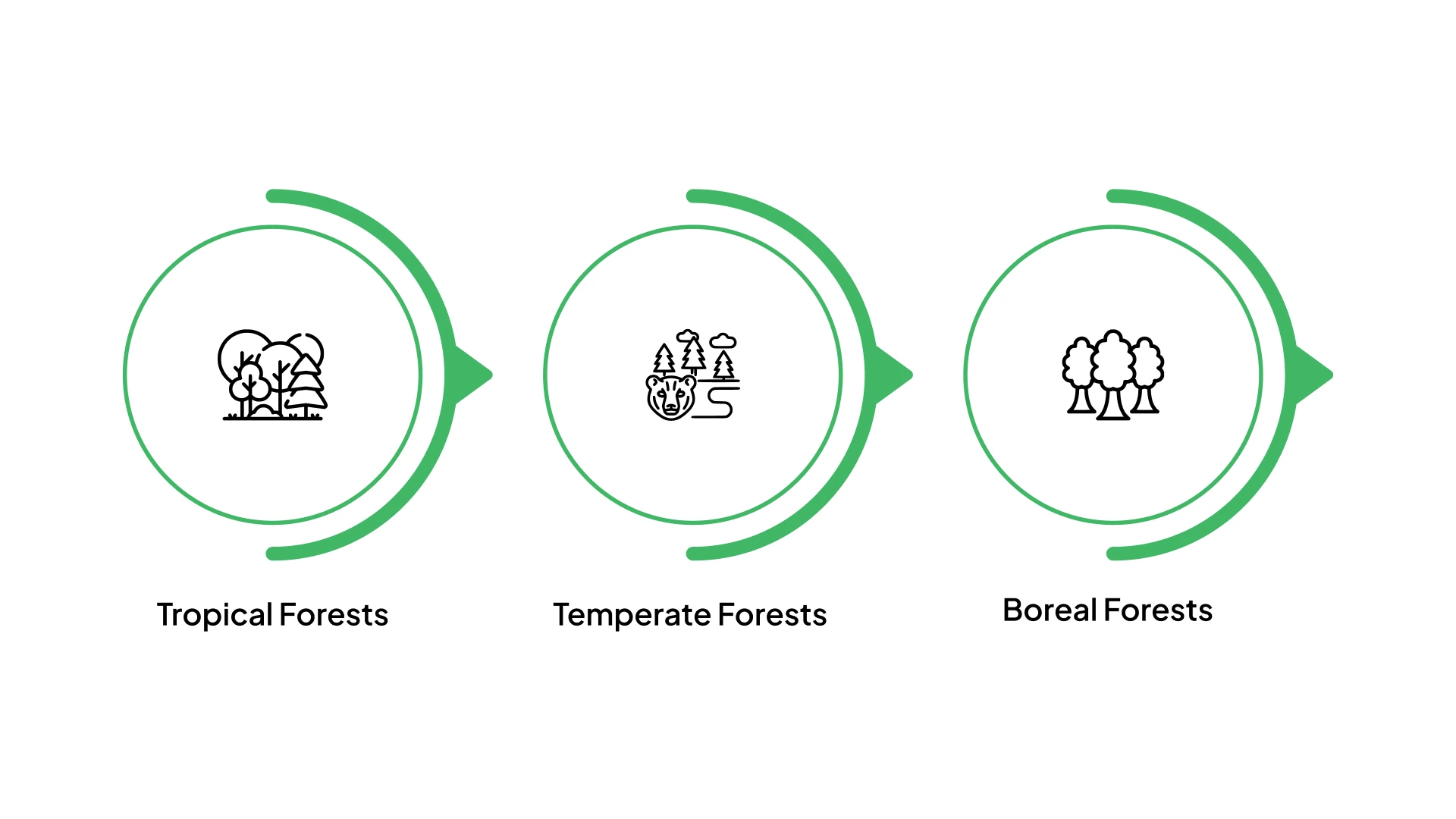
Tree species worldwide tend to cluster into three broad forest types. Each type is shaped by climate, temperature patterns, and seasonal change, which determine how trees grow, reproduce, and survive. Understanding these forest types helps explain why certain trees thrive in one region but struggle in another.
Tropical Forests
Tropical forests grow near the equator, where temperatures remain warm year-round and rainfall is high. These conditions support dense vegetation and rapid growth.
-
Climate: Warm temperatures year-round with little seasonal variation
-
Tree characteristics: Broadleaf trees with large canopies and rapid growth cycles
-
Biodiversity: Extremely high species diversity, with many plants and animals found nowhere else
-
Ecological role: Major contributors to global carbon storage and rainfall regulation
These forests include some of the world’s most important biodiversity hotspots, and restoring trees in the Amazon is one of the highest-impact actions for global forest recovery.
Temperate Forests
Temperate forests are found in regions with distinct seasons, including warm summers and cold winters. Trees here have adapted to seasonal changes in temperature and daylight.
-
Climate: Moderate temperatures with clear seasonal shifts
-
Tree characteristics: A mix of deciduous trees that shed leaves and evergreen conifers
-
Seasonal adaptation: Leaf drop helps conserve water and energy during colder months
-
Ecological role: Support soil health, water filtration, and diverse wildlife habitats
Boreal Forests
Boreal forests, also known as taiga, stretch across high northern latitudes. These forests experience long, cold winters and short growing seasons.
-
Climate: Cold temperatures with extended winters and brief summers
-
Tree characteristics: Mostly coniferous trees with needle-like leaves
-
Adaptations: Needles reduce water loss and shed snow more easily
Evergreen vs. Deciduous Forest Trees
One of the most fundamental distinctions among trees in forests worldwide is whether they are evergreen or deciduous. This difference shapes forest appearance, seasonal cycles, and ecological function.
Evergreen Forest Trees
Evergreen trees retain their leaves or needles year-round. Rather than dropping foliage in winter, they hold onto it, though individual leaves still cycle out over time. This trait is an adaptation to environments with short or unpredictable growing seasons. Holding onto foliage means the tree can begin photosynthesizing immediately when conditions improve.
Most conifers are evergreen. In boreal forests, species such as black spruce, white spruce, and balsam fir retain their needles through harsh winters. In tropical forests, many broadleaf trees are also evergreen, since warm temperatures and consistent rainfall mean there is no seasonal trigger for leaf drop.
Leaf drop is an energy-saving response to how cold weather affects tree growth. By shedding leaves, the tree enters dormancy and conserves resources until spring. This seasonal cycle is one of the most important stages in a tree’s life. Evergreens, by contrast, retain foliage so they can resume photosynthesis as soon as temperatures allow.
Common evergreen forest trees include: Douglas-fir, Engelmann spruce, Eastern white pine, ponderosa pine, red pine, and most tropical hardwoods.
Deciduous Forest Trees
Deciduous trees shed their leaves seasonally, typically in autumn, and regrow them in spring. Leaf drop is an energy-saving response to cold or dry seasons when photosynthesis becomes inefficient. By shedding leaves, the tree reduces water loss and redirects resources inward until conditions improve.
Deciduous trees dominate temperate forests in North America, Europe, and East Asia. Their seasonal leaf change drives some of the most visible ecological transitions in the forest calendar, influencing light levels, soil nutrient cycles, and habitat availability for wildlife.
Common deciduous forest trees include: Sugar maple, red oak, American beech, white birch, hickory, and tulip poplar.
Mixed Forests
Many temperate forests contain both evergreen and deciduous species growing together. These mixed forests benefit from the ecological contributions of both types, the year-round canopy cover of conifers alongside the seasonal nutrient input from deciduous leaf litter. The Great Lakes region, the Pacific Northwest, and parts of Europe all contain prominent mixed forest systems.
Western Forest Trees
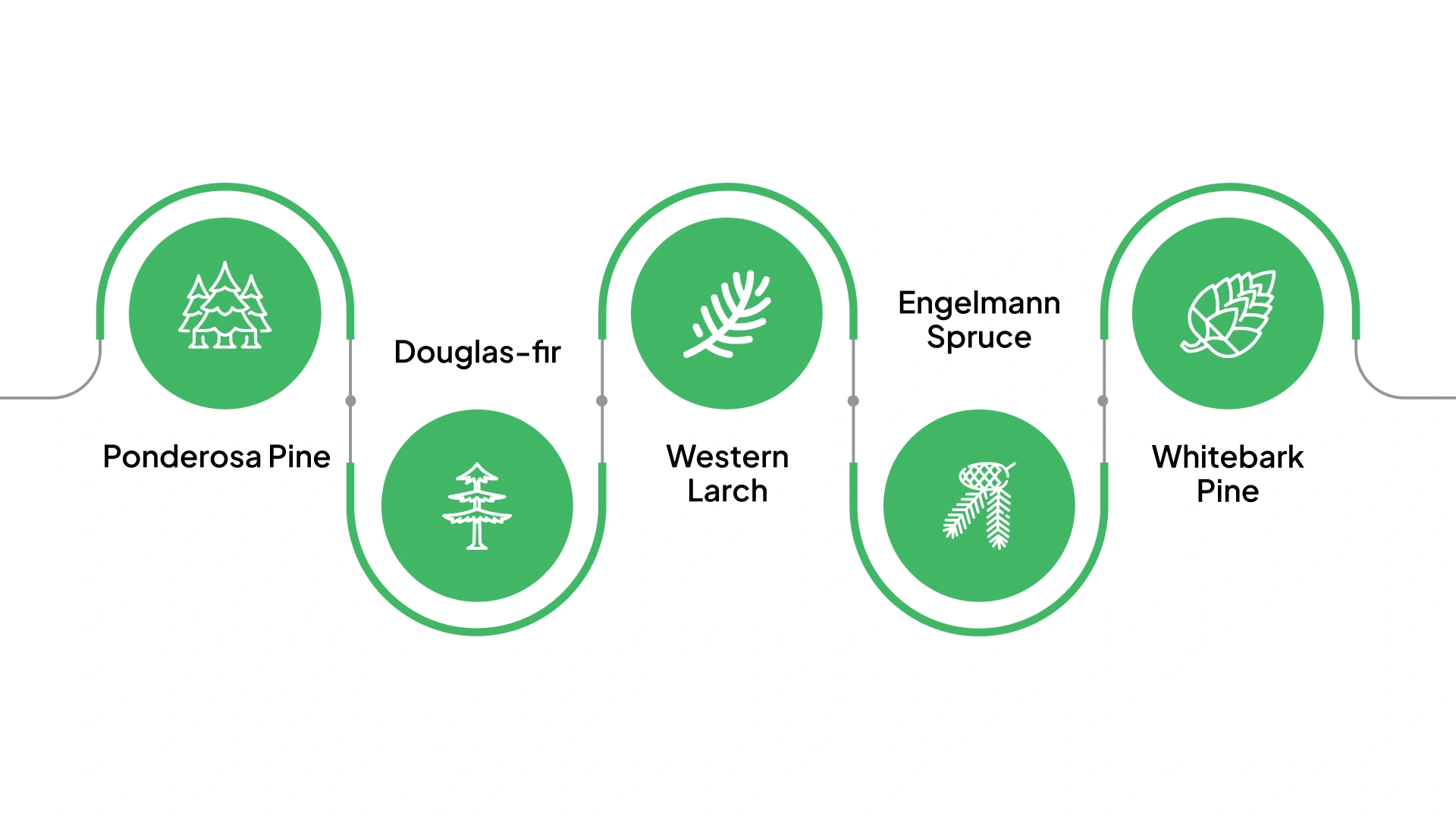
Western forests stretch across a wide range of elevations and climates, from dry, low-elevation woodlands to cold, high-mountain environments. Many of these forests experience regular disturbances, including wildfire, drought, and seasonal temperature extremes.
The tree species that grow here are shaped by those conditions, with adaptations that allow them to survive fire, limited water, and long growing seasons.
Ponderosa Pine
Ponderosa pine is one of the most widespread conifers in the western United States. It commonly grows in lower to mid-elevation forests where summers are dry, and fire has historically played a regular role.
This species is well adapted to frequent, low-intensity fires. Its thick bark protects the trunk, while its growth pattern allows it to recover after disturbance. Understanding what happens to ecosystems after forest fires shows why fire-resilient species like ponderosa pine are so critical to western forest recovery.
Ponderosa pine also tolerates dry conditions, making it a stable presence in forests that face recurring stress.
Because of these traits, ponderosa pine often anchors forests that experience repeated disturbance, helping maintain structure and allowing other species to regenerate.
Douglas-fir
Douglas-fir grows across a broad range of climates and soil types, from coastal regions to interior mountain forests. Its flexibility allows it to thrive in many western ecosystems.
As Douglas-fir ages, its bark thickens, increasing resistance to fire. This adaptation allows older trees to persist through disturbances that remove younger vegetation. Beyond its ecological role, Douglas-fir holds cultural significance as a widely recognized timber species and a common holiday tree.
Western Larch
Western larch is known for its fast growth and exceptional longevity, with some individuals living for many centuries. It is often found alongside Douglas-fir and other conifers in mixed forests.
Unlike most conifers, western larch drops its needles each winter. This seasonal cycle reduces moisture loss and helps the tree withstand cold conditions. Its presence adds structural diversity to western forests and supports long-term forest development.
Engelmann Spruce
Engelmann spruce is a defining species of high-elevation forests in the Rocky Mountains. These environments experience cold temperatures, heavy snow, and short growing seasons.
The dense canopy of Engelmann spruce provides shelter for wildlife, offering shade during summer and protection during winter. Its role in regulating temperature and wind exposure makes it an important contributor to high-mountain forest systems.
Whitebark Pine
Whitebark pine grows near the upper limits of tree growth, often at very high elevations. It plays an important role in mountain ecosystems, especially in regulating snowmelt and supporting wildlife.
This species provides food for birds and mammals and influences how water moves through mountain watersheds. However, whitebark pine is listed faces among endangered tree species facing serious threats from pests, disease, wildfire, and rising temperatures. These pressures have reduced its range and made forest conservation efforts increasingly important.
Southeastern Forest Trees
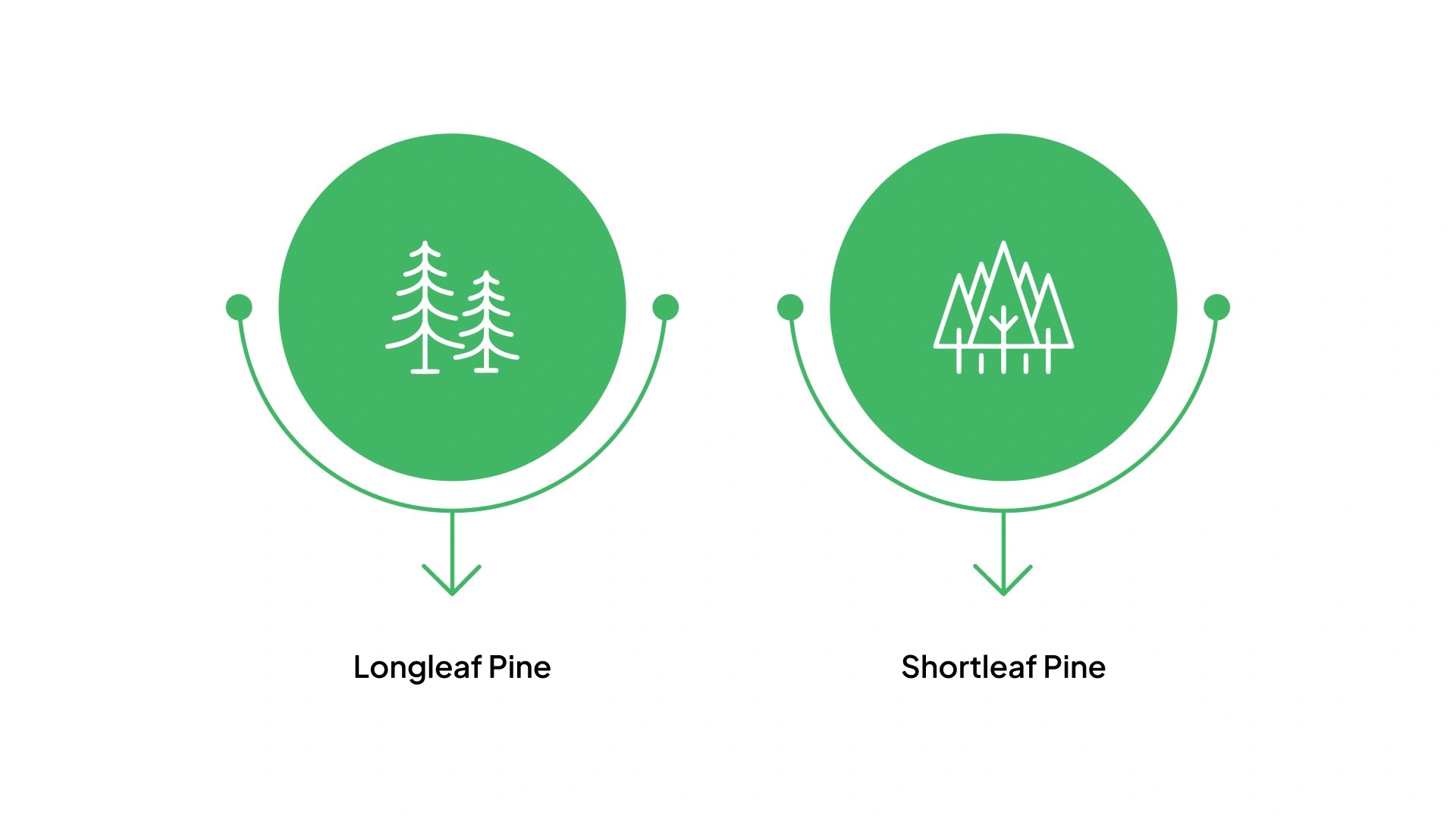
Forests in the southeastern United States grow in warm climates with long growing seasons, sandy or well-drained soils, and a long history of fire. Many tree species in this region evolved alongside frequent, low-intensity fires, which helped shape open forest structures and supported a wide range of plants and wildlife. When fire cycles are interrupted, these ecosystems change quickly.
Longleaf Pine
Longleaf pine once dominated large portions of the Southeast, forming expansive forest systems that supported high biodiversity. Today, only a small portion of its original range remains.
This species depends on regular, low-intensity fire to thrive. As seedlings, longleaf pines spend years in a grass-like stage that protects their growing tip from fire. Once established, they grow tall and straight, becoming highly heat-resistant. These forests support diverse understory plants and provide habitat for many species that rely on open, fire-maintained conditions.
Shortleaf Pine
Shortleaf pine historically stretched across a broad area, from eastern Texas and Oklahoma through the Southeast and into parts of the Northeast. It is well adapted to a range of soils and elevations.
Like longleaf pine, shortleaf pine benefits from periodic fire, which reduces competition and supports regeneration. Over recent decades, its range has declined due to land-use changes, pest outbreaks, and altered fire regimes. Shortleaf pine forests play an important role in wildlife habitat, water quality, and regional forest diversity.
Great Lakes Forest Trees
Forests in the Great Lakes region experience cold winters, moderate summers, and a mix of sandy and well-drained soils shaped by glacial history. Fire has played an important role in many of these ecosystems, influencing which tree species establish and how forests regenerate over time. Several trees in this region are closely tied to specific wildlife and disturbance patterns.
Jack Pine
Jack pine grows best in sandy soils and open conditions, particularly in areas shaped by fire. It is well known for its relationship with fire, as its cones are sealed with resin and often require heat to release their seeds.
This regeneration strategy allows jack pine to reestablish quickly after fire events. Young jack pine stands provide essential breeding and nesting habitat for certain wildlife species, making this tree an important part of regional conservation efforts.
Eastern White Pine
Eastern white pine is a large, long-lived species that once dominated many forests across the Great Lakes and Northeast. It provides food and shelter for a wide range of wildlife, from small birds to larger mammals.
Its root system helps stabilize soil, and its tolerance of diverse conditions makes it useful for land restoration and reclamation projects. Eastern white pine also plays a role in rebuilding forest structure in areas that were previously disturbed.
Red Pine
Red pine is another fire-adapted species common in the Great Lakes region. It relies on periodic fire for successful regeneration and historically formed open, evenly spaced stands.
This species grows slowly but lives for a long time, often reaching several centuries in age. Red pine contributes to forest stability and helps maintain ecological balance in fire-influenced systems.
Northeastern Forest Trees
The forests of the northeastern United States and southeastern Canada are among the most recognizable in the world, defined by vivid autumn color and a dense mix of deciduous hardwoods and conifers. These forests grow on glacially shaped soils, with cold winters and moderate summers creating conditions that favor a mix of broadleaf and needle-bearing species.
Sugar Maple
Sugar maple is one of the most iconic trees in northeastern forests, known for its brilliant autumn foliage and its role in maple syrup production. It grows in well-drained upland soils and is a dominant canopy species across much of New England and the Great Lakes transition zone.
Beyond its cultural significance, sugar maple plays a central role in nutrient cycling. Its leaf litter breaks down quickly, enriching forest soils and supporting a wide range of understory plants and soil organisms.
Red Oak
Red oak is a fast-growing, long-lived hardwood that provides critical food and habitat for forest wildlife. Its acorns are a key food source for deer, turkeys, squirrels, and many bird species. Red oak tolerates a range of soil conditions and is commonly found in mixed forests alongside maple, beech, and birch.
American Beech
American beech thrives in mature, undisturbed forest stands, often forming dense, shade-tolerant groves. Its smooth silver-grey bark makes it one of the more visually distinctive trees in northeastern forests. Beech nuts are an important food source for wildlife, and the species plays a key structural role in old-growth forest communities. These represent some of the most ecologically complex systems on the planet, with some of the world’s oldest forests serving as benchmarks for what healthy, undisturbed woodland looks like.
White Birch
White birch, with its distinctive white bark, is a pioneer species that establishes quickly in disturbed or open areas. It is often among the first trees to colonize land after fire, logging, or other disturbance, helping initiate forest succession. Though relatively short-lived
Bring Forests Back Where They Belong with Plantd

Understanding the different types of forest trees and where they grow highlights an important truth: healthy forests depend on the right trees growing in the right environments. When restoration efforts align with local climate, soil, and ecosystem needs, forests are more resilient and better able to support wildlife, water systems, and long-term climate stability.
Plantd supports reforestation projects that prioritize native species and regional fit. These projects help restore forest structure, strengthen biodiversity, and support ecosystems shaped by their environments over generations. Each tree planted contributes to healthier forests that can adapt to future conditions.
Every contribution helps restore forests in ways that respect regional ecosystems and support future resilience. Plantd makes it easy to participate in thoughtful, science-based reforestation.
Plant trees with purpose. Support forest restoration with Plantd.