
10 Fascinating Facts About the Taiga Biome You Didn’t Know
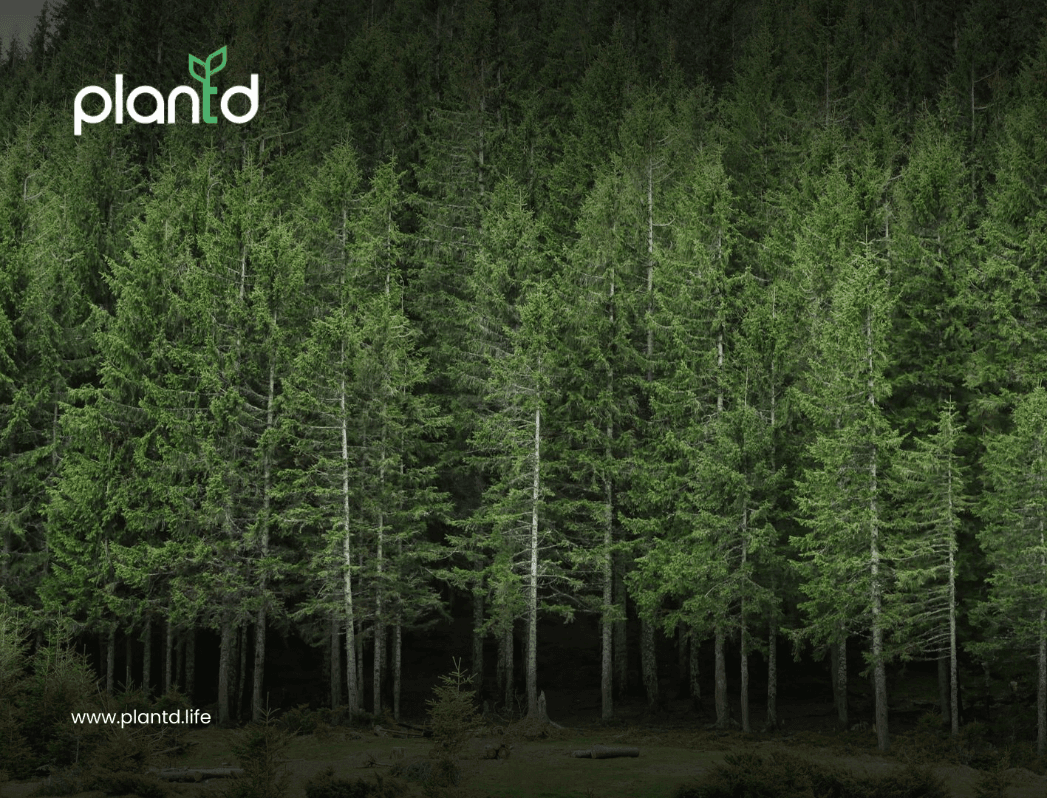
What if the most important ecosystem on Earth was one that most people couldn’t name?
Most of us grew up learning about the Amazon rainforest, the Sahara Desert, or the Great Barrier Reef, places that feel vast, dramatic, and urgent. They dominate documentaries, textbooks, and conservation conversations. And for good reason. But there is another ecosystem that quietly outranks them all in size, carbon storage, and global importance, and it barely gets a mention in any of those contexts.
These interesting facts about the taiga biome go well beyond what the textbooks cover. Some will surprise you, some will change the way you think about climate change and wildlife, and some may even make you rethink the everyday products sitting in your home right now. By the end, you may find yourself wondering how this place stayed under the radar for so long.
What Is the Taiga Biome?
The taiga biome is the world’s largest land biome, forming a dense, continuous belt of forest across the upper reaches of the Northern Hemisphere. It sits between the frozen tundra to the north and the temperate forests to the south, a middle ground that is neither as barren as one nor as lush as the other, but remarkable in its own right.
Also called the boreal forest, it spans eight countries: Canada, the United States, Norway, Finland, Sweden, Russia, China, and Japan. It is defined by freezing temperatures that grip the land for six to eight months of the year, a short but intense summer growing season, and forests dominated almost entirely by cold-adapted conifers such as spruce, fir, and pine.
Beneath those snow-covered trees lies an ecosystem of extraordinary complexity, one that directly regulates Earth’s climate, water supply, and biodiversity. And yet, most of what makes it truly remarkable never makes it into the conversation.
10 Fascinating Facts About the Taiga Biome You Didn’t Know
The taiga biome is full of details that rarely make it into mainstream conversation, from its record-breaking size to its surprising role in your daily life. Here are ten facts that might just change the way you see it:
1. The Taiga Is the World’s Largest Land Biome
When most people think of the world’s largest biome, the Amazon rainforest tends to come to mind. But it is actually the taiga that holds that title, and it isn’t particularly close.
The taiga covers approximately 6.6 million square miles, accounting for roughly 11.5% of all land on Earth. To put that into perspective, it is larger than the entire continent of Africa. It stretches in an almost unbroken belt across the upper reaches of the Northern Hemisphere, spanning eight countries: Canada, the United States, Norway, Finland, Sweden, Russia, China, and Japan.
There is one small caveat worth noting. Forests, as a collective category, cover more of the Earth’s surface than any single biome, but within that category, the taiga stands alone as the largest individual biome on land. No other single ecosystem comes close to matching its scale.
2. The Word “Boreal” Comes From a Greek God
The taiga is commonly referred to as both the taiga and the boreal forest. Most people assume “boreal” is simply a scientific term, but its origins are far more interesting than that.
The word traces back to Boreas, the Greek god of the North Wind. In Greek mythology, Boreas was believed to be a purple-winged deity who could chill the air with a single breath, ushering in the cold and frost of winter. It is a fitting origin for a biome defined almost entirely by its relentless cold.
It is one of those small details that adds a layer of character to a place that is so often described purely in scientific terms, and a reminder that the natural world has captivated the human imagination for a very long time.
3. Canada’s Boreal Forest Is a World Record on Its Own
The taiga spans eight countries, but no single nation holds a larger or more significant piece of it than Canada.
Canada’s boreal forest covers 1.2 billion acres, making it the world’s largest intact forest ecosystem. To put that into perspective, it accounts for nearly a quarter of all the world’s remaining intact forests. It is not just large in size, it is large in consequence. Indigenous communities have lived within it for thousands of years. Ancient trees that predate modern civilization still stand across its interior. And some of the world's most endangered wildlife continue to depend on it for survival.
In a world where intact, undisturbed ecosystems are becoming increasingly rare, Canada's boreal forest represents something genuinely extraordinary, a landscape that, despite growing pressures, remains largely whole.
4. The Taiga Contains More Fresh Water Than Anywhere Else on Earth
When people think of the world’s great freshwater reserves, they tend to picture glaciers, rivers, or the Great Lakes. What rarely comes to mind is a forest, and yet the taiga holds more surface freshwater than any other region on the planet.
The reason comes down to the climate itself. The taiga's persistently cold temperatures slow evaporation to a crawl, so when rain falls or snow melts, the water has nowhere to go. Over time, it accumulates across the landscape in the form of lakes, rivers, swamps, and bogs, thousands upon thousands of them, scattered across the forest floor like a vast, frozen sponge.
Canada’s boreal forest alone is estimated to contain more surface freshwater than anywhere else in the world, a fact that carries enormous implications not just for the wildlife that depends on it, but for the millions of people whose water supplies are connected to the health of this ecosystem.
5. Most of the Taiga's Carbon Is Stored Underground
The taiga is widely recognized as one of the world's most important carbon sinks, but what most people don’t realize is that the trees themselves are not where most of that carbon lives.
Roughly 95% of the carbon stored in the taiga biome sits not in the forests above ground, but in the soil beneath them. The taiga’s cold, waterlogged conditions slow decomposition to an almost imperceptible pace, allowing organic matter to accumulate in the soil and peatlands over thousands of years. The result is a carbon reservoir of staggering scale, one that stores roughly twice as much carbon as all of the world's tropical forests combined.
This distinction matters more than it might seem. When people talk about protecting forests for the sake of the climate, the conversation tends to focus on the trees. In the taiga, the far greater priority is what lies beneath them. Disturb the soil, through logging, through warming, through the thawing of permafrost, and you risk releasing thousands of years’ worth of stored carbon back into the atmosphere at once.
6. Logging in to Taiga Is Connected to Everyday Products
The threats facing the taiga can feel abstract, distant problems happening in a remote part of the world. But the connection between this biome and daily life is more direct than most people realize, and it starts with something as ordinary as a trip to the supermarket.
Approximately one million acres of Canadian boreal forest are clear-cut every year. The majority of that logging does not go toward building homes or manufacturing furniture; it goes toward producing paper products. Toilet paper, facial tissues, paper towels, and packaging materials are among the most common end products of boreal forest logging. Globally, boreal forests supply around a third of the world’s lumber and a quarter of its paper exports.
Every time someone reaches for a paper towel or picks up a tissue, there is a reasonable chance that its origins trace back to one of the most important and irreplaceable ecosystems on Earth. It is also a reminder that individual choices about sustainably sourced products carry more weight than they might appear to.
7. Several of the World’s Most Endangered Species Call It Home
The taiga is not just a forest; it is a lifeline. For many of the world’s most endangered species, it is the last remaining large, intact habitat capable of supporting their survival.
The grizzly bear, woodland caribou, wolverine, and Siberian tiger all depend on the boreal forest to survive. Of these, the Siberian tiger stands out as perhaps the most striking example. It is the world’s largest cat, capable of weighing up to 600 pounds, and the only tiger species on Earth that lives and hunts in snow.
During the winter months, it grows a thick, shaggy coat that sets it apart from every other tiger species, an adaptation that has allowed it to survive in one of the harshest environments on the planet. Its population, however, remains critically low.
What connects all of these species is not just their endangered status, but the fact that their survival is directly tied to the health of a single ecosystem. As the taiga comes under increasing pressure from logging, climate change, and habitat disruption, the margins for these animals grow narrower. For them, there is no alternative habitat waiting on the other side.
8. Wildfire Is a Natural Part of How the Taiga Survives
For most ecosystems, a wildfire is a disaster. For the taiga, it is more of a necessity.
Natural fires have been a part of the boreal forest cycle for thousands of years. Ignited by lightning and left to run their course, they burn through dead wood and thick layers of accumulated moss, clearing space, recycling nutrients back into the soil, and triggering a new cycle of growth in their wake. Under natural conditions, these fires occur on cycles of roughly 50 to 200 years, long enough for the forest to mature, and timed well enough to allow it to renew itself without lasting damage.
The concern today is not fire itself, but what fire is becoming. Climate change is shortening those natural cycles and dramatically intensifying the resulting fires. The concern today is not fire itself, but what fire is becoming. Climate change is shortening those natural cycles and dramatically intensifying the blazes that result.
Fires are now burning deeper and hotter than they historically would have, eating into the organic soil and the permafrost beneath it. When that happens, carbon stored underground for thousands of years begins to release, and once it does, it contributes to the very warming that made the fires worse in the first place. It is a cycle that is becoming harder to interrupt, and one that the taiga, for all its resilience, was never designed to withstand.
9. Thawing Permafrost Is Causing Forests to Tilt and Collapse
Beneath much of the taiga lies a layer of permanently frozen soil known as permafrost. For most of the biome's history, this frozen ground has acted as a stable foundation, holding the landscape in place and keeping vast reserves of organic carbon locked safely underground.
As temperatures rise, however, that foundation is beginning to give way. When permafrost thaws, it does not do so evenly. The ground softens in patches, sags, and dips, and the trees rooted above it, which have always had shallow root systems ill-suited to the taiga’s thin soils, begin to tilt.
Some lean one way, some lean another, and what results is a stretch of forest that looks, for all the world, like it has lost its footing. Scientists and locals alike have come to call this phenomenon a “drunken forest”, and once you have seen a photograph of one, it is difficult to forget.
It is also difficult to ignore what it signals. A drunken forest is not just a curiosity; it is a visible, ground-level indicator of just how significantly the taiga is changing, and how quickly those changes are beginning to show.
10. The Taiga Receives Surprisingly Little Rainfall
For a biome covered in lakes, rivers, bogs, and swamps, the taiga receives far less precipitation than most people would expect. Annual rainfall across the boreal forest typically ranges between 15 and 20 inches, less than many of the world’s deserts receive in a given year.
The reason the landscape stays so saturated despite this has everything to do with temperature. The taiga's persistently cold climate slows evaporation to such a degree that even modest amounts of rain and snowmelt have nowhere to go. Water sits, accumulates, and spreads, pooling across the forest floor and filling the landscape with the bogs, swamps, and lakes that the taiga is so well known for.
It is one of the taiga’s quieter contradictions, a landscape that looks and behaves like one of the wettest places on Earth, sustained not by an abundance of rainfall but by the cold that never quite lets the water leave.
Now you know what the taiga is, what it does, and why losing it would matter in ways that reach far beyond the forest itself. It is a biome under real and growing pressure, but it is not a lost cause. Forests can be restored, ecosystems can recover, and the taiga has proven time and again that it is built to bounce back. What it needs is a little help getting there.
Help Restore the World’s Largest Forest With Plantd
Understanding the taiga biome is the first step, but real change happens when awareness turns into action. Plantd makes it easy to contribute to verified tree planting and reforestation projects that protect ecosystems like the taiga, restore what has been lost, and deliver lasting environmental impact where it is needed most.
With transparent tracking, verified projects, and a focus on long-term ecosystem restoration, Plantd ensures your contribution doesn’t just feel good; it actually makes a difference.