
What Trees in Winter Go Through & How It Affects Their Health

At first glance, winter makes trees seem lifeless. Leaves are gone, growth appears to stop, and landscapes fall quiet. But for trees in winter, this season is anything but inactive. Beneath the bark and below frozen ground, trees are making careful adjustments that determine how well they survive the cold and how strongly they grow when spring returns.
Winter weather puts trees under unique pressure. Freezing temperatures, limited water access, heavy snow, and sudden temperature swings all test a tree’s structure and internal systems. How a tree responds during these months directly affects its health, resilience, and future growth. Some trees emerge from winter well-prepared for the growing season ahead, while others carry stress or damage that only becomes visible later.
In this blog, we will explore what happens to trees in winter, the environmental stresses they face, and how winter conditions influence both tree growth and overall health long after the cold season ends.
What Happens to Trees in Winter
As winter sets in, trees shift from growth mode to survival mode. This transition is a carefully timed response to shorter days, falling temperatures, and changing environmental conditions. For trees in winter, these adjustments are necessary to conserve energy and prevent damage.
One of the most critical changes trees undergo in winter is dormancy. Dormancy is a protective state that slows internal activity and halts visible growth. It allows trees to conserve energy and avoid damage that would occur if active growth continued during freezing conditions. This is not a sign of decline. It is a survival strategy that helps trees endure long periods of cold.
Deciduous trees respond by shedding their leaves, which reduces water loss and eliminates the risk of leaf tissue freezing. Without leaves, trees can focus their stored energy on maintaining vital systems rather than supporting growth. Evergreen trees take a different approach. They retain their needles, which are adapted to withstand cold temperatures and limit moisture loss, allowing them to function at a reduced level throughout winter.
How Trees Prepare Before Winter Arrives
Trees begin preparing for winter well before the first frost. Changes in daylight signal trees to slow growth, harden tissues, and store energy in their roots, trunks, and branches. Sugars and nutrients produced during the growing season are redirected and preserved, providing the fuel trees need to survive winter and restart growth in spring.
This preparation phase is critical. Trees that enter winter healthy and well-resourced are far more likely to tolerate cold stress, resist damage, and recover quickly when conditions improve. In this way, winter is not just a pause in growth. It is a carefully managed phase that supports long-term stability and resilience.
Environmental Stresses Trees Face in Winter
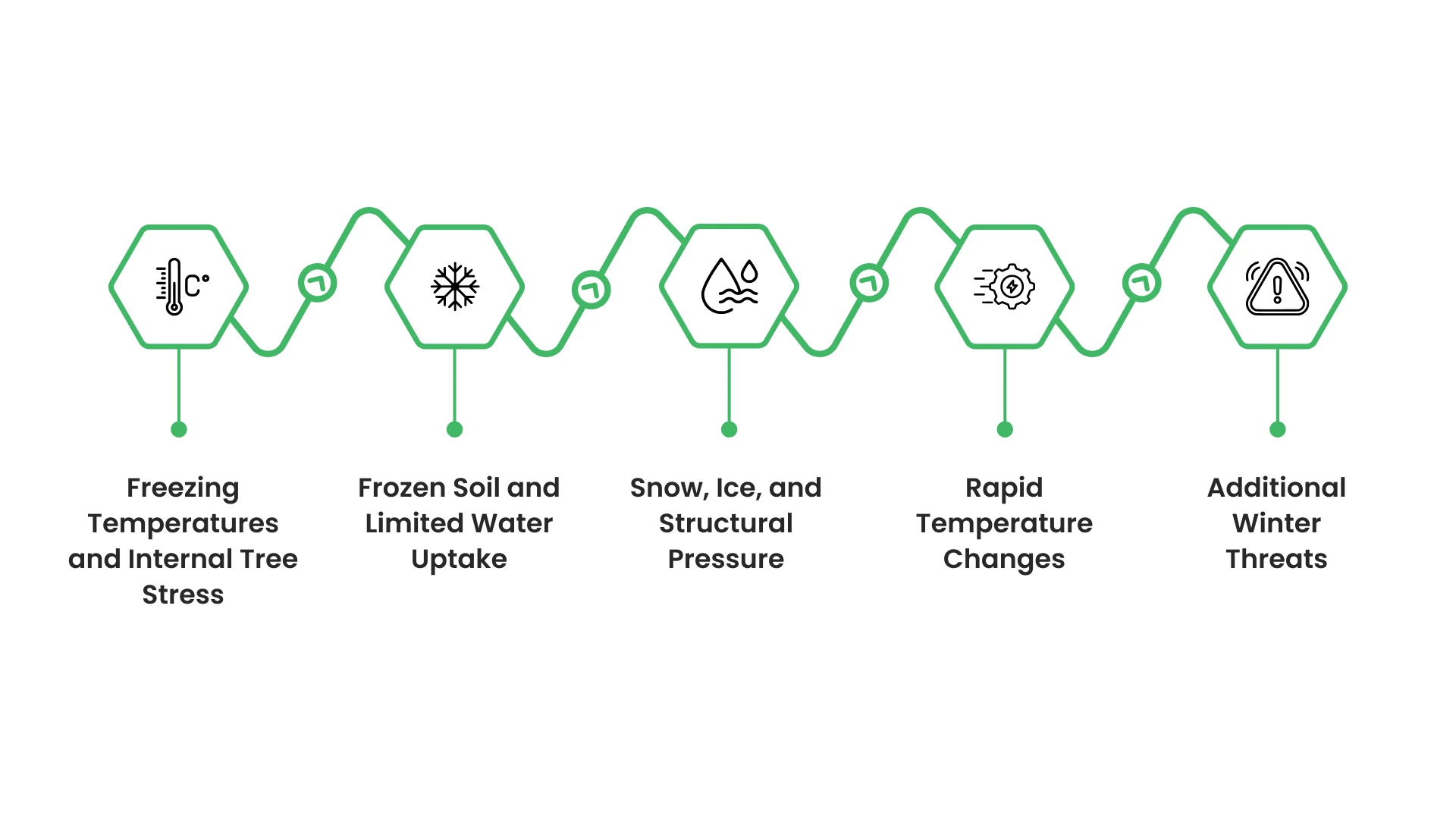
While dormancy helps trees survive the cold, winter still exposes them to several environmental stresses that can affect both structure and health. For trees in winter, these challenges are often invisible at first, but their effects may linger long after the snow melts.
Freezing Temperatures and Internal Tree Stress
Extreme cold can place significant strain on a tree’s internal systems. When temperatures drop rapidly, water inside tree cells can freeze, potentially damaging cell walls and tissues. Trees naturally adjust by increasing sugar concentrations in their cells, which helps lower the freezing point and reduce injury. Even with these defenses, prolonged or sudden cold snaps can cause internal stress that weakens branches and stems.
In some cases, freezing temperatures also affect sap movement. As sap expands and contracts with temperature changes, pressure can build inside the trunk, leading to cracks or splits in the bark.
Frozen Soil and Limited Water Uptake
Winter cold often freezes the soil, cutting off access to liquid water. Although growth slows, trees continue to lose moisture through their bark and, in the case of evergreens, through their needles. When water loss exceeds uptake, trees experience winter dehydration. This is one of the most common stresses affecting trees in winter, especially during extended dry periods with little snow cover.
Snow, Ice, and Structural Pressure
Snow and ice add significant weight to branches. Heavy accumulation can bend limbs beyond their natural limits, causing breakage or permanent deformation. Ice storms are particularly damaging, as even healthy branches can fail under sudden, uneven loads. Structural damage sustained in winter can compromise a tree’s shape, balance, and long-term stability.
Rapid Temperature Changes
Fluctuating winter temperatures create repeated freeze-thaw cycles that stress tree bark and wood. Warm daytime temperatures followed by sudden nighttime freezes can cause frost cracks, in which bark splits open due to uneven expansion and contraction. Sunscald is another risk, especially for young or thin-barked trees, when sunlight warms bark during the day, and temperatures drop sharply after sunset.
Additional Winter Threats
Winter conditions also increase exposure to indirect stress factors. Road salts used for deicing can accumulate in nearby soil, disrupting root function and damaging delicate root tissues. At the same time, limited food sources drive wildlife to feed on bark, buds, and young branches, adding another layer of stress during an already demanding season.
These environmental pressures shape how trees endure winter and influence how well they recover once growth resumes.
How Winter Weather Affects Tree Growth

Winter is often seen as a complete pause in growth, but for trees, the reality is more nuanced. While visible growth slows or stops, winter conditions directly shape when and how growth resumes. For trees in winter, this period sets the foundation for the next growing season.
Above-Ground Growth Comes to a Halt
Cold temperatures and limited daylight signal trees to stop producing new leaves, shoots, and flowers. This pause protects sensitive tissues from freezing damage and prevents the tree from expending energy it cannot easily replace. By halting above-ground growth, trees reduce their water and nutrient demands during periods of scarce resources.
This rest period is crucial. Trees that fail to enter proper dormancy are more vulnerable to cold injury and often experience poor growth once warmer weather returns.
Energy Storage and Root Activity Below the Surface
Although branches and buds remain inactive, roots can continue to function under certain conditions. When soil temperatures stay above freezing, roots slowly absorb nutrients and store carbohydrates produced earlier in the year. These stored reserves serve as the fuel for early spring growth, allowing trees to leaf out and form new shoots before photosynthesis fully resumes.
Snow cover can actually support this process by insulating the soil, helping maintain more stable temperatures around the root system. In this way, winter weather can indirectly support future growth when conditions are favorable.
Differences Between Deciduous and Evergreen Trees
Deciduous trees rely heavily on winter dormancy to reset their growth cycle. Their growth resumes rapidly in spring, driven by energy stored in roots and woody tissue. Evergreen trees, on the other hand, maintain a low level of metabolic activity throughout winter. While their growth is minimal, their needles allow them to photosynthesize during brief periods of warmth and sunlight.
These differing strategies highlight how winter weather influences growth patterns in species-specific ways. Rather than stopping growth altogether, winter reshapes how trees allocate energy and prepare for the seasons ahead.
How Winter Conditions Influence Tree Health
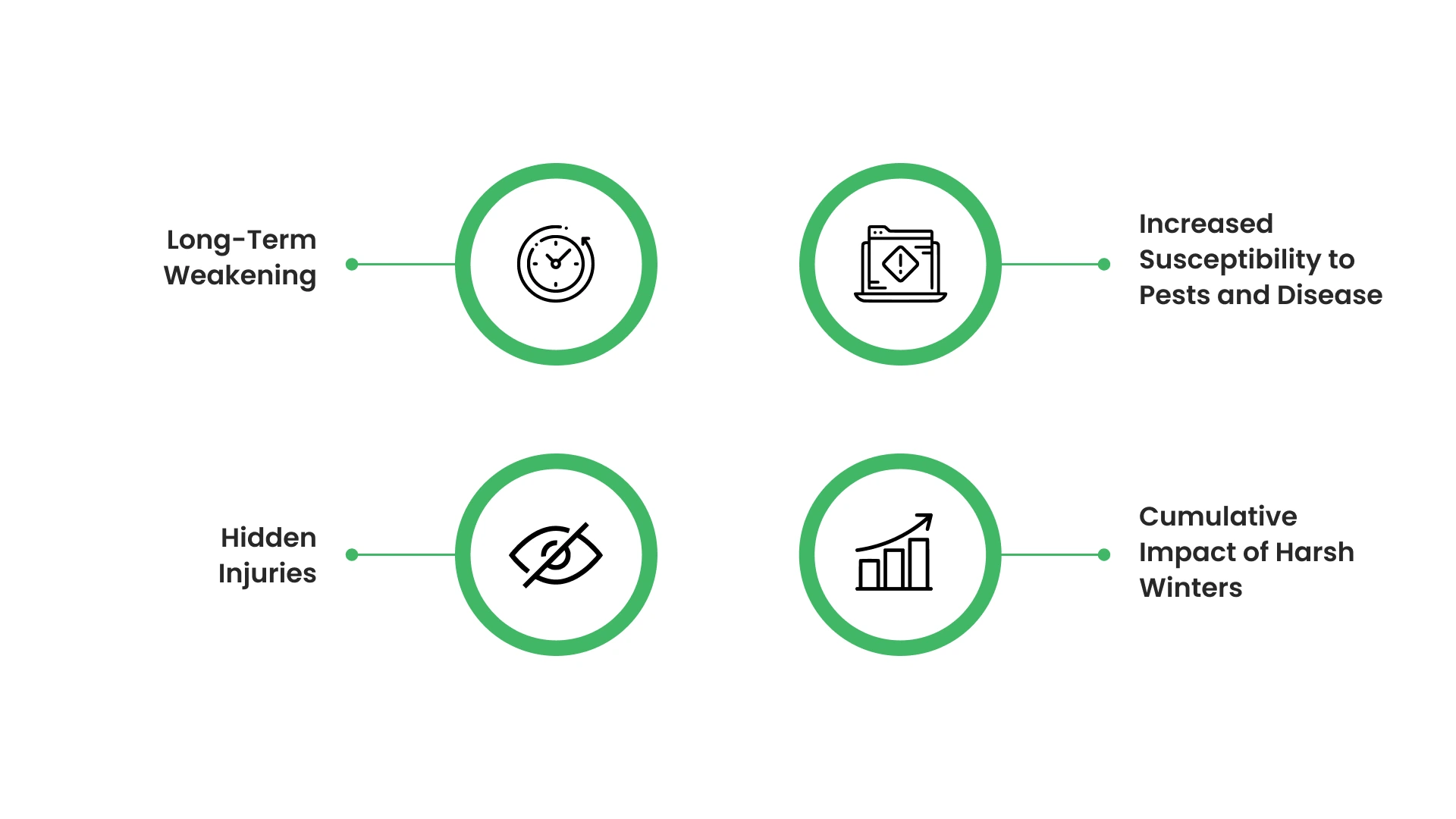
Winter does more than slow growth. It directly affects a tree’s overall health and its ability to withstand future stress. In winter, the balance between protection and pressure determines whether trees emerge resilient or weakened when spring arrives.
Long-Term Weakening
Extended exposure to extreme cold can strain a tree’s internal systems, even when visible damage is minimal. Repeated freezing events may weaken tissues, making branches more brittle and reducing the tree’s natural defenses. Trees that enter winter already stressed from drought, disease, or poor soil conditions are especially vulnerable to long-term damage.
Hidden Injuries
One of the challenges with winter-related damage is that it often goes unnoticed until the growing season begins. Cracks in bark, damaged buds, or injured roots may not be visible during winter but can lead to delayed leaf emergence, dieback, or uneven canopy growth in spring. These hidden injuries can also create entry points for pests and pathogens.
Increased Susceptibility to Pests and Disease
Trees weakened by winter stress are less able to defend themselves against insects and disease once temperatures rise. Reduced energy reserves and damaged tissues make it easier for pests to invade and for infections to spread. In this way, the effects of winter extend beyond the cold months, influencing a tree’s health well into the growing season.
Cumulative Impact of Harsh Winters
A single harsh winter can cause noticeable stress, but repeated severe winters have a cumulative effect. Over time, this can lead to reduced growth, thinning canopies, and a gradual decline in vitality. Healthy trees can recover, but those under constant winter stress may struggle to maintain long-term stability.
Understanding how winter conditions influence tree health helps explain why proper preparation, resilience, and recovery are so crucial for trees year after year.
What Winter Means for Growth in the Seasons Ahead
Winter may appear to slow everything down, but it plays a defining role in how trees rebound once warmer weather returns. For trees in winter, this period of rest, stress, and conservation directly shapes the strength and quality of spring growth.
Dormancy allows trees to reset their internal systems and protect vital tissues from cold damage. When winter conditions are stable and trees fully enter dormancy, buds remain protected, and energy reserves remain intact. As temperatures rise, these stored resources fuel the rapid production of new leaves, shoots, and flowers, often before roots are fully active in the soil.
Winter also leaves visible markers of its influence. Growth rings formed each year reflect how well a tree endured the previous winter, with wider rings indicating favorable conditions and narrower rings suggesting stress or damage. Trees that experienced heavy snow loads, freeze-thaw injury, or dehydration may show delayed leaf-out, reduced canopy density, or uneven spring growth.
Recovery from winter stress is not immediate. Trees must repair damaged tissues, restore moisture balance, and rebuild energy reserves while supporting new growth. Those who entered winter healthy are better equipped to manage this transition. Trees already weakened may struggle, making them more susceptible to disease or decline as the season progresses.
By shaping both recovery and renewal, winter acts as a critical bridge between one growing season and the next, quietly determining how well trees thrive in the months ahead.
Replant Winter-Resilient Forests with Plantd

Winter is one of the most demanding seasons for trees. Cold temperatures, frozen soil, and limited access to water all test a tree’s ability to survive and recover. When trees are healthy and well-supported, they are better equipped to withstand winter stress and return stronger in spring, continuing to clean the air, store carbon, and support surrounding ecosystems.
Plantd makes it easy to support forests that can endure these seasonal challenges. Every tree planted contributes to healthier, more resilient landscapes that stand up to winter conditions and continue delivering environmental benefits year after year.
With verified global reforestation projects, transparent tracking, and measurable outcomes, Plantd turns everyday action into lasting environmental impact. Together, we can help trees survive winter stress, recover in spring, and grow stronger for generations to come.
Support trees through every season.
Start Planting with Plantd