
The Importance of Preventive Plant Health Care

You usually do not notice a tree is struggling until the signs become impossible to ignore. Leaves start turning yellow. Branches look brittle. Growth slows down. Maybe the canopy suddenly looks thinner than it did a season ago. By the time most people react, the damage has often been building quietly for months, sometimes even years.
That is exactly why plant health care matters.
Just like people benefit from regular checkups and preventative care, trees and plants need consistent attention to stay healthy and resilient. Waiting until a tree is visibly declining often leads to more expensive, time-consuming, and sometimes irreversible problems.
In this blog, we will break down why preventative plant health care is important, the core elements of an effective care program, and how protecting healthy trees today supports a more sustainable future tomorrow.
What Is Plant Health Care?
Plant health care, often called PHC, is a proactive approach to keeping trees, shrubs, and other plants healthy throughout their lives. Instead of waiting for visible decline, disease, or pest infestations to appear, plant health care focuses on prevention, monitoring, and long-term wellness.
At its core, plant health care is about creating the right conditions for plants to thrive naturally. That includes maintaining healthy soil, managing moisture levels, monitoring for pests and disease, improving root health, and addressing environmental stress before it causes serious damage.
A good plant health care program considers the entire environment surrounding a plant, not just the symptoms visible above ground. For example, yellowing leaves may not simply be a leaf problem. The real issue could stem from compacted soil, poor drainage, root stress, nutrient imbalances, or even nearby construction damage. Preventive care helps identify these underlying issues early, when they are easier and less costly to manage.
Preventative Care vs Reactive Care
One of the biggest differences in plant health care is whether problems are addressed early or only after visible damage appears.
Preventive care focuses on maintaining plant health before serious issues develop. This includes regular inspections, soil improvement, proper watering, seasonal pruning, mulching, and early pest monitoring. The goal is to reduce stress and help plants stay resilient year-round.
Reactive care, on the other hand, usually begins after a plant is already struggling. At that stage, trees may already be dealing with severe disease, pest infestations, root damage, canopy decline, or structural instability. Treatments often become more expensive, more aggressive, and less predictable.
Once a tree enters advanced decline, recovery becomes significantly more difficult. In many cases, damage that could have been prevented with early intervention may eventually lead to major limb failure, long-term instability, or complete removal.
Preventative plant health care not only improves long-term plant survival but also helps reduce unnecessary tree loss, emergency removals, and environmental impact over time.
Why Proactive Plant Care Matters More Than Ever
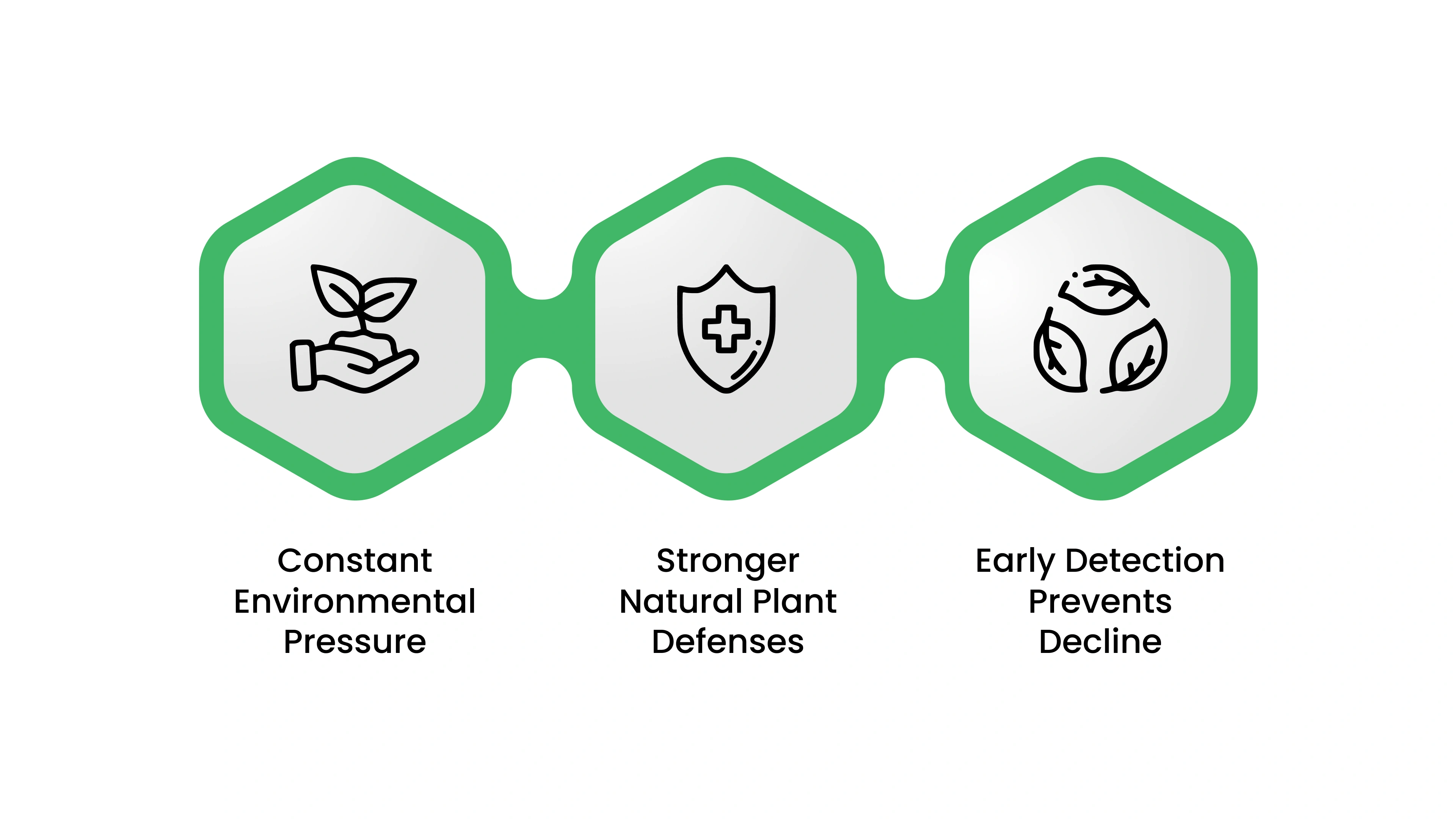
Healthy plants do not happen by accident. Long-term plant health depends on consistent care, early intervention, and the ability to manage stress before visible decline begins. That is exactly why preventative plant health care matters:
Constant Environmental Pressure
Trees growing in urban and residential spaces face far more challenges than those in natural forests. Limited root space, poor drainage, compacted soil, rising temperatures, pollution, drought, and nearby construction activity all affect long-term plant health.
Many of these problems develop below the surface long before visible symptoms appear. A tree may still look healthy while its roots struggle with restricted growth, moisture imbalance, or nutrient deficiencies.
Over time, these conditions weaken the plant and increase vulnerability to pests, disease, and structural instability.
Stronger Natural Plant Defenses
Healthy plants are naturally better able to handle environmental stress. Strong root systems, balanced nutrient levels, and healthy soil conditions improve resilience to drought, seasonal changes, storms, and pest exposure.
Preventive care strengthens these natural defense systems early, rather than waiting for visible decline. Plants that receive consistent care are more likely to maintain stable growth, stronger canopies, and healthier overall structure over time.
Early Detection Prevents Decline
Serious plant health problems rarely appear overnight. Issues such as fungal infections, root stress, insect activity, or canopy thinning usually begin gradually with subtle warning signs.
Routine monitoring helps identify these concerns before they spread or cause irreversible damage. Addressing a minor issue early is often simpler, less invasive, and far less costly than dealing with advanced decline or complete tree loss later on.
Early intervention also helps preserve long-term tree health while reducing the need for aggressive treatments or emergency removals.
What Preventive Plant Care Looks Like in Practice
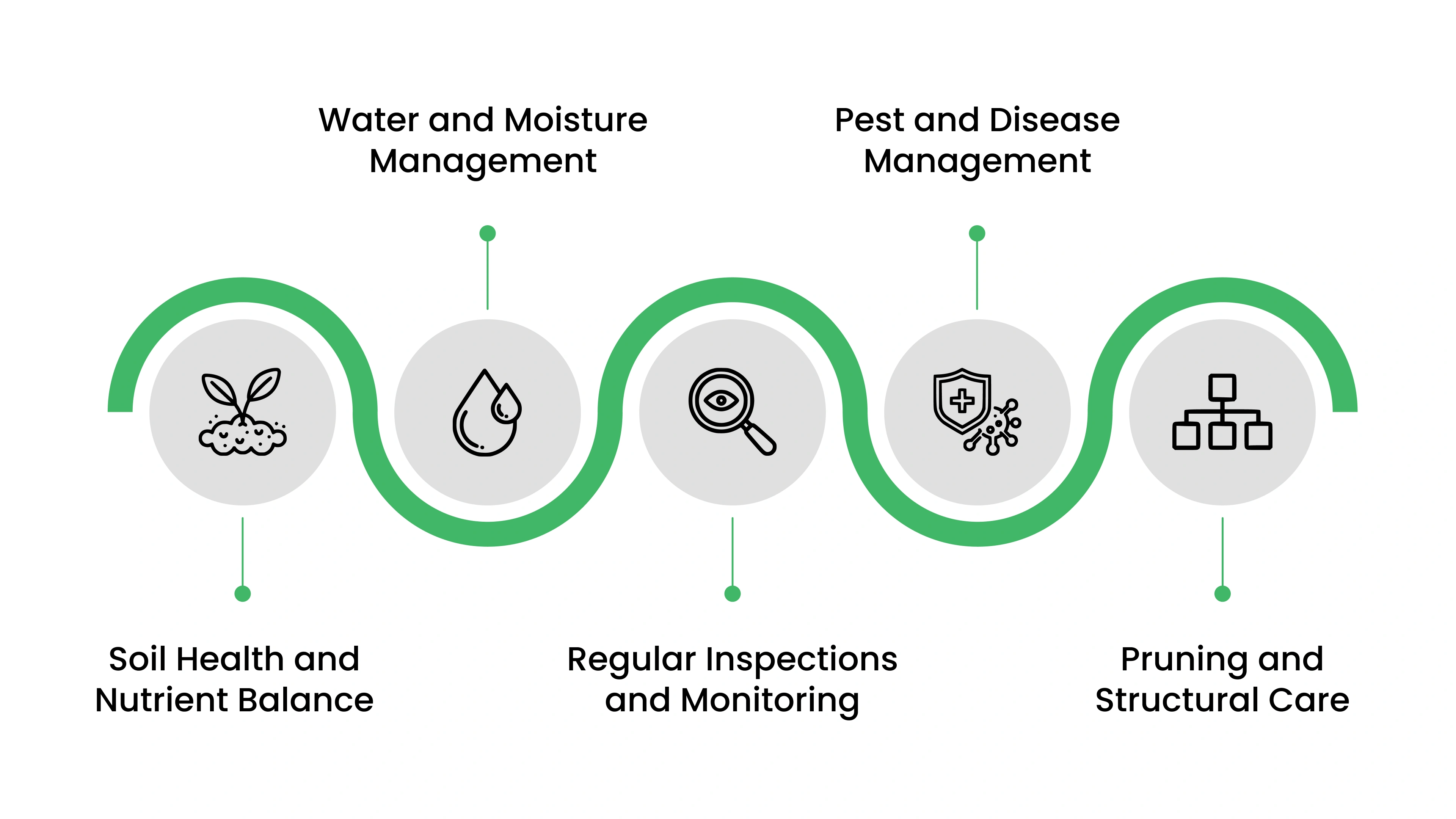
Several factors influence how well trees and plants grow, recover from stress, and stay healthy over time. These are some of the most important areas that preventative plant health care focuses on:
Soil Health and Nutrient Balance
Healthy soil supports healthy roots, and healthy roots support stronger, more resilient trees. When soil becomes compacted or nutrient-deficient, root systems struggle to absorb water, oxygen, and essential nutrients properly.
Soil testing, aeration, composting, and proper fertilization all help improve growing conditions and support long-term plant health. Mulching also plays an important role by retaining moisture, regulating soil temperature, and reducing erosion around the root zone.
Water and Moisture Management
Trees need consistent hydration to maintain healthy growth, especially during periods of extreme heat or drought. Both overwatering and underwatering can create long-term stress and weaken root systems.
Moisture management should be adjusted to seasonal conditions, soil type, rainfall levels, and the tree’s age. Younger trees often require more regular watering, while mature trees benefit from deeper, more stable moisture levels.
Regular Inspections and Monitoring
Routine inspections help identify problems before visible decline becomes severe. Regularly checking leaves, bark, trunks, canopies, and root zones can reveal early signs of stress that might otherwise go unnoticed.
Discoloration, thinning foliage, bark cracks, fungal growth, unusual leaf drop, or insect activity can all indicate underlying health issues. Catching these warning signs early allows for faster and more effective treatment.
Pest and Disease Management
Pests and diseases often spread more aggressively when trees are already weakened by environmental stress. Early monitoring makes it easier to manage infestations and infections before they cause widespread damage.
Preventive plant health care focuses on targeted, early-stage interventions rather than reacting after a major decline has already occurred. This approach is often more effective, less invasive, and less costly over time.
Pruning and Structural Care
Pruning helps improve airflow, remove dead or damaged branches, and support healthier structural growth. It also reduces the risk of disease spread and branch failure during storms or high winds.
Without regular structural maintenance, overcrowded growth and weak branch attachments can create long-term vulnerabilities that affect both plant health and safety.
The Long-Term Benefits of Preventive Plant Health Care
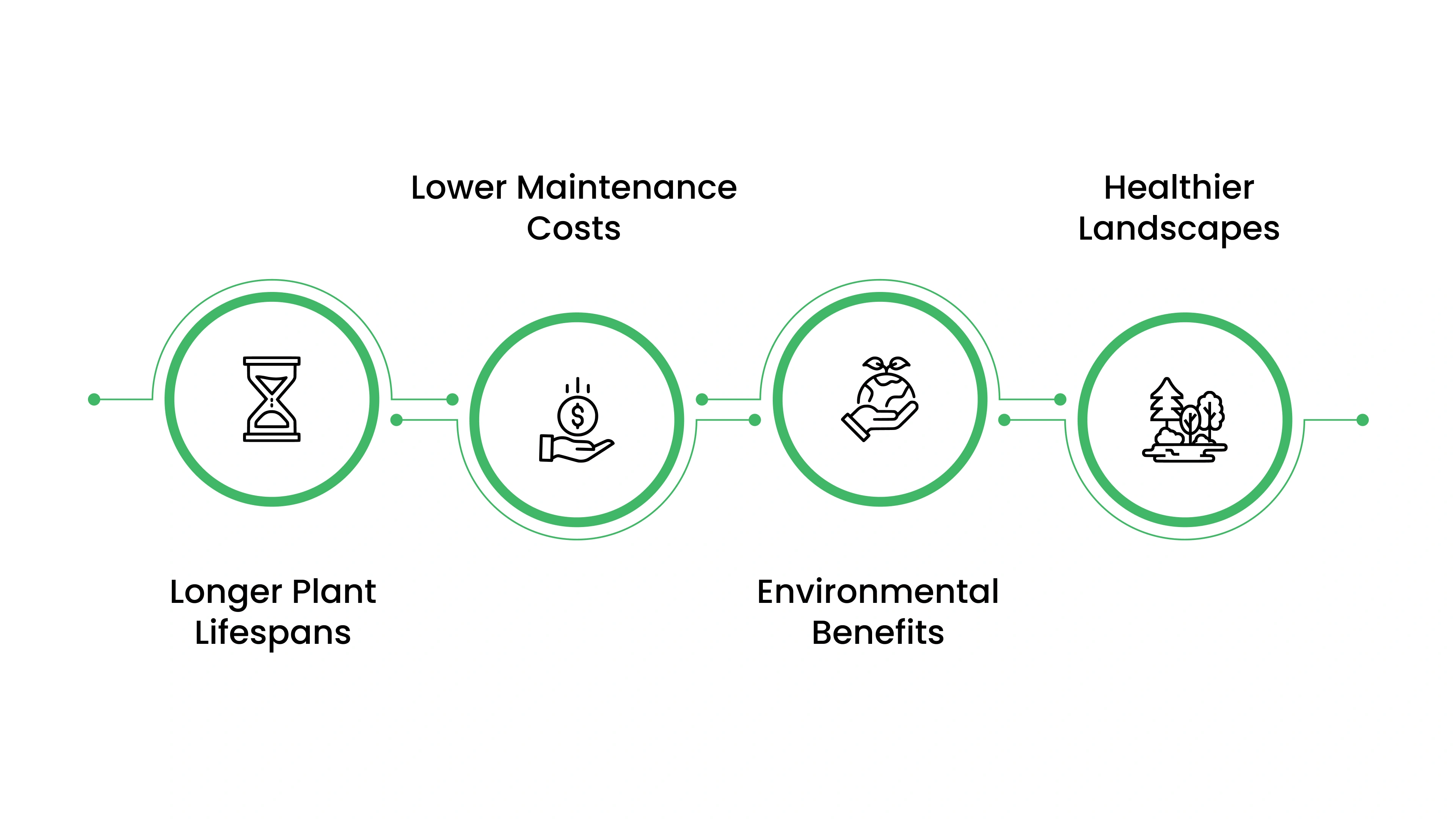
Preventive plant health care supports healthier growth, reduces long-term risks, and helps trees continue to provide environmental value for years to come. Here are a few of the long bem
Longer Plant Lifespans
Trees that receive proper care early and consistently are more likely to remain healthy for decades. Healthy root systems, balanced soil conditions, and regular monitoring help reduce long-term stress that can gradually weaken a tree. Preventative care also improves a tree’s ability to recover from drought, storms, seasonal changes, and minor damage before those issues become more severe.
Lower Maintenance Costs
Major tree removals, emergency treatments, storm damage, and advanced disease management can become expensive very quickly. Preventive care helps reduce the likelihood of these large-scale issues by identifying and managing problems early. Routine maintenance is typically far more cost-effective than dealing with late-stage decline or replacing mature trees entirely.
Environmental Benefits
Healthy trees contribute significantly to the environment around them. They help improve air quality, absorb and store carbon, stabilize soil, reduce heat, and support local biodiversity. The longer trees remain healthy, the longer they continue providing these environmental benefits to surrounding communities and ecosystems.
Healthier Landscapes
Well-maintained trees and plants improve the overall appearance and functionality of outdoor spaces. Healthy canopies provide shade, support privacy, reduce heat around buildings, and create more comfortable environments for people and wildlife alike. Preventative plant health care also helps landscapes remain more stable and visually healthy throughout changing seasons.
How Preventive Plant Health Care Supports Reforestation & Sustainability
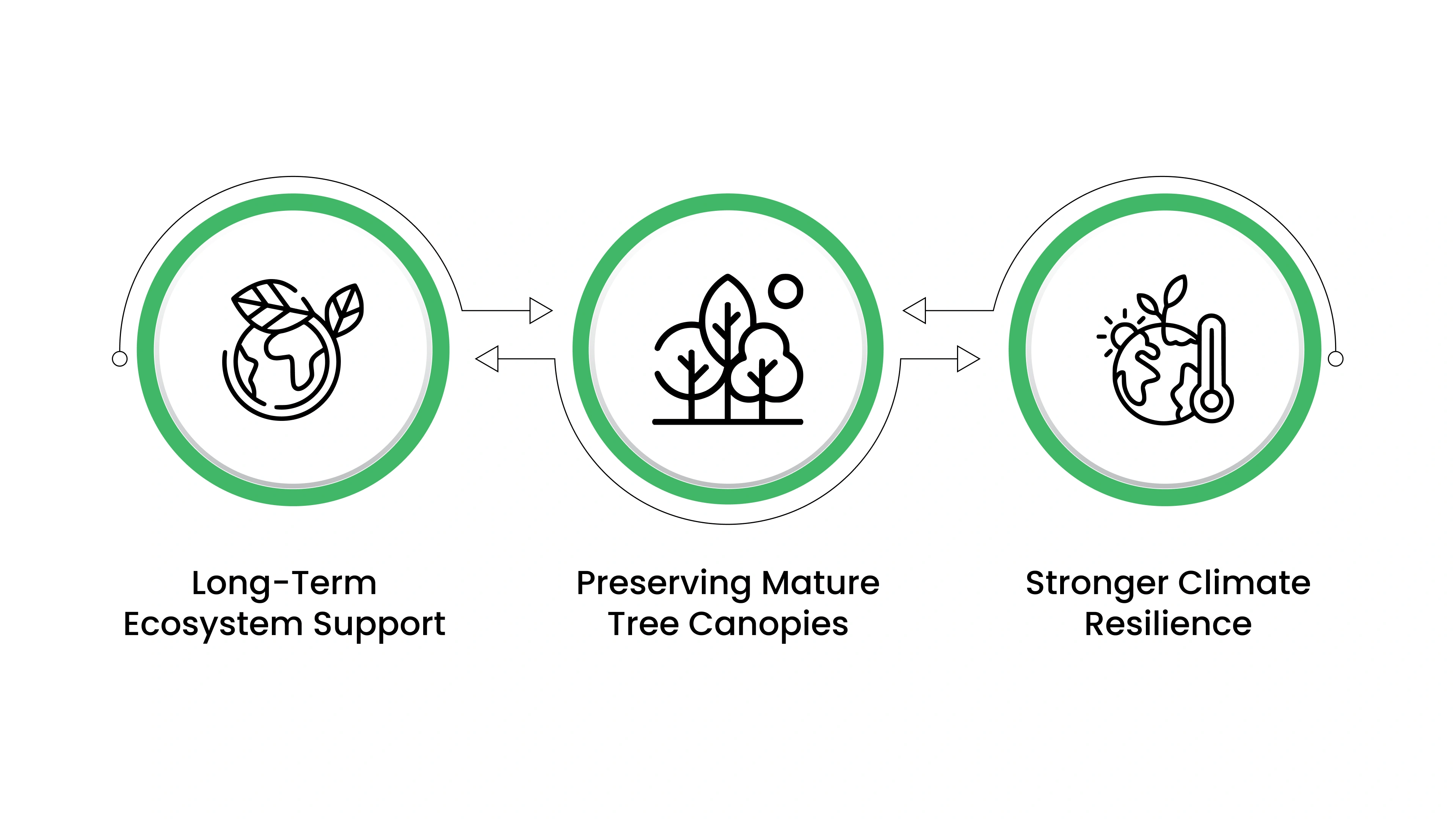
Plant health care is not just about maintaining individual trees or landscapes. Healthy trees play an important role in supporting cleaner air, healthier ecosystems, biodiversity, and long-term environmental stability:
Long-Term Ecosystem Support
Trees that remain healthy for longer continue providing environmental benefits year after year. They absorb carbon, improve air quality, regulate temperatures, reduce erosion, and create habitats for wildlife and pollinators. When trees decline early because of preventable stress, disease, or poor growing conditions, ecosystems lose many of these long-term benefits.
Preserving Mature Tree Canopies
Planting new trees is important, but protecting mature and existing trees is just as critical. Established trees already store significant amounts of carbon, support local biodiversity, and contribute to stable ecosystems in ways that newly planted trees cannot immediately replace. Preventative plant health care helps reduce avoidable tree decline and unnecessary removals by addressing problems before they become severe.
Stronger Climate Resilience
Healthy urban forests and green spaces are an important part of climate resilience and environmental sustainability. Trees help cool cities, improve stormwater management, support soil health, and reduce the environmental impact of rising temperatures. Preventive care helps trees remain healthier and more resilient in changing environmental conditions, allowing them to continue supporting communities and ecosystems over the long term.
Support Long-Term Plant and Forest Health With Plantd
Preventive plant health care helps trees stay healthier, stronger, and better equipped to support the surrounding environment. But long-term environmental impact also depends on restoring damaged ecosystems and supporting forests beyond individual landscapes.
At Plantd, that long-term impact is central to every restoration effort. From supporting verified reforestation projects to helping individuals and businesses contribute to healthier ecosystems, Plantd focuses on creating measurable, lasting environmental change.
With transparent tracking, verified projects, and a focus on long-term ecosystem restoration, Plantd helps turn environmental action into meaningful, measurable impact.