
Best Time to Plant Trees: A Seasonal Guide for Healthy Growth

You plant a young tree on a bright summer morning. The ground is warm, the leaves look healthy, and it feels like the perfect day to begin something good.
A few weeks later, the soil has turned dry. The leaves are curling at the edges. Watering becomes more frequent, mulch is added, and growth slows to a standstill. The tree survives, but it does not move forward.
Now, let’s imagine the same tree planted on a cool autumn afternoon. The air is mild, and the soil still carries the warmth of the past season. There is no urgency to produce new leaves. Beneath the surface, roots begin to stretch outward, searching, anchoring, settling. By the time spring arrives, the tree is not recovering. It is ready to grow.
Nothing about the species or the planting method has changed. Only the timing.
That shift is what turns tree planting into long-term success. The best time to plant trees is not about convenience. It is about creating the conditions where roots can establish before the stress of a new growing season begins.
In this blog, we’ll look at how planting seasons influence root development, why fall and spring offer very different advantages, and how local climate shapes the ideal planting window.
Why Planting Time Determines Whether a Tree Thrives or Struggles
A tree’s future is largely decided in its first year. Not by how tall it grows, but by what happens quietly below the surface. When planting aligns with the natural seasonal window, the entire establishment process unfolds very differently:
Week 1: A Period of Adjustment
The moment a tree is planted, its world becomes smaller. Its roots are confined to the soil that came with it, and every drop of water and nutrient has to be drawn from this limited space. At this stage, stability matters more than visible growth. The surrounding conditions will determine what the tree does next.
Weeks 2 to 6: Where The Energy Goes
In cooler, balanced conditions, the tree begins directing its energy into root expansion. There is little demand from the canopy, and moisture loss through the leaves is low. The underground network starts to move outward, exploring the surrounding soil.
In hotter or more demanding conditions, that energy is pulled upward instead. The tree tries to maintain its leaves, even though the roots are not ready to support them. This is when watering increases and growth slows.
Months 2 To 4: Soil Warmth Becomes The Driver
Roots respond more to soil temperature than to air temperature. When the soil holds gentle, consistent warmth, root activity continues even if everything above ground appears still. This is the phase where real establishment happens. The tree begins to anchor itself and access deeper, more reliable moisture.
Entering the New Season: The Turning Point
A tree that has spent this time building roots enters the next growing season with a functioning support system. It does not need to recover. It can immediately produce new leaves, extend its branches, and begin storing carbon more rapidly.
When is The Best Time to Plant Trees?
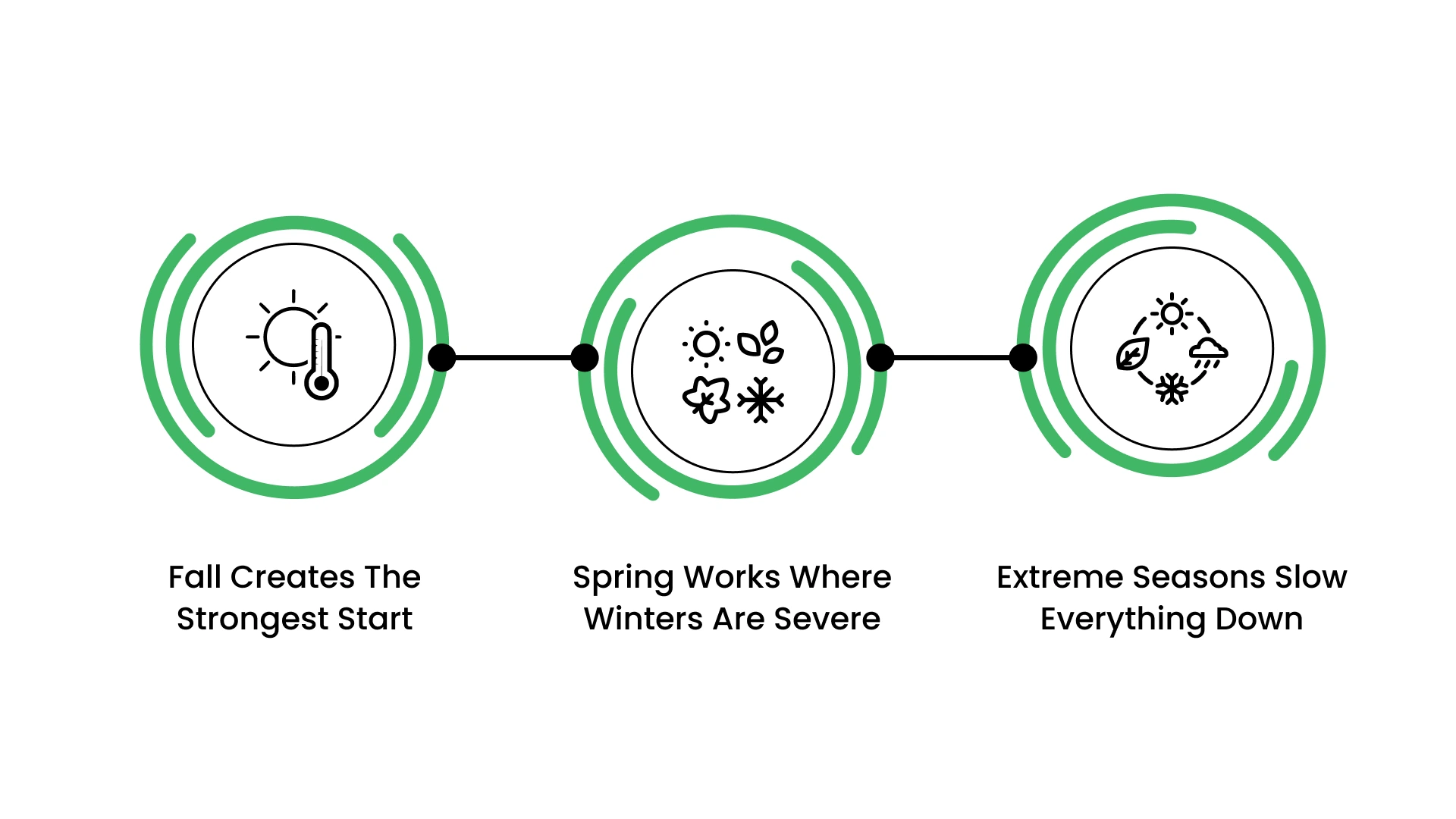
In most regions, the best time to plant trees is when the soil is warm, the air is mild, and the tree is not under pressure to produce new growth. This usually falls in early fall, with early spring as the next most favorable window in colder climates.
Fall Creates The Strongest Start
Fall brings a rare balance. The intense heat of summer has passed, but the soil still holds enough warmth to support active root growth. With fewer leaves to maintain, the tree can focus almost entirely on establishing below ground. In many regions, seasonal rainfall also reduces the need for constant watering.
By the time spring arrives, a fall-planted tree already has an expanded root system and is ready to grow immediately.
Spring Works Where Winters Are Severe
In climates where the ground freezes deeply, fall planting does not allow roots to establish. Early spring becomes the more reliable option, especially once the soil is workable and daytime temperatures begin to stabilize.
Planting before rapid leaf growth begins ensures that root development still gets the first share of the tree’s energy.
Extreme Seasons Slow Everything Down
-
Peak summer forces a tree to manage heat, water loss, and canopy growth at the same time
-
Mid-winter freezes pause root activity completely
Planting during these periods is possible, but it demands more water, more care, and a longer recovery phase.
Across restoration projects and urban planting programs, timing is treated as a growth strategy. When trees are planted during the right window, they establish faster and begin supporting their ecosystems sooner. That advantage comes from what happens in the soil during this phase.
How Your Local Climate Changes the Ideal Planting Season
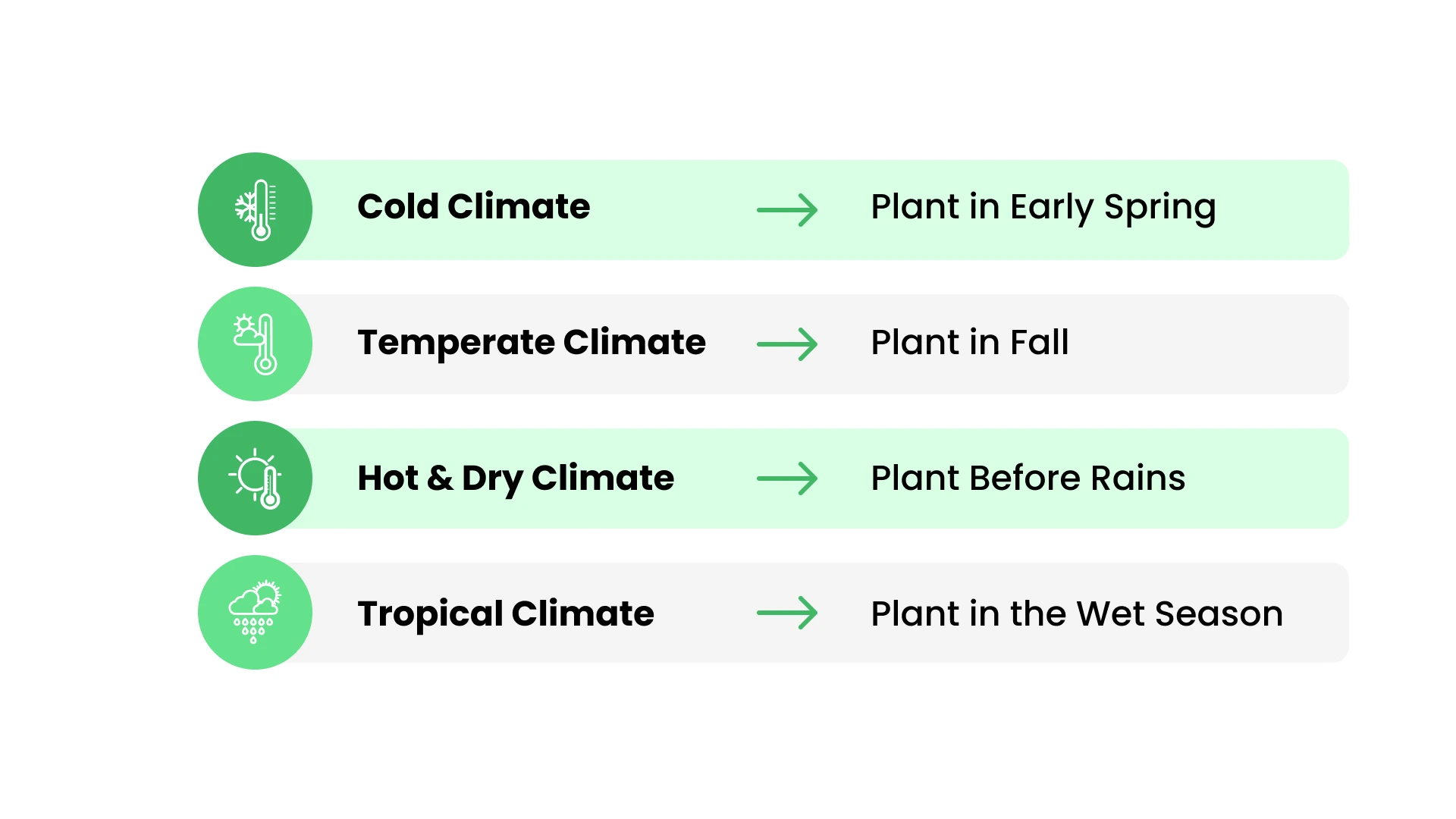
There is no single planting month that works everywhere. The right window is created by local temperature patterns, rainfall cycles, and the length of time the soil stays workable. Here is how different seasons can affect the ideal planting season:
Cold Climates
Where winters freeze the ground deeply, fall planting has to happen early enough for roots to establish before the soil turns solid. If that window is missed, early spring becomes the more reliable option. The key signal is not the date, but when the soil can be dug, and daytime temperatures begin to stay consistent.
Mild & Temperate Climates
In regions with gentle winters, root growth can continue for months after planting. Trees benefit from steady moisture, lower evaporation, and a long establishment period before summer arrives.
Hot & Dry Climates
In arid and semi-arid areas, rainfall matters more than temperature. The best planting time is the period just before or at the beginning of consistent rains, when young roots can expand without constant irrigation.
Tropical Climates
Instead of spring or fall, the growing cycle follows wet and dry seasons. Planting at the start of the wet season allows trees to establish quickly and reduces early-stage stress.
How to Know It’s the Right Time to Plant
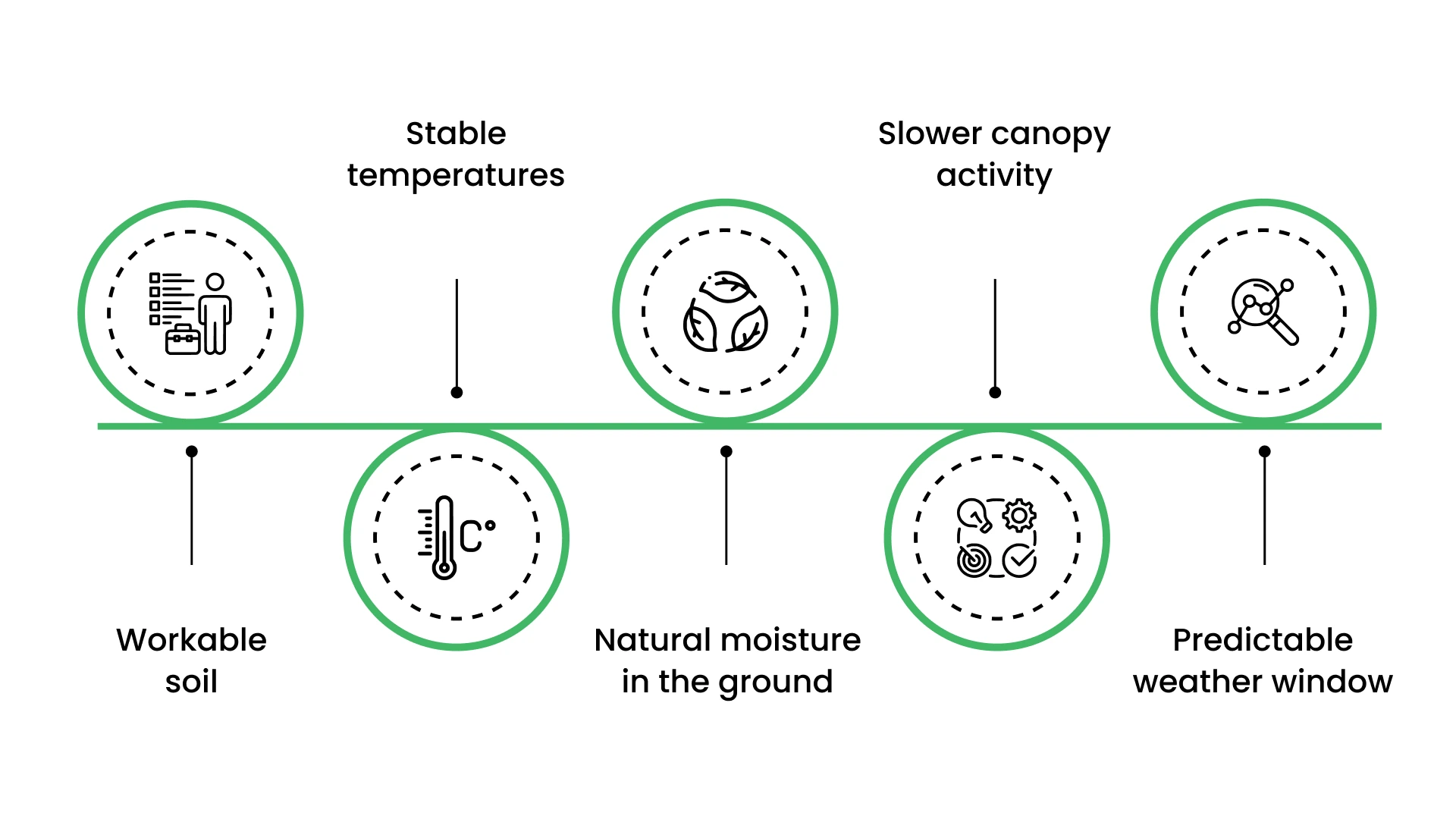
The right planting moment rarely comes from the calendar. It shows up through a set of natural signals that make root establishment easier and early stress far less likely.
-
Workable soil: When the ground is loose and easy to dig, new roots can move outward without resistance. If the soil is frozen or waterlogged, establishment slows before it even begins.
-
Stable temperatures: Mild, consistent conditions allow the tree to focus on adaptation. Extreme heat or sudden frost shifts its energy toward protection rather than growth.
-
Natural moisture in the ground: Seasonal rainfall or moisture held in cool soil reduces the need for constant watering and helps young roots settle in more evenly.
-
Slower canopy activity: When a tree is not actively pushing out new leaves, more of its energy is available for root expansion. This is the phase where establishment happens fastest.
-
Predictable weather window: A few steady weeks ahead give roots time to spread and anchor before the next period of environmental stress.
When the timing is right, a tree does more than survive. It settles in, grows with confidence, and begins giving back to the climate and the life around it far sooner.
And the best part is, you don’t have to get every detail right on your own. With the right planting window and the right restoration approach, that long-term impact is already within reach.
Plant at the Right Time with Plantd

Planting in the right season helps trees establish faster and begin restoring the ecosystems around them sooner.
Plantd turns that critical timing into real, measurable climate action. Every tree is planted in its natural growth window, so it can take root under the right conditions, survive more readily, and have a long-term environmental impact.
With verified reforestation projects, transparent impact tracking, and a planting approach built around the right seasonal windows, Plantd ensures every tree is placed to survive, grow, and give back for decades.
Plant with purpose today. Plant with Plantd