
What Is Urban Forestry? The Science Behind Why City Trees Matter
Have you felt that small but noticeable drop in temperature the moment you step under a canopy of trees? The way a tree-lined street feels calmer than an exposed one. The instinct to find a bench near the greenery in a park rather than out in the open.
Most of us experience trees in our cities every single day without thinking much about them. They’re just… there, part of the background.
But here’s the thing: that background is anything but accidental.
Every tree you pass on your morning commute, every patch of shade in your local park, every row of saplings along a newly built boulevard, these aren’t happy coincidences. They’re part of a deliberate, science-backed effort to make cities healthier, safer, and more livable. And that effort has a name: urban forestry.
If you’ve never heard the term before, don’t fret. It doesn’t come up in casual conversation the way “climate change” or “sustainability” does. But it probably should, because the trees in our cities are doing far more work than most people realize.
In this blog, we will break down what urban forestry is, why it matters, and why the tree outside your window deserves a lot more credit than it gets.
What Is Urban Forestry?
At its core, urban forestry is the practice of planting, caring for, managing, and protecting trees in cities and towns.
What sets urban forestry apart from traditional forestry is its setting and purpose. Traditional forestry focuses on large, rural, or wild woodlands, timber management, wildlife conservation, that kind of thing. Urban forestry is specifically about trees in the places where people live, work, and move through every day.
The term itself is surprisingly recent. It was first introduced in 1965 by a professor at the University of Toronto, and when it landed, it struck many people as odd. What does a forest have to do with a city? The two ideas felt contradictory. But as scientists began to measure just how much trees contribute to urban life, the concept stopped sounding strange and started sounding essential.
Some smaller communities prefer the term “community forestry” over “urban forestry”, mostly because “urban” can feel like it doesn’t apply to them. The principles, however, are identical.
It’s also worth noting that urban forestry isn’t the responsibility of a single department. It sits at the intersection of ecology, city planning, public health, policy, and community engagement, which is part of what makes it such a critical and growing field.
What Actually Makes Up an Urban Forest?
When most people hear “forest,” they picture something wild and sprawling, towering trees, thick undergrowth, and birdsong. A city is the last place that comes to mind.
But an urban forest isn’t a forest in the traditional sense. It’s a collective term for every tree and green space within a city or town, and its scope tends to surprise people.
It includes the obvious: parks, public gardens, and tree-lined streets. But also private backyards, residential front yards, college campuses, hospital grounds, cemeteries, arboretums, and even the scraggly tree growing out of a sidewalk box near a bus stop. If it’s a tree in or near where people live, it’s part of the urban forest.
What’s particularly striking is how much of this sits on private land. In the United States, roughly 80 to 85% of urban trees are on privately owned property, meaning homeowners, landlords, and businesses are, whether they know it or not, among the most important stewards of the urban forest.
In fact, U.S. urban forests cover over 140 million acres and contain an estimated 5.5 billion trees, a significant chunk of the country’s total tree canopy, quietly doing its job amid concrete and traffic.
Why Does Urban Forestry Matter?
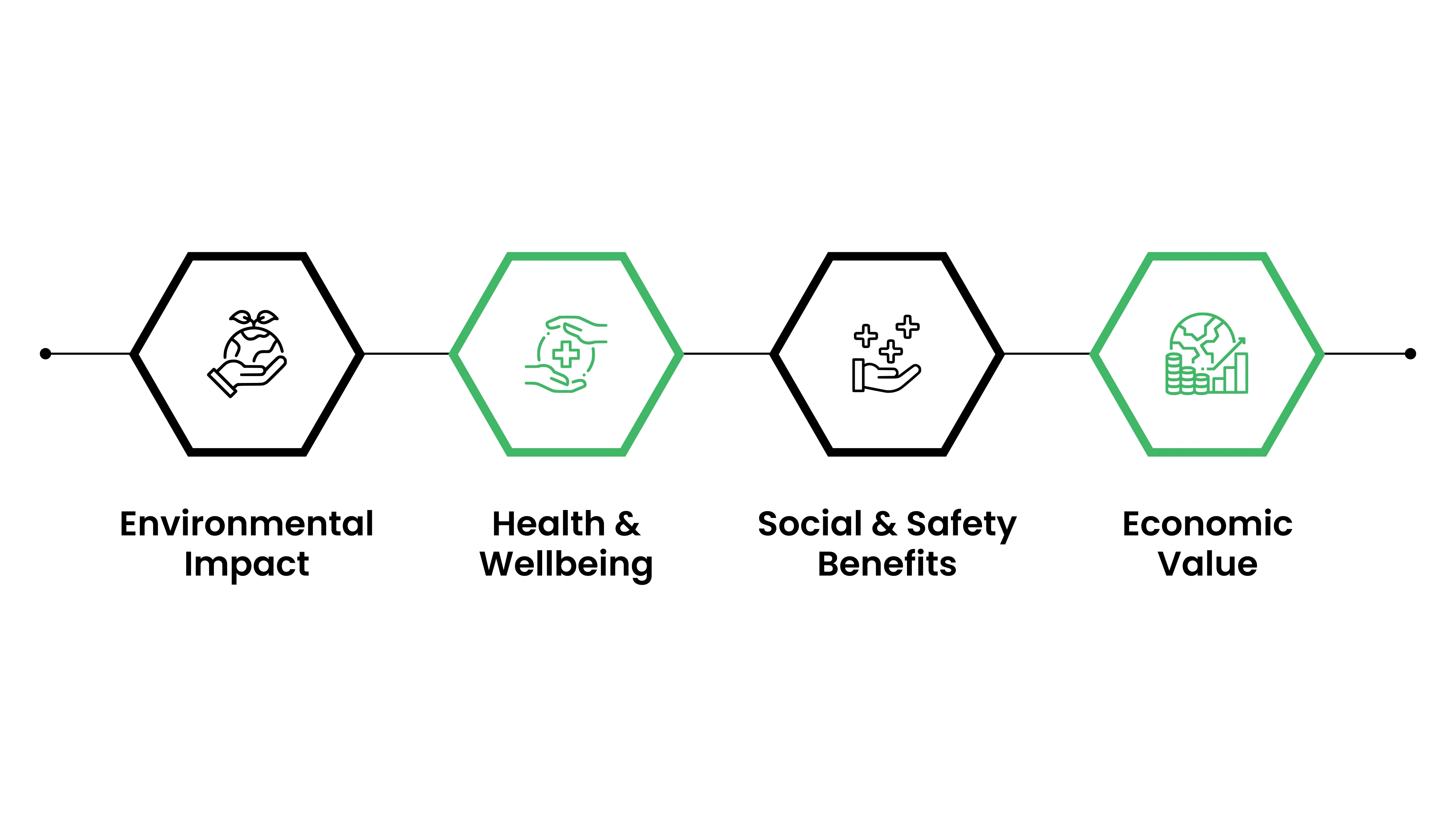
Urban forestry isn’t just about adding greenery to a city. It shapes how people live, move, and experience their surroundings every day. Here’s how those benefits show up in tangible ways:
Environmental Impact
Urban trees improve the environment in ways you feel but don’t always notice. They filter pollutants from the air, helping reduce exposure to harmful particles in dense urban areas. Their shade lowers surface and air temperatures, significantly easing the impact of heat in built-up neighborhoods.
Trees also absorb rainwater and slow runoff, reducing the risk of flooding and easing pressure on drainage systems. Over time, this natural protection even extends to infrastructure, as shaded roads and pavements face less cracking and heat damage.
Health & Wellbeing
Spending time around trees has a direct impact on how people feel and function. Access to green spaces is linked to lower stress levels, improved focus, and better overall mental well-being. In cities where outdoor comfort is often limited by heat, tree cover creates shaded, usable spaces that encourage people to step outside.
This also helps reduce heat-related illnesses, particularly among children, older adults, and those more vulnerable to extreme temperatures. The result is a city that supports both physical and mental health more consistently.
Social & Safety Benefits
Tree-lined neighborhoods tend to feel more inviting, and that changes how people use them. When streets are shaded and comfortable, people are more likely to walk, spend time outdoors, and interact with others. This consistent presence builds stronger community connections over time.
There is also evidence that increased tree cover is linked to lower crime rates, likely due to greater visibility and community engagement. In addition, students in greener neighborhoods often show better concentration and academic outcomes, showing how the environment can influence everyday behavior.
Economic Value
Urban trees contribute far more than visual appeal. Across the U.S., they deliver over $24 billion in environmental services, including energy savings, cleaner air, and improved stormwater management.
These benefits translate into real cost savings for cities by reducing the need for additional infrastructure and maintenance. Trees can also increase nearby property values and make commercial areas more attractive to visitors and businesses. Over time, this makes urban forestry not just an environmental effort, but a practical investment in long-term economic stability.
How Urban Forestry Helps Cities Respond to Climate Change
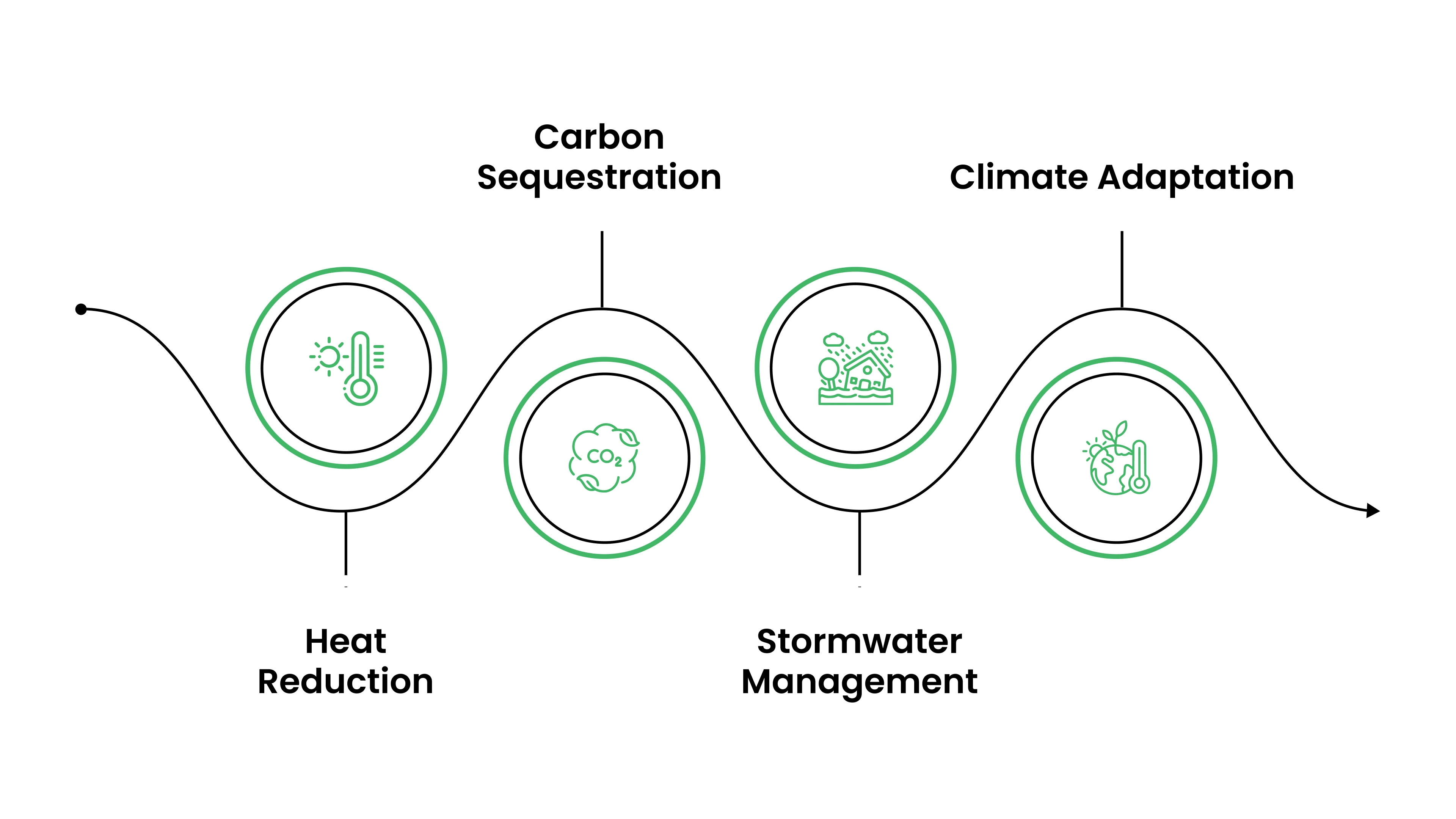
Urban forestry is no longer just about adding green cover. It has become a practical way for cities to respond to how climate change is already affecting daily life. Here is how urban forestry fights climate change:
Heat Reduction
Cities hold heat in a way natural landscapes don’t. Concrete, asphalt, and buildings absorb sunlight during the day and release it slowly, keeping temperatures high even after sunset. Trees interrupt that cycle. Their canopy provides direct shade, reducing surface temperatures on roads, sidewalks, and buildings.
At the same time, they release moisture into the air, which cools the surrounding environment. This can make entire neighborhoods feel noticeably more livable during peak heat. Over time, this also reduces dependence on air conditioning, helping lower energy use and the emissions associated with it.
Carbon Sequestration
Urban areas contribute heavily to carbon emissions, and while trees won’t solve that alone, they play a steady and ongoing role in reducing them. As trees grow, they absorb carbon dioxide from the atmosphere and store it within their biomass.
Unlike many climate interventions that require constant input, trees continue this process naturally over time. The longer they are protected and allowed to mature, the more carbon they capture. This makes urban forestry a long-term, compounding approach rather than a one-time solution.
Stormwater Management
Rainfall is becoming more unpredictable, and many urban drainage systems are already operating at capacity. When heavy rain hits, water has nowhere to go, leading to flooding and infrastructure strain.
Trees help manage this at the source. Their roots absorb water, while the soil around them slows down runoff. This reduces the volume and speed of water entering drainage systems, lowering the risk of overflow. Instead of relying solely on engineered systems, cities benefit from a natural layer of protection that operates continuously and adapts over time.
Climate Adaptation
Most climate solutions focus on either reducing emissions or adapting to changing conditions. Urban forestry does both at once. Trees reduce heat, improve air quality, and manage water, helping cities cope with immediate climate stress. At the same time, they continue to remove carbon from the atmosphere.
Green corridors also support biodiversity by allowing plant and animal life to adjust and move as environments shift. This combination of mitigation and adaptation makes urban forestry one of the more balanced and practical climate strategies available to cities today.
If urban forestry delivers cleaner air, cooler temperatures, and better overall well-being, it would be easy to assume these benefits are shared equally across a city. In reality, they’re not.
Tree canopy is often unevenly distributed, with lower-income neighborhoods and communities of color having significantly fewer trees and less access to green space. This pattern reflects years of uneven planning, development priorities, and underinvestment in certain areas.
The impact is visible in everyday life. These neighborhoods experience higher temperatures, poorer air quality, and fewer safe, shaded spaces to spend time outdoors. They miss out not just on environmental benefits, but also on the mental health and community advantages that come with green spaces.
This gap, often referred to as tree equity, has become a central focus in urban forestry. Addressing it requires more than planting trees. It calls for intentional planning, sustained funding, and long-term maintenance to ensure that the benefits of urban forestry reach the areas that need them the most.
The Gap in Who Benefits from Urban Greenery
Urban forestry promises cleaner air, cooler streets, and better everyday living. But those benefits don’t show up equally across a city. In many cases, they follow the same patterns as income, infrastructure, and long-term investment.
Walk through different neighborhoods, and the contrast becomes clear. Some areas have tree-lined streets, shaded sidewalks, and parks within easy reach. Others have long stretches of exposed roads, minimal green cover, and very little relief from heat. This isn’t random. It reflects years of planning decisions, development priorities, and where resources were or weren’t directed.
The impact goes beyond how a place looks. Neighborhoods with fewer trees tend to experience higher temperatures, poorer air quality, and fewer safe outdoor spaces. That affects how often people step outside, how children play, and how communities interact. Over time, it also shapes health outcomes, stress levels, and overall quality of life in ways that aren’t always immediately visible.
This gap is often referred to as tree equity, but at its core, it’s about access. Access to shade, to cleaner air, to spaces that feel livable. Addressing it isn’t just about planting more trees. It requires consistent investment, long-term care, and a shift in how cities allocate those benefits.
How You Can Contribute to Urban Forestry
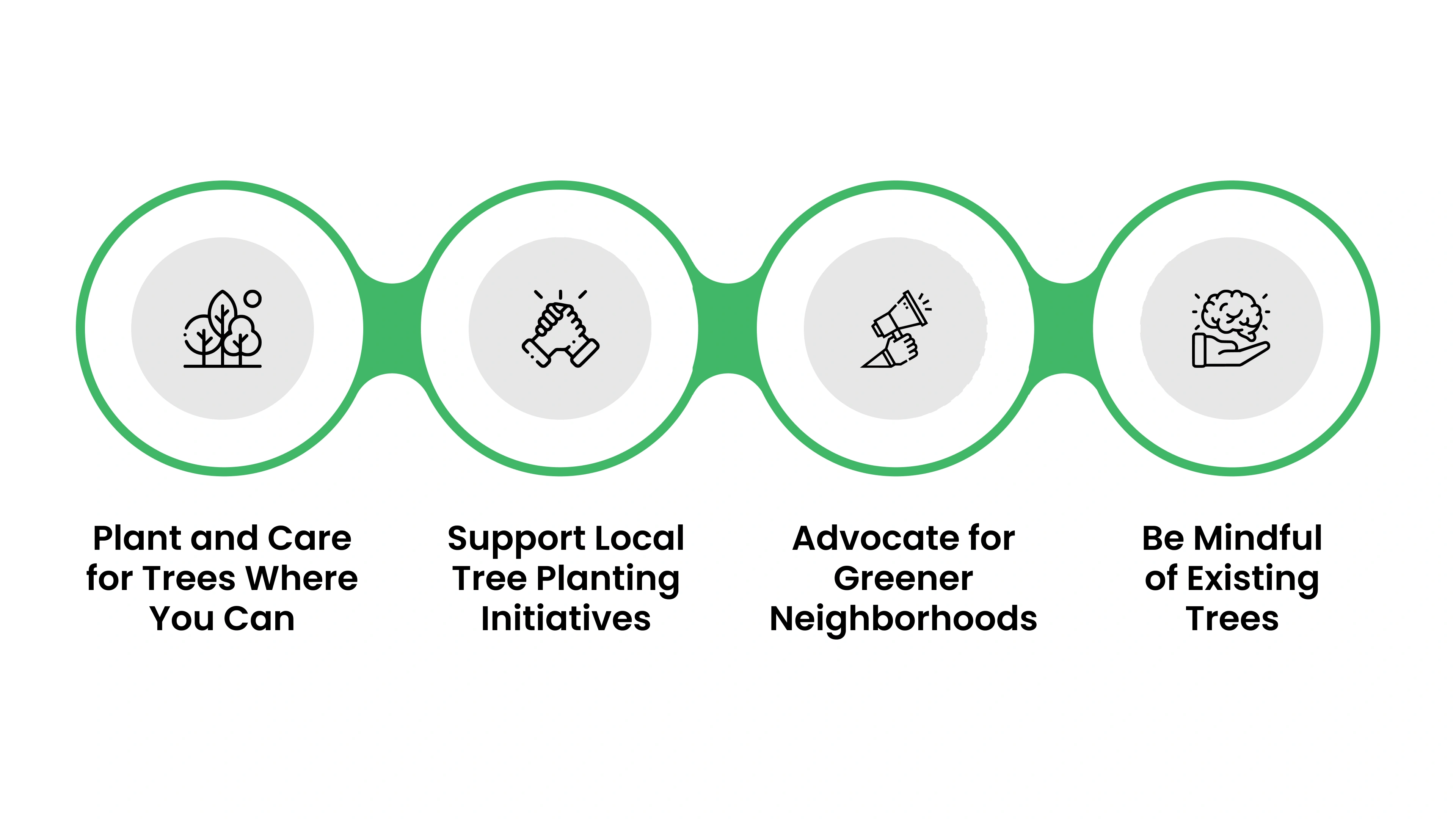
Urban forestry isn’t just shaped by policies or large-scale programs. Everyday actions also play a role in how green and livable a city becomes over time. Here are a few ways you can contribute:
Plant and Care for Trees Where You Can
If you have access to space, planting a tree is one of the most direct ways to contribute. Even a single tree adds shade, improves air quality, and supports the surrounding environment as it grows. Just as important is ongoing care. Watering, pruning, and protecting trees in their early years ensures they survive long enough to deliver long-term benefits.
Support Local Tree Planting Initiatives
Not everyone has the space to plant trees, but that doesn’t limit your impact. Many communities run tree planting and maintenance programs that rely on volunteers or funding. Supporting these efforts, whether through participation or contribution, helps expand tree cover in areas that need it the most.
Advocate for Greener Neighborhoods
Urban forestry often depends on local awareness and demand. Paying attention to what’s happening in your area and speaking up for more tree cover can influence community-level decisions. Whether it’s requesting more street trees or supporting green initiatives, consistent advocacy helps move these efforts forward.
Be Mindful of Existing Trees
Contribution isn’t always about adding more. Protecting what’s already there matters just as much. Avoiding unnecessary removal, supporting proper maintenance, and respecting existing green spaces all help preserve the benefits trees already provide. Long-term impact often comes from sustained care, not just new planting.
Make Urban Forestry Work for Your City With Plantd
Understanding urban forestry is the first step, but real change happens when awareness turns into action.
Plantd makes it easy to contribute to verified tree planting and reforestation projects that strengthen urban forests, restore ecosystems, and deliver lasting environmental impact in the communities that need it most. Choose how you want to get involved:
With transparent tracking, verified projects, and a focus on long-term ecosystem restoration, Plantd ensures your contribution doesn’t just feel good; it actually makes a difference.