
What Is Deforestation and How Does It Contribute to Climate Change?
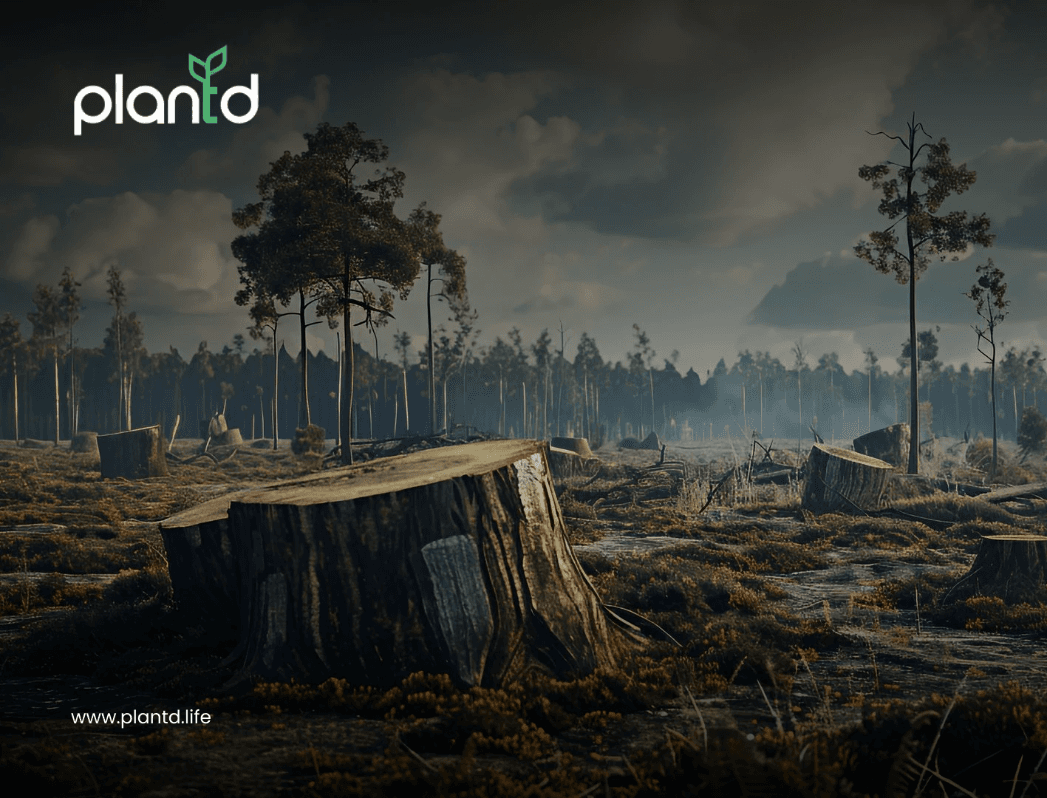
Forests quietly perform some of the most critical climate work on Earth. They lock away carbon, regulate local weather, support rainfall patterns, and give countless species a place to live. However, every minute, more trees are cut down or lost to development, depleting one of our strongest natural defenses against global warming.
In fact, deforestation accounts for about 11% of global greenhouse gas emissions, a share comparable to emissions from the entire transportation sector.
That percentage reflects the release of carbon that had been stored for decades or centuries. It reflects disrupted water cycles, weakened ecosystems, and increased vulnerability to extreme heat and drought. And it shows how decisions made on millions of acres of land directly influence the temperature of the atmosphere we all share.
Deforestation is often discussed as a distant problem, but its impacts affect agriculture, weather, biodiversity, and human livelihoods worldwide. In this blog, we’ll break down what deforestation is, how it works, how it contributes to climate change, and why protecting forests remains one of the most effective steps we can take to limit global warming.
What Is Deforestation and How Does It Happen?
Deforestation refers to the large-scale clearing of forests, usually driven by human activity. In many cases, land is cleared to make room for agriculture, grazing, mining, timber harvesting, or new development. Forests can also be lost to wildfires, drought, and storms, especially as climate change intensifies these events.
In reality, forest loss happens in stages rather than all at once. It often begins with small changes that weaken an ecosystem long before the final trees are removed. Common steps in this process include:
-
Selective logging or timber extraction, which reduces canopy cover and opens the forest to further access
-
Road construction, allowing vehicles, machinery, and settlement expansion into previously remote areas
-
Forest degradation, where repeated disturbance lowers biodiversity and weakens tree health
-
Conversion to agricultural or industrial use, preventing natural regrowth
-
Long-term land development, such as housing or infrastructure, that permanently replaces forest cover
After trees are removed and land is converted, returning the area to its original condition is difficult. Even when reforestation begins, it can take decades for a recovering forest to regain the biodiversity and carbon storage that mature forests provide.
The Scale of Global Forest Loss
The world’s total forest area is estimated at 4.06 billion hectares, which amounts to roughly 5,000 square meters of forest per person. While this may sound substantial, that figure reflects centuries of decline due to land conversion for agriculture, timber, and development. Without meaningful changes, projections suggest that forests could face severe decline within the next century, particularly in regions under pressure from expanding land use and climate-related disturbances.
Where Forest Loss Hits Hardest
Some ecosystems experience forest loss more rapidly than others due to climate, economic activity, and land-use patterns.
-
Tropical rainforests in South America and Southeast Asia face heavy clearing for cattle ranching, soy cultivation, and palm oil plantations.
-
Boreal forests in regions like Canada and Russia experience extensive logging and are increasingly affected by wildfires linked to warming temperatures.
-
Forests in Central and West Africa face significant agricultural expansion and fuelwood demand driven by population growth and limited access to alternative energy.
These regional differences show that forest loss does not occur uniformly. Local drivers and global markets are determining where and how deforestation unfolds.
How Deforestation Affects Global Climate Systems
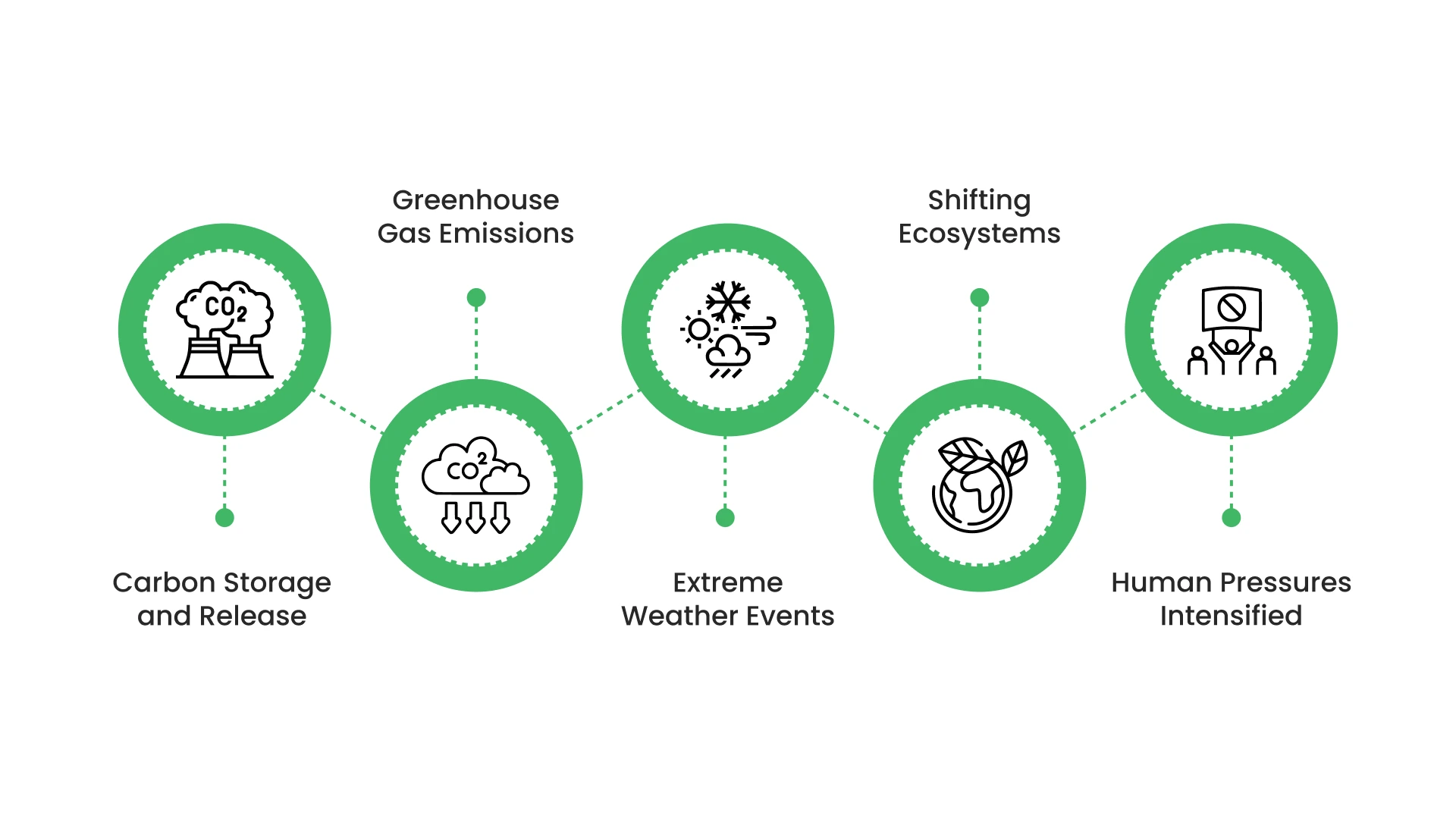
Forests act as significant carbon sinks and help regulate global climate patterns. When they are cleared or degraded, the processes that store carbon and stabilize local weather systems are disrupted. As a result, deforestation contributes to both rising greenhouse gas emissions and conditions that make forests more vulnerable in the future.
Carbon Storage and Release
Mature forests store large amounts of carbon in their trunks, branches, roots, and soils. When trees are cut down or burned, that stored carbon is released into the atmosphere as carbon dioxide.
Research shows that a single mature tree can absorb around 48 pounds of CO₂ each year, so clearing thousands or millions of trees quickly adds up. Once a forest is removed, the land often loses its capacity to absorb carbon at the same rate, making the climate impact long-lasting.
Greenhouse Gas Emissions
Deforestation and forest degradation account for roughly 25 percent of human-caused greenhouse gas emissions. To put this into perspective, global transportation emissions fall in a similar range.
This comparison illustrates that forest loss is not a marginal contributor; it is a significant source of emissions that must be addressed alongside energy and transportation if warming is to be slowed.
Extreme Weather Events
As the climate warms, forests become more exposed to wildfires, storms, heat waves, and prolonged droughts. These events can destroy vast areas of forest faster than they can regenerate. Once weakened, forests are less able to recover and more likely to experience further loss, creating a cycle that intensifies both deforestation and climate stress.
Shifting Ecosystems
Changes in temperature and rainfall patterns affect tree growth, soil moisture, and habitat conditions. Higher heat and reduced rainfall can weaken trees and make them more susceptible to insects, pests, and disease outbreaks. This stress reduces the forest’s ability to store carbon and increases mortality rates, contributing further to emissions.
Human Pressures Intensified
Climate change also affects the human systems that rely on forests. Rising temperatures can reduce agricultural yields, prompting land conversion to create new farmland. In regions where livelihoods depend heavily on natural resources, this pressure can accelerate clearing and deepen the link between climate change and deforestation.
Major Causes of Global Deforestation
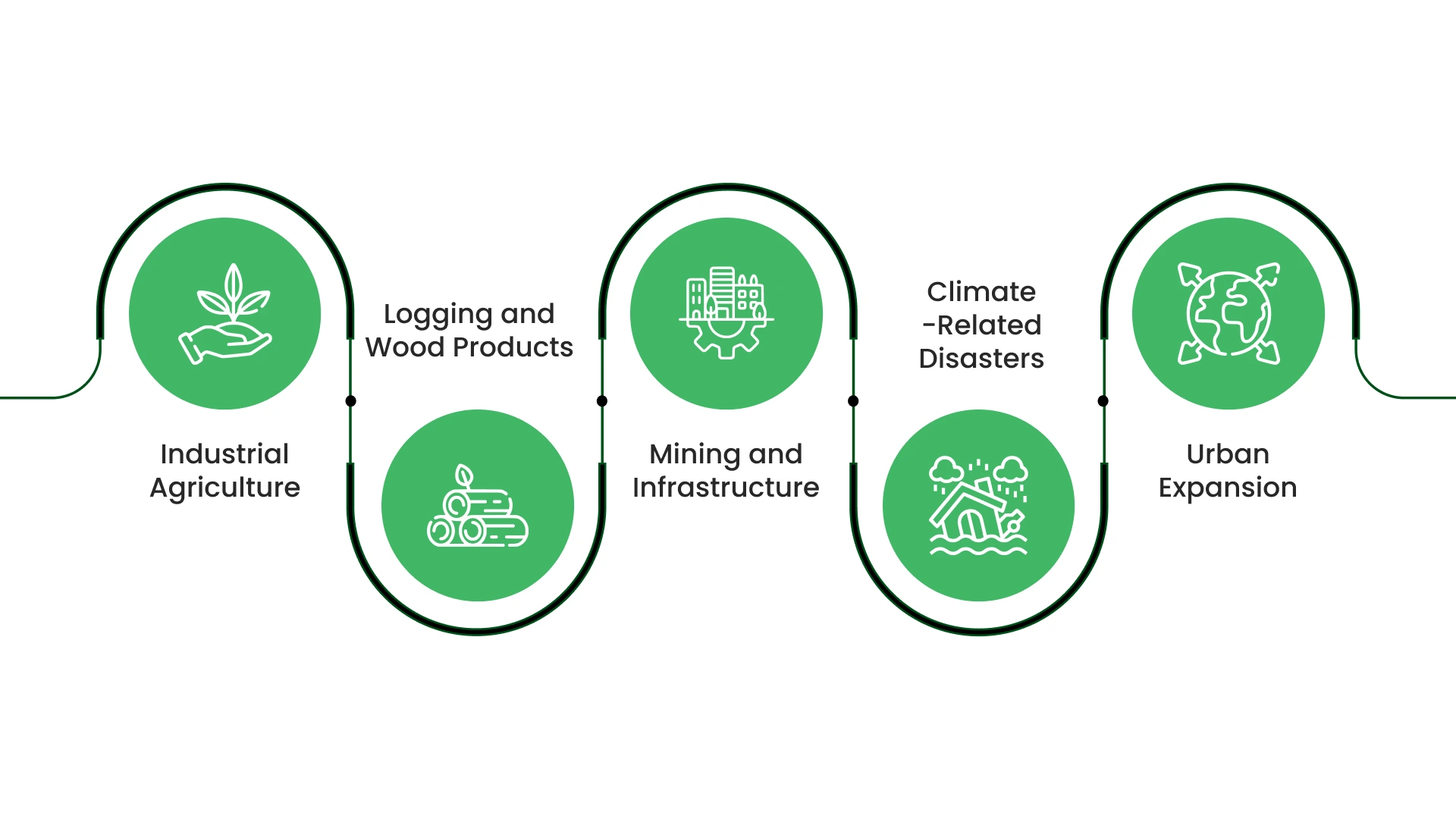
A combination of economic, environmental, and social pressures drives deforestation. While the specific causes vary by region, several major activities consistently account for most of the forest loss worldwide.
Industrial Agriculture
Industrial agriculture is the most significant driver of deforestation globally. Large areas of land are cleared for cattle ranching, soy cultivation for livestock feed, and palm oil plantations. These operations supply global food and commodity markets, and demand for meat and processed products increases the pressure on forested regions, particularly in tropical areas.
Logging and Wood Products
Demand for wood products contributes to both legal and illegal logging. Timber is harvested for construction, furniture, fuel, and paper, while pulp and packaging industries clear vast areas of forest for industrial plantations. In some regions, unsustainable logging practices worsen forest degradation and make it easier for areas to be converted to other uses later.
Mining and Infrastructure
Mining for metals, minerals, and fossil fuels often requires road building and land clearing. Once access roads are established, remote forests become more vulnerable to settlement and further clearing. Infrastructure projects such as highways, pipelines, and dams also reshape landscapes and open new zones for development.
Climate-Related Disasters
Wildfires, droughts, and severe storms can rapidly destroy forests. As temperatures rise, these events become more frequent and intense, making forests less resilient and accelerating loss. While natural disasters are not always the original cause of deforestation, they compound human-driven pressures by weakening ecosystems and delaying recovery.
Urban Expansion
Growing populations and expanding cities lead to increased demand for housing, transportation, and commercial development. As urban areas expand, forests on the outskirts of cities are converted into built environments. This expansion is often permanent, limiting opportunities for reforestation or natural regeneration.
How Can We Combat Deforestation
Deforestation is driven by global markets, land-use decisions, and economic pressures, but practical solutions exist. Protecting forests and restoring degraded areas requires cooperation between governments, businesses, communities, and individuals. These approaches help reduce pressure on forests and support long-term conservation:
-
Policy enforcement: Strengthen legal frameworks and ensure land-use laws are applied consistently to prevent illegal clearing
-
Responsible supply chains: Encourage companies to adopt zero-deforestation commitments and monitor their sourcing practices
-
Indigenous land rights: Support community stewardship because Indigenous-managed forests often experience lower rates of deforestation
-
Sustainable products: Choose certified wood, sustainable palm oil, and ethical cocoa to reduce demand for goods linked to forest loss
-
Lower meat consumption: Reduce reliance on beef and livestock products, which drive large-scale land clearing for pasture and feed crops
-
Reforestation and restoration: Invest in projects that rebuild canopy cover, strengthen soils, and restore ecosystem services
-
Targeted advocacy: Participate in campaigns that protect high-risk forests and urge industries to adopt sustainable practices
-
Informed consumer choices: Research brands, read labels, and avoid products tied to deforestation pressures
These solutions help reduce the drivers of forest loss and support climate resilience by protecting ecosystems that store carbon, regulate water, and provide habitat.
Plant Trees and Support Forest Conservation with Plantd
Understanding how deforestation drives climate change highlights the urgency of protecting the forests we still have and restoring those that have been lost. Forests absorb carbon, stabilize soil, support biodiversity, and regulate water systems. Plantd gives individuals and organizations a simple way to participate in that effort.
Plantd focuses on reforestation and forest restoration projects that strengthen ecosystems and support long-term climate resilience. These projects rebuild canopy cover, help restore degraded land, and support communities that rely on forests for their livelihoods.
Each action contributes to healthier forests, lower emissions, and stronger ecosystems. Planting trees is not a replacement for protecting primary forests, but it remains a vital step toward restoring degraded areas and supporting future forests.
Take a step toward climate action. Plant trees and support forest conservation with Plantd.