
How Does Agroforestry Support Sustainable Farming and Land Use?
Modern agriculture is under growing pressure to produce more food without further degrading the land it depends on. According to a land report, human activity has already altered more than 70 percent of the Earth’s land surface, largely through farming, deforestation, and development. This level of change has placed growing pressure on soils, water systems, and ecosystems that support both people and wildlife.
Agroforestry offers a practical way forward. By integrating trees into agricultural systems, this approach supports food production while helping restore soil health, stabilize water cycles, and strengthen resilience to climate stress. Rather than separating farming and forests, agroforestry connects them in ways that benefit both land and livelihoods.
In this blog, we’ll discuss what agroforestry is, how it works in practice, and why it has become an increasingly important approach to sustainable farming and land use today.
What Is Agroforestry?
Agroforestry is a land-use approach that intentionally combines trees with crops and or livestock on the same area of land. Rather than separating agriculture and forests into different spaces, agroforestry brings them together in ways that support long-term productivity and environmental health. The concept is widely recognized by international organizations such as the UN Food and Agriculture Organization as a practical system for sustainable land management.
At its core, agroforestry treats trees as an active part of farming systems, not as obstacles to food production. Trees may be planted alongside crops, integrated into grazing areas, or managed within existing forested land where food or other agricultural products are grown. Each system is designed to suit local conditions, including climate, soil type, water availability, and community needs.
Major Characteristics of Agroforestry
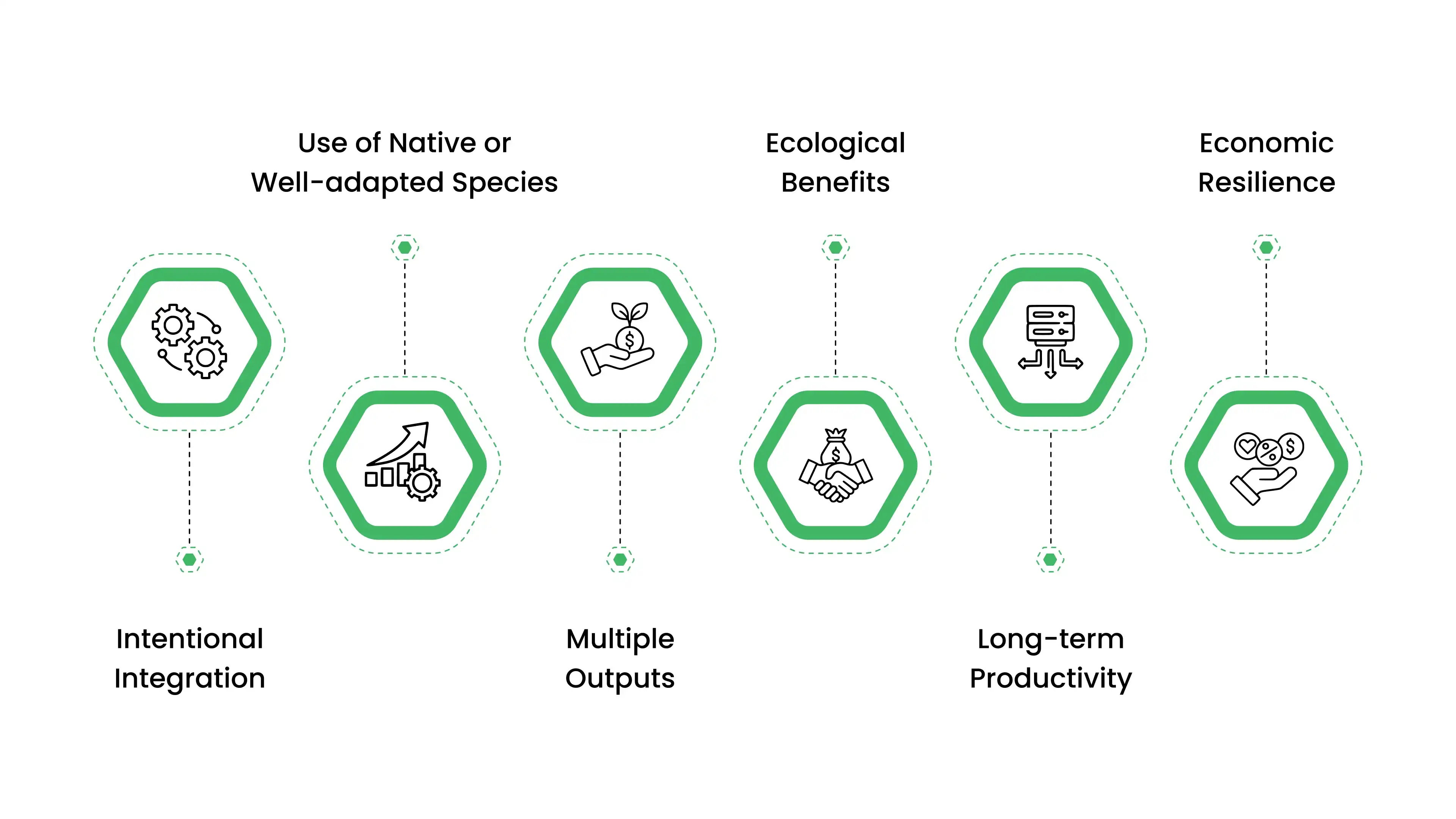
Agroforestry systems share several defining features that set them apart from conventional agriculture:
-
Intentional Integration: Trees, crops, and sometimes animals are planned and managed together rather than existing separately
-
Use of Native or Well-adapted Species: Tree species are selected based on their suitability to local environmental conditions
-
Multiple Outputs: Systems are created to produce food, timber, fuel, fodder, or other products at the same time
-
Ecological Benefits: Trees improve soil structure, support biodiversity, regulate water flow, and store carbon
-
Long-term Productivity: Agroforestry focuses on sustained yields rather than short-term gains
-
Economic Resilience: Diversified production helps farmers reduce risk and stabilize income
By blending agriculture with tree-based systems, agroforestry creates landscapes that are productive, resilient, and better aligned with natural processes. This approach supports both food security and environmental restoration, making it an increasingly important part of sustainable land use strategies.
How Does Agroforestry Work in Practice?
Agroforestry is applied in many different ways, but all systems are built around intentional design. Trees are placed where they support agricultural production while strengthening the surrounding environment. The goal is to create working landscapes where food production and ecological health reinforce one another rather than compete.
Integrating Trees Into Agricultural Systems
In many agroforestry systems, trees are planted directly among crops or incorporated into grazing areas. Their placement is planned, so they contribute useful functions without limiting yields.
Trees in these systems may serve multiple roles, including:
-
Food production: Fruit, nut, and spice trees provide additional harvests
-
Shade: Canopy cover protects crops and livestock from heat stress
-
Timber and fuel: Long-term wood products offer future income
-
Ecological support: Trees improve soil structure, enhance nutrient cycling, and provide habitat for beneficial insects
When integrated thoughtfully, trees help stabilize microclimates, reduce erosion, and improve overall farm resilience.
Producing Crops Within Forest Systems
Agroforestry can also involve growing crops within existing forests rather than clearing them. This approach maintains much of the forest canopy while allowing farmers to cultivate specialty crops beneath it.
Forest-based systems strike a balance between production and conservation. Canopy density is managed to provide appropriate light levels while preserving biodiversity and ecological functions. Crops such as fruits, mushrooms, medicinal plants, and other understory species thrive under these conditions.
Benefits of Agroforestry Systems
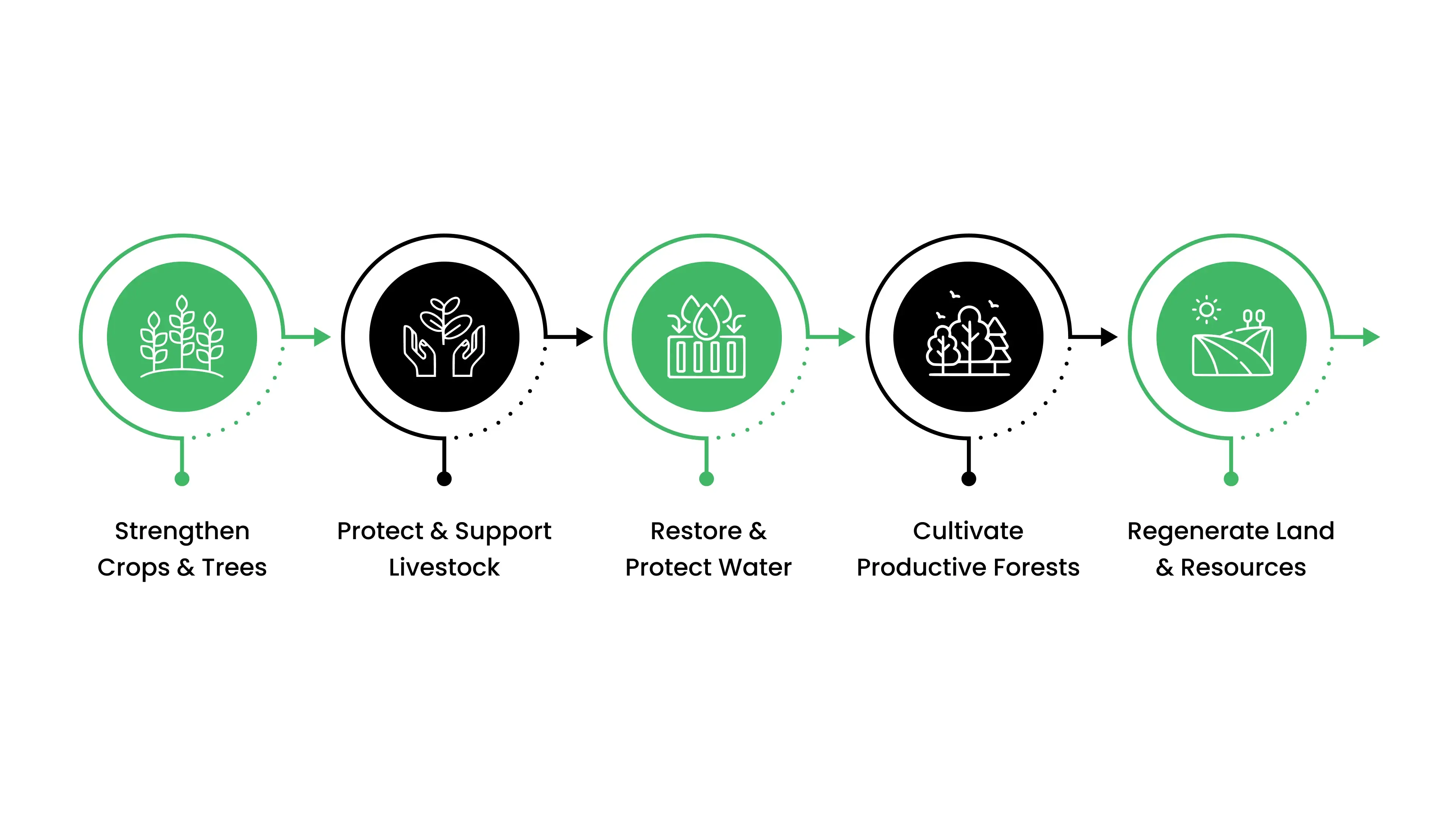
Agroforestry systems deliver multiple benefits at the same time by aligning agricultural production with ecological processes. Each benefit builds on how trees interact with crops, livestock, soil, and water, creating systems that are productive and resilient over the long term.
Strengthen Crops & Trees
Agroforestry encourages biodiversity rather than suppressing it. A mix of trees, crops, insects, and microorganisms creates balanced systems where natural relationships do much of the work.
Greater plant diversity supports pollinators and natural pest predators, which helps protect crops without heavy reliance on chemical inputs. When trees are planted alongside crops such as coffee and cacao, leaf litter improves soil fertility while shade moderates temperature and moisture. In return, healthy crops support tree growth by maintaining living soils and stable growing conditions.
Protect & Support Livestock
When trees are integrated into grazing areas, they improve conditions for livestock in practical ways. Shade lowers temperatures and reduces heat stress, which can affect animal health and productivity. Trees also provide protection from wind and heavy rainfall, helping animals conserve energy.
In well-managed systems, trees may offer additional food sources such as fodder or fallen fruit. Livestock, when carefully integrated, contribute to nutrient cycling through manure while benefiting from more comfortable and stable environments.
Restore & Protect Water
Trees planted along rivers, streams, and waterways play a critical role in protecting water systems. These riparian zones act as natural buffers between farmland and water bodies.
Roots stabilize stream banks, reducing erosion and sediment loss. Vegetation filters runoff before it enters waterways, helping trap nutrients and debris that would otherwise degrade water quality. Shaded water stays cooler, supporting aquatic life and improving conditions for downstream ecosystems.
Cultivate Productive Forests
Forest farming allows producers to grow crops beneath an existing forest canopy while keeping the forest intact. This approach focuses on cultivating species that thrive in shaded conditions.
Common forest-farmed products include:
-
Fruits and nuts
-
Mushrooms
-
Medicinal and culinary herbs
By managing light levels and understory conditions, farmers can harvest valuable products while maintaining forest structure, biodiversity, and long-term ecosystem health. This diversification provides additional income without clearing trees.
Regenerate Land & Resources
Agroforestry represents a shift away from extractive land-use practices toward systems that rebuild natural resources over time. Instead of exhausting soil and water supplies, these systems restore them.
Trees improve soil structure, increase organic matter, and enhance water retention. Over time, this leads to more reliable yields and reduced vulnerability to drought. By making farmland productive and resilient, agroforestry reduces pressure to clear remaining primary forests and supports land use that benefits both people and ecosystems.
Agroforestry and Community Resilience
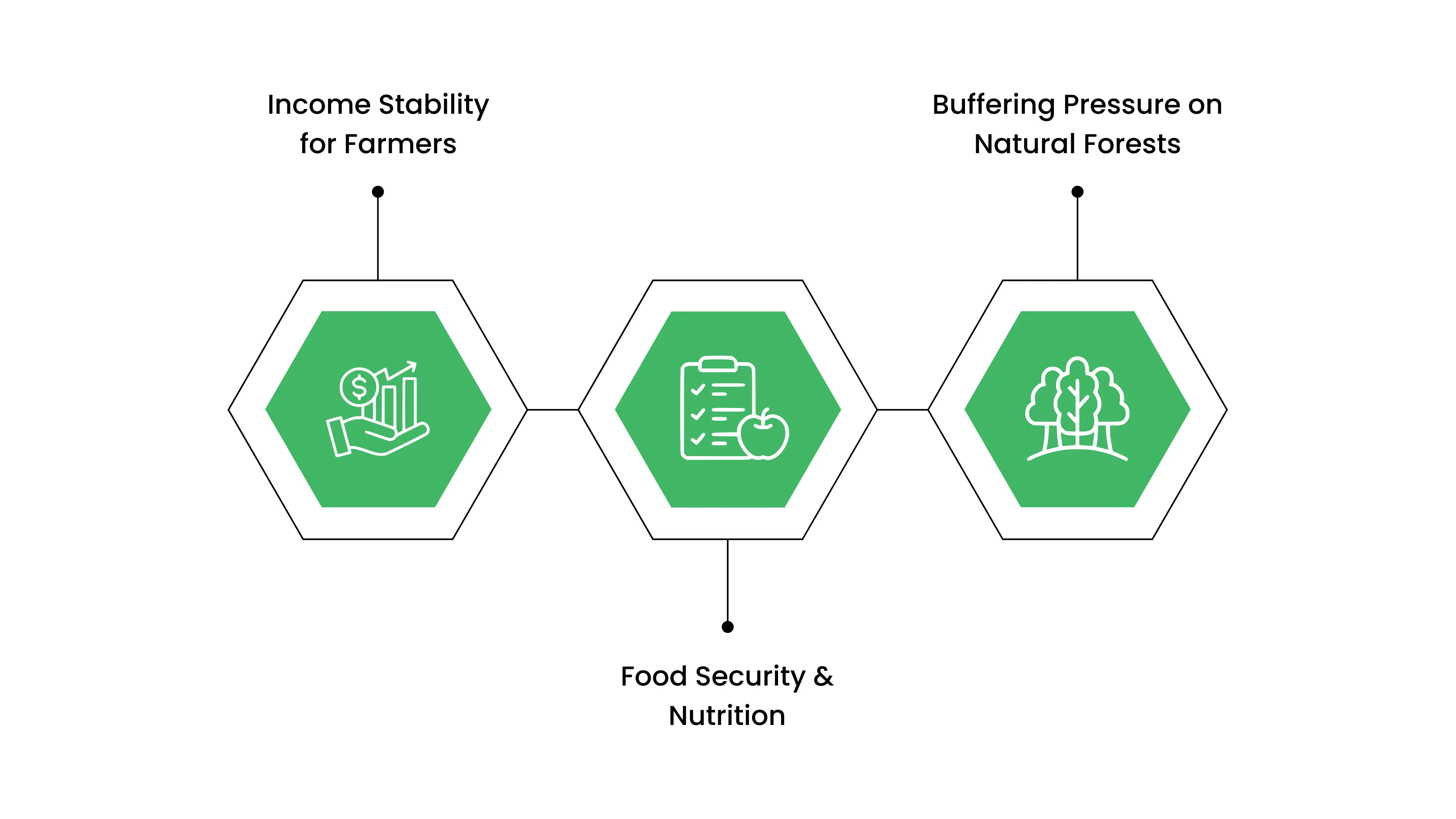
Agroforestry systems strengthen communities by supporting livelihoods alongside healthy ecosystems. When farms produce more than a single crop and remain productive over time, households and local economies are better equipped to handle environmental and economic change.
Income Stability for Farmers
Agroforestry creates multiple income streams within the same piece of land. Trees can produce fruits, nuts, timber, fuelwood, or other products while crops continue to grow beneath or between them. This diversification reduces financial risk by spreading income across different products and seasons.
Seasonal variation in harvests helps smooth income throughout the year rather than concentrating earnings into a single growing period. When one crop underperforms due to weather or pests, other products can help offset losses.
Food Security & Nutrition
By growing a wider range of crops, agroforestry improves access to nutritious food at the household and community level. Fruits, nuts, and diverse staple crops supplement diets and reduce dependence on external food sources.
Local food production strengthens resilience during supply disruptions and supports more stable access to essential nutrients. Over time, this diversity contributes to healthier diets and improved nutrition outcomes, particularly in rural areas.
Buffering Pressure on Natural Forests
Productive agroforestry systems reduce the need to clear or harvest nearby natural forests. When farmland provides food, fuel, and income, communities are less reliant on extracting resources from primary forests.
This buffering effect supports conservation by allowing forests to remain intact while still meeting human needs. In this way, agroforestry helps balance agricultural productivity with long-term forest protection.
How Are Agroforestry Principles Put Into Practice?
Agroforestry principles take shape through systems planned for local conditions and long-term land health. Soil quality, water availability, crop selection, and community needs are considered together to support productive farming alongside gradual land recovery. When implemented thoughtfully, tree-based systems strengthen growing conditions over time and reduce pressure on surrounding forests.
Plantd helps turn these principles into action by supporting agroforestry projects built for long-term impact and local resilience.
Build Lasting Agroforestry Systems with Plantd
Agroforestry shows that farming and restoration need not be at odds. When trees are integrated into agricultural systems, land stays productive while soil, water, and biodiversity recover over time. These systems support farmers, strengthen communities, and reduce pressure on natural forests, which are critical to climate stability.
Plantd supports agroforestry and restoration projects shaped by local conditions and focused on lasting outcomes. These projects focus on planting the right trees in the right places, helping communities build resilient food systems while restoring degraded land.
Every contribution helps create farming systems that work with nature rather than against it. Support agroforestry with Plantd and be part of a more resilient future for people and the land they depend on.