
Top 10 Ways Individuals Can Help Prevent Climate Change Today

Climate change often feels like a problem too immense for one person to influence. The scale is global, the causes are complex, and the impacts can feel distant. Yet, the global crisis is ultimately the sum of our individual footprints. Every choice we make adds up to more speed and power than most realize.
To limit the worst climate impacts, research shows we must reduce global emissions by nearly 45% by 2030. While that timeline is urgent, it also confirms that the ability to change our trajectory depends on the present. Reaching net zero is not just a policy goal; it is a cumulative result of how we live.
From the energy in our homes to our daily transportation and consumption habits, individual actions are the primary drivers of atmospheric change. When these patterns shift across millions of people, the impact becomes transformative.
In this blog, we’ll walk through ten realistic ways individuals can help prevent climate change today, focusing on steps that are achievable, measurable, and proven to make a difference.
10 Simple Ways To Prevent Climate Change
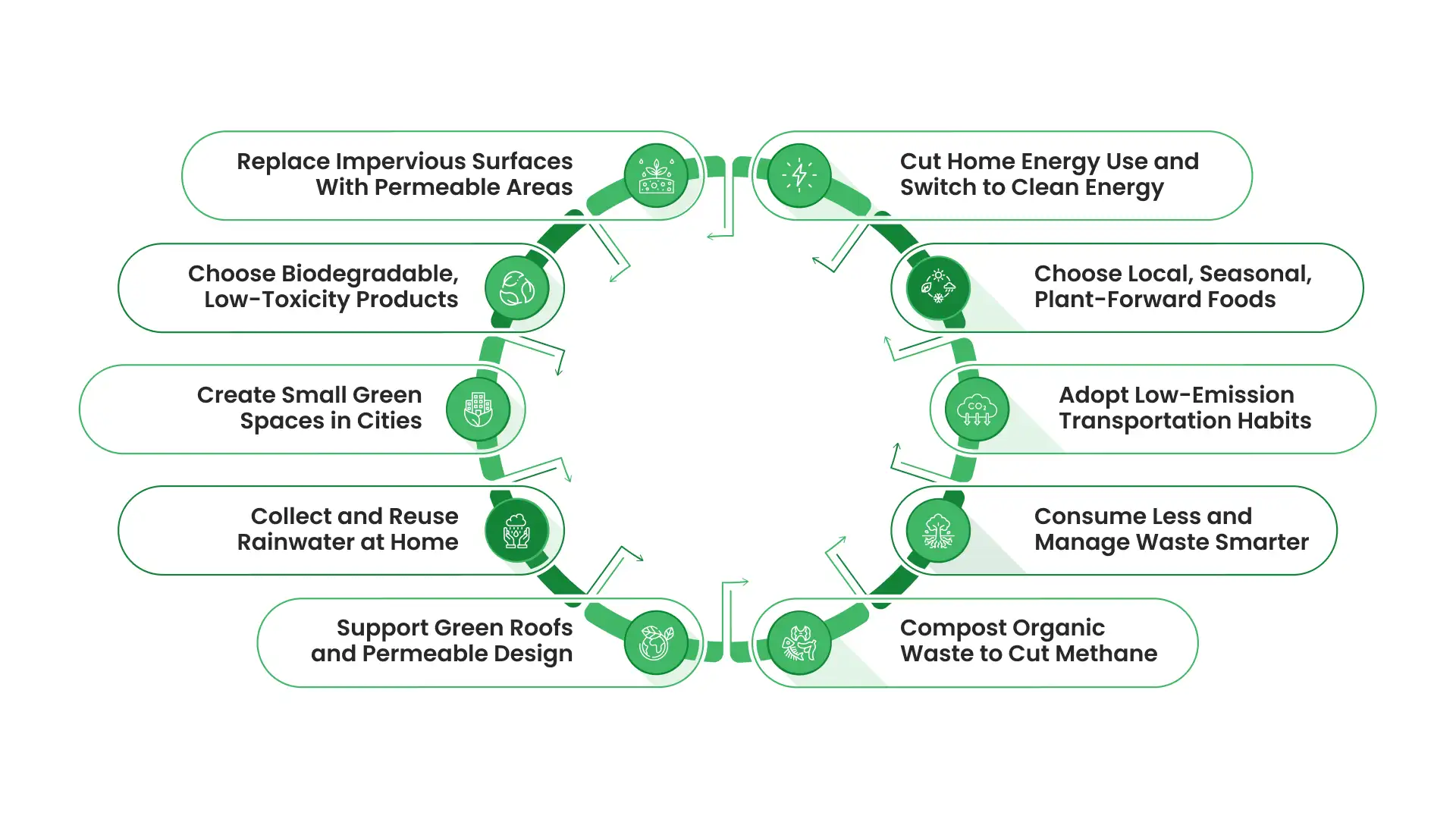
While large-scale solutions matter, individual behavior remains vital for reducing emissions and protecting natural systems.
Below are 10 simple ways individuals can help prevent climate change, starting today.
1. Cut Home Energy Use and Switch to Clean Energy
Homes account for a significant share of everyday emissions, mainly through electricity use, heating, and cooling. Cutting energy use at home is one of the fastest ways individuals can lower their carbon footprint, and it often comes with lower utility bills as a bonus.
Start with simple habits. Turn off lights and electronics when they are not in use. Choose LED bulbs and energy-efficient appliances, and adjust thermostats a few degrees rather than running heating or air conditioning continuously. Sealing drafts, adding insulation, and using natural light where possible all reduce the amount of energy a home needs to stay comfortable.
Beyond using less energy, switching the source of that energy matters just as much. Many utility providers now offer renewable electricity options, allowing households to choose power generated through wind or solar. For homeowners, installing rooftop solar can further reduce reliance on fossil fuels over time.
2. Choose Local, Seasonal, Plant-Forward Foods
What you eat and where it comes from have a direct impact on climate change. Food often travels long distances before reaching your plate, requiring energy for processing, packaging, refrigeration, and transportation. The longer the food chain, the higher the emissions per meal.
Shortening your food chain starts with choosing foods produced closer to home. Buying local and seasonal produce reduces the fuel needed to move food across regions and countries. Farmers’ markets, community-supported agriculture programs, and locally sourced grocery options help reduce transport-related emissions.
Diet choices also matter. Meals built around plant-based foods generally require fewer resources and generate fewer greenhouse gases than those centered on animal products. Even small changes, such as reducing meat consumption a few days a week, can make a measurable difference.
3. Adopt Low-Emission Transportation Habits
Transportation is one of the most significant sources of greenhouse gas emissions, especially in places where daily travel depends heavily on personal vehicles. The way people move through their day plays a primary role in climate impact.
Whenever possible, choose options that reduce fuel use. Walking, biking, and public transportation generate far fewer emissions than driving alone. Even replacing a few car trips each week with these alternatives can lower overall emissions and reduce traffic congestion.
For trips that require a car, efficiency matters. Carpooling, combining errands into a single journey, and maintaining proper tire pressure all help reduce fuel consumption. If replacing a vehicle is an option, fuel-efficient or electric models produce significantly fewer emissions over their lifetime.
4. Consume Less and Manage Waste Smarter
Every product we buy carries hidden emissions tied to extraction, manufacturing, transportation, and disposal. Reducing climate impact means looking beyond recycling alone and rethinking how much we consume in the first place.
Start by rethinking purchases. Ask whether an item is truly needed or if an existing product can serve the same purpose. Refusing unnecessary items, especially single-use plastics and excess packaging, prevents waste before it enters the system.
When consumption is unavoidable, focus on reducing overall use and choosing durable products that last longer. Reusing items, whether through repairs, secondhand purchases, or repurposing, reduces emissions associated with new production. Recycling should come last, helping recover materials once other options are exhausted.
These steps may seem small on their own, but practiced consistently, they lower demand for resource-intensive production and significantly reduce emissions over time.
5. Compost Organic Waste to Cut Methane
A large portion of household waste consists of food scraps and other organic material that do not belong in landfills. When organic waste breaks down in landfills, it releases methane, a greenhouse gas far more potent than carbon dioxide over short time periods.
Composting keeps this material out of landfills and turns it into a helpful resource. Food scraps, yard waste, and other organic materials can break down naturally into nutrient-rich compost, improving soil health and supporting plant growth. This process reduces methane emissions while returning valuable nutrients to the ground.
You do not require a large yard or specialized equipment. Small bins, backyard piles, or community compost programs make it accessible in apartments and urban areas as well. By composting regularly, individuals can reduce waste, lower emissions, and contribute to healthier soils that store carbon more effectively.
6. Support Green Roofs and Permeable Design
Rainwater often runs off roofs, driveways, and sidewalks before it has a chance to soak into the ground. That runoff can carry pollutants into storm drains and waterways, and it adds pressure to drainage systems during heavy rainfall. Capturing rainwater helps reduce these impacts while conserving a valuable resource.
Simple systems, such as rain barrels or cisterns, collect water from rooftops and store it for later use. This water can be used for gardening, landscaping, or outdoor cleaning, reducing the demand for treated municipal water. Using rainwater also reduces the energy required to pump, treat, and distribute drinking water, helping cut emissions.
Capturing rainwater supports healthier local water cycles by slowing runoff and allowing more water to be reused on-site. When practiced widely, it reduces flooding risk, protects water quality, and makes better use of rainfall that would otherwise be wasted.
7. Collect and Reuse Rainwater at Home
In many cities, rain has nowhere to go but into storm drains. Rooftops, roads, and sidewalks prevent water from infiltrating the ground, increasing runoff and flooding risk. Green roofs help solve this problem by allowing buildings to absorb and manage rainwater where it falls.
A green roof uses vegetation and soil layers to hold rainwater and release it slowly over time. This reduces the volume of runoff entering storm systems, especially in areas where adding permeable ground space is limited or not possible. To put the impact into perspective, a roof measuring about 1,000 square feet can shed more than 600 gallons of water during just one inch of rainfall. Capturing even a portion of that water makes a meaningful difference.
Beyond stormwater control, green roofs improve insulation, reduce building energy use, and support urban biodiversity. Whether through advocating for green roof policies, supporting building upgrades, or choosing them in new developments, individuals can help reduce emissions and protect local water systems at the same time.
8. Create Small Green Spaces in Cities
Parklets turn small, underused spaces into green areas that support climate-friendly living. These spaces often replace a few parking spots or sections of pavement with plants, seating, and permeable surfaces. While they may look small, parklets can make a real difference in dense neighborhoods where green space is limited.
Vegetation in parklets helps absorb rainwater, reduce surface temperatures, and improve local air quality. By replacing hard surfaces with plants and soil, parklets slow runoff and reduce heat buildup, thereby lowering energy demand in surrounding buildings. They also encourage walking, biking, and community use of public space, which can reduce short car trips.
Individuals can support parklets by working with local councils, neighborhood groups, or businesses to propose and maintain them. Even small additions of greenery in urban areas help lower emissions and create more climate-resilient communities when adopted widely.
9. Choose Biodegradable, Low-Toxicity Products
Many everyday household products release harmful chemicals into the air, water, and soil during use and disposal. Cleaners, personal care items, paints, and pesticides often contain compounds that contribute to pollution and require energy-intensive treatment once they enter wastewater systems.
Choosing biodegradable and less toxic alternatives helps reduce these impacts at the source. Products made with simpler, plant-based ingredients break down more easily in the environment and place less strain on water treatment facilities. This lowers emissions linked to chemical processing and reduces the risk of contamination in rivers and groundwater.
Small swaps add up. Using non-toxic cleaners, avoiding synthetic fragrances, and limiting the use of harsh chemicals in gardens or lawns all reduce pollution associated with production and disposal. Over time, these choices support healthier ecosystems while reducing emissions from manufacturing and waste management.
10. Replace Impervious Surfaces With Permeable Areas
Hard surfaces like driveways, patios, and sidewalks prevent water from soaking into the ground. When rain can’t absorb naturally, it runs off quickly, carrying pollutants such as oil, fertilizers, and debris into storm drains and nearby waterways. Reducing impervious surfaces helps keep more water on site and less pollution in local water systems.
Impervious cover also increases the volume and speed of stormwater runoff, which can contribute to downstream flooding and erosion. Replacing even small sections of these surfaces with materials that allow water to pass through can noticeably improve drainage and infiltration.
Replace sections of concrete or asphalt with gravel, grass pavers, or mulch paths. Use permeable paving materials for driveways and walkways. Expand planting beds or lawn areas to replace paved sections. Add rain gardens or shallow planted areas where runoff naturally collects.
Reducing impervious surface on your property supports healthier water cycles, lowers pollutant loads entering waterways, and helps communities cope with heavier rainfall events as the climate changes.
Plant Trees and Reduce Emissions for a Healthier Climate with Plantd

Learning how individuals can help prevent climate change is an important step. Turning those ideas into action is where real progress begins. Many of the solutions that reduce emissions also strengthen ecosystems, protect water, and support healthier communities. That is where Plantd comes in.
Plantd supports reforestation and ecosystem restoration projects that address climate change at its source. Trees and healthy natural systems absorb carbon, improve air and water quality, and help communities adapt to changing conditions. Each project is grounded in science and focused on long-term environmental benefits.
Every action through Plantd helps reduce emissions, protect ecosystems, and support communities facing climate pressures. Individual choices matter, and when they add up, they drive meaningful change.