
10 Ways Tree Planting Programs Create Lasting Change

Imagine walking through a neighborhood where the summer heat feels softer under the shade of tall trees, the air smells cleaner, and birdsong replaces the hum of traffic. These changes don’t happen overnight, but they often begin with something as simple as a tree planting program.
All over the world, people are picking up shovels with the same mission: to help the planet heal. Whether it’s a tree planting government program in a rural community or a large-scale reforestation project in a fragile ecosystem, planting in the forest or along a city street is about much more than making a place look greener. It’s a practical way to restore ecosystems, protect wildlife, and slow the effects of climate change.
A single tree can make a difference, offering shade, cleaning the air, holding soil in place, and creating a home for countless species. Multiply that by hundreds or thousands through organized tree planting programs, and the impact can reshape entire landscapes. In this blog, next sections, we’ll look at why these programs matter and the many ways they make life better for nature and people.
10 Benefits of Tree Planting Programs
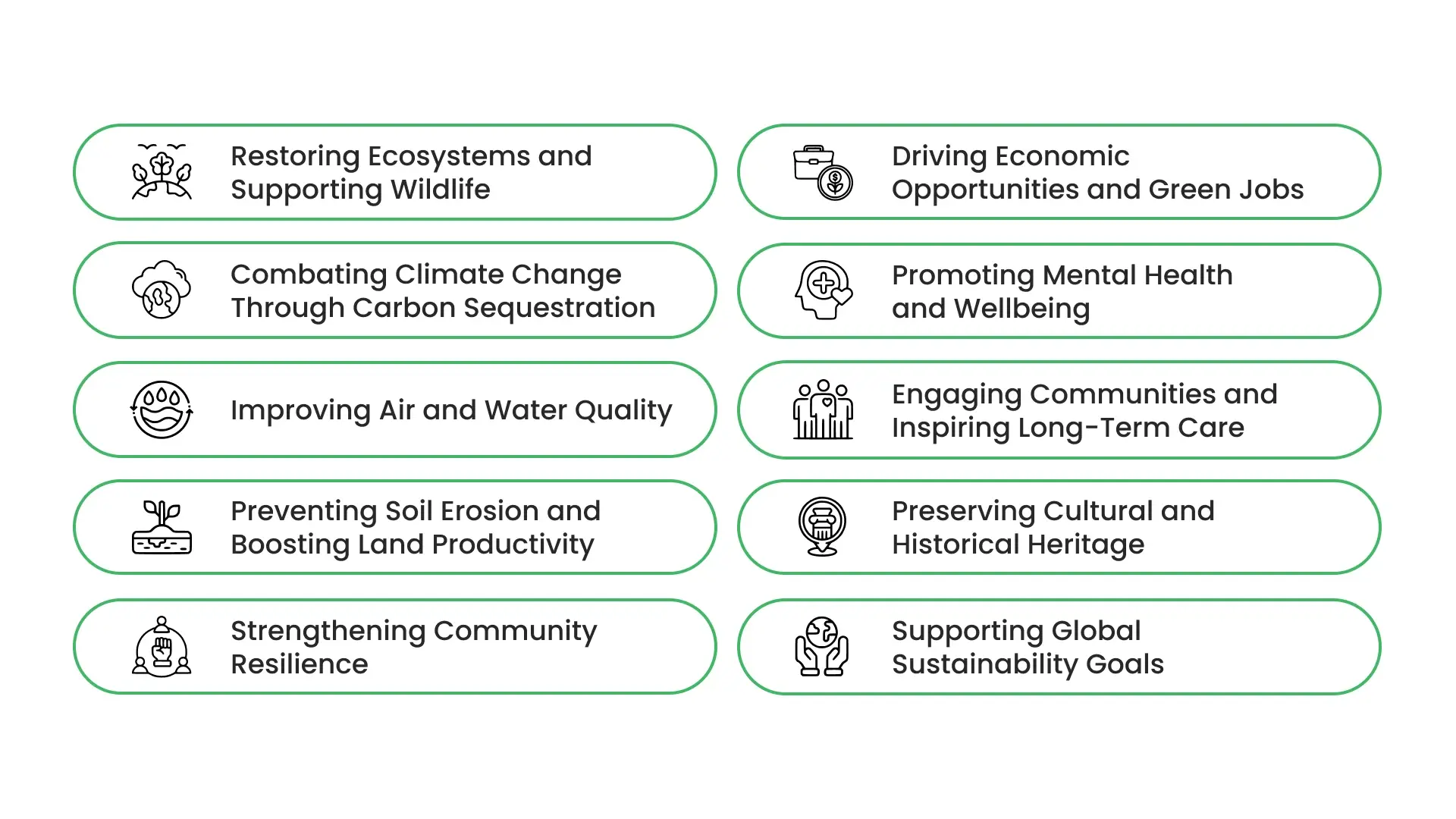
Here are some of the most critical ways tree planting programs make a difference, for the environment, for communities, and for future generations:
1. Restoring Ecosystems and Supporting Wildlife
Healthy forests are the foundation of thriving ecosystems. When trees are planted in degraded or deforested areas, they begin to rebuild the complex web of life that once existed there. Roots stabilize the soil, native plants return, and the habitat becomes suitable again for birds, mammals, insects, and other wildlife.
Reforestation projects are significant in biodiversity hotspots, where even small patches of restored forest can help endangered species survive. Planting in the forest with native species ensures the area supports local wildlife and maintains the natural balance. Over time, these green corridors allow animals to move, feed, and breed safely, strengthening populations that might otherwise decline.
Whether it’s restoring a tropical rainforest in Southeast Asia or revitalizing a wooded park in a city, tree planting programs are a direct investment in the health and resilience of nature. The return is not just measured in acres of green space, but in the revival of entire living systems.
2. Combating Climate Change Through Carbon Sequestration
Trees are among the most effective natural means we have for reducing the amount of carbon dioxide in the atmosphere. Through photosynthesis, they absorb carbon and store it in their trunks, branches, leaves, and roots, locking it away for decades or even centuries. This process, known as carbon sequestration, plays a critical role in slowing the pace of climate change.
Large-scale reforestation projects can offset significant amounts of greenhouse gas emissions, primarily when they focus on planting in the forest with species that are well-suited to the local environment. Even smaller tree planting programs in urban areas make a measurable impact by lowering local carbon levels and improving air quality.
When combined with efforts to protect existing forests, these programs help create a long-term buffer against rising global temperatures. Each tree planted is a small but vital step toward a more stable climate.
3. Improving Air and Water Quality
Trees work quietly but powerfully to clean the air we breathe. Their leaves trap dust, pollen, and other particles while also absorbing harmful gases such as nitrogen dioxide, sulfur dioxide, and carbon monoxide. At the same time, they release oxygen, making the air fresher and healthier for people, wildlife, and entire communities.
Tree planting programs also improve water quality. Roots act like natural filters, slowing rainfall and allowing it to soak into the soil instead of rushing into waterways. This process helps prevent pollutants, sediment, and chemicals from being washed into rivers and lakes. In larger reforestation projects, trees protect watersheds that supply drinking water to towns and cities.
By enhancing both air and water quality, these programs create cleaner, safer environments, benefits that can be felt almost immediately and continue for generations.
4. Preventing Soil Erosion and Boosting Land Productivity
One of the less visible but most important benefits of tree planting programs is their ability to protect and improve soil. Tree roots hold the ground in place, preventing wind and rain from washing away the topsoil. This is especially valuable in areas prone to landslides, floods, or prolonged dry spells.
Healthy soil supports more than just trees. It provides a stable foundation for crops, grasslands, and other plants, which in turn feed livestock and wildlife. In agricultural regions, reforestation projects and planting in the forest help restore land that has been overworked or degraded, allowing it to produce food and raw materials more sustainably.
By stabilizing soil and replenishing its nutrients, trees not only prevent environmental damage but also give communities a more substantial base for farming, forestry, and other land-based livelihoods.
5. Strengthening Community Resilience
Tree planting programs can make communities more resilient to the challenges brought by a changing climate. In urban areas, trees provide shade that lowers temperatures during heat waves, reducing the risk of heat-related illnesses. In rural and coastal regions, forests act as natural barriers, protecting homes and farmland from floods, landslides, and strong winds.
Tree planting government programs often target areas most vulnerable to climate impacts, creating long-term defenses that are far more affordable and sustainable than engineered solutions alone. Restored forests also help regulate local rainfall patterns, reducing the severity of droughts and improving water availability.
By improving living conditions, protecting infrastructure, and safeguarding food and water supplies, these programs help communities adapt and thrive even in the face of environmental uncertainty.
6. Driving Economic Opportunities and Green Jobs
Tree planting programs do more than restore nature; they also create livelihoods. From nursery workers who grow seedlings to crews who plant in the forest, these initiatives open up a range of green jobs. Ongoing maintenance, such as watering, pruning, and monitoring growth, provides steady employment, especially in rural areas where job opportunities can be limited.
Large-scale reforestation projects can also boost local economies by attracting eco-tourism, generating income for communities, and encouraging investment in sustainable industries. Tree planting government programs often include training in forestry and conservation, giving participants valuable skills that can lead to long-term careers.
When designed with local needs in mind, tree planting programs don’t just improve the environment, they support economic stability and give communities a stronger future.
7. Promoting Mental Health and Well-being
Access to green spaces has a direct and positive impact on mental health. Tree planting programs help create these spaces, giving people places to relax, connect with nature, and enjoy time outdoors. Studies have shown that spending time around trees can lower stress levels, improve mood, and even boost concentration.
In cities, where natural landscapes are often limited, planting in the forest is not the only answer; urban tree planting programs can transform empty lots, school grounds, and street corners into calming, welcoming environments. These green areas also encourage social interaction, nurturing a sense of community and belonging.
By improving both physical surroundings and emotional well-being, tree planting programs contribute to healthier, happier communities, making them as much an investment in people as in the planet.
8. Engaging Communities and Inspiring Long-Term Care
Tree planting programs work best when local communities are involved from the start. Participation builds a sense of ownership, which often leads to higher survival rates for the trees and stronger long-term commitment to their care. Planting in the forest or neighborhood green spaces becomes more than a one-day event—it turns into an ongoing relationship between people and the land.
Many reforestation projects and tree planting government programs include educational components, teaching participants about native species, soil health, and the role trees play in the ecosystem. These experiences help people understand that each tree is part of a larger network supporting clean air, healthy water, and thriving wildlife.
By involving residents in every step, from planning to planting to maintenance, these programs inspire future generations to become stewards of the environment, ensuring the benefits last well beyond the initial effort.
9. Preserving Cultural and Historical Heritage
In many regions, trees are more than natural resources. They are part of a community’s cultural identity and history. Tree planting programs can help restore areas that hold traditional, spiritual, or historical value. Whether it is replanting an orchard that has fed generations or restoring a forest tied to local heritage, these efforts protect more than the environment.
Reforestation projects in culturally significant areas often use native species to maintain the authenticity of the site. Planting in the forest with respect for traditional knowledge ensures that the restored land continues to serve both ecological and cultural purposes.
By preserving this heritage, tree planting programs strengthen the bond between people and place, ensuring that important traditions are passed down alongside healthier ecosystems.
10. Supporting Global Sustainability Goals
Tree planting programs contribute directly to many of the United Nations Sustainable Development Goals, from climate action to clean water and sustainable cities. By restoring degraded land through reforestation projects and planting native species in the forest, these initiatives support biodiversity, reduce carbon emissions, and strengthen natural resources that communities rely on.
Tree planting government programs often align their projects with national and global environmental commitments, ensuring that local efforts have an international impact. Even small-scale community planting days can be part of a bigger picture, adding up to meaningful progress toward global sustainability targets.
When people, organizations, and governments work together through coordinated tree planting programs, the result is not just healthier forests but a step forward in building a more sustainable, resilient planet.
Take the First Step Toward a Greener Future with Plantd

If the benefits of tree planting programs have inspired you, Plantd is here to help you take the next step. Whether your goal is to reforest a critical habitat, support community-led planting in the forest, or weave sustainability into your everyday life, we make it easy to turn good intentions into measurable impact.
Every tree you plant through Plantd contributes to reforestation projects that restore ecosystems, protect biodiversity, and create long-term benefits for local communities.
With verified planting partners, transparent impact tracking, and a focus on ecological restoration, Plantd makes it easy to take action that truly matters for biodiversity, for climate, and for future generations.
Rebuild what’s been lost.