
How Planting Trees in the Amazon Rainforest Helps the Planet
When people talk about saving the planet, the Amazon Rainforest always comes up, and for good reason. Spanning nine countries and covering over 2 million square miles, it’s often called the “lungs of the planet”.
The Amazon absorbs billions of tons of carbon dioxide each year, helps regulate global temperatures, and supports more plant and animal species than almost anywhere else on the planet.
Here’s the problem: we’re losing it. Decades of deforestation, illegal logging, agriculture, and wildfires have pushed large portions of the forest to the brink of collapse. Trees are being cut down faster than they can grow back, disrupting weather patterns, harming wildlife, and accelerating climate change.
But there’s still a way to start turning things around, and it begins with planting trees in the rainforest. It is one of the most direct ways to reverse some of that damage by restoring fragile ecosystems, eliminating carbon from the atmosphere, supporting local communities, and restoring balance to a system the planet depends on.
In this blog, we’ll walk through how rainforest tree planting works, what kinds of trees are involved, and why helping the Amazon recover might be one of the smartest things we can do for the future.
What Makes the Amazon Rainforest So Unique?
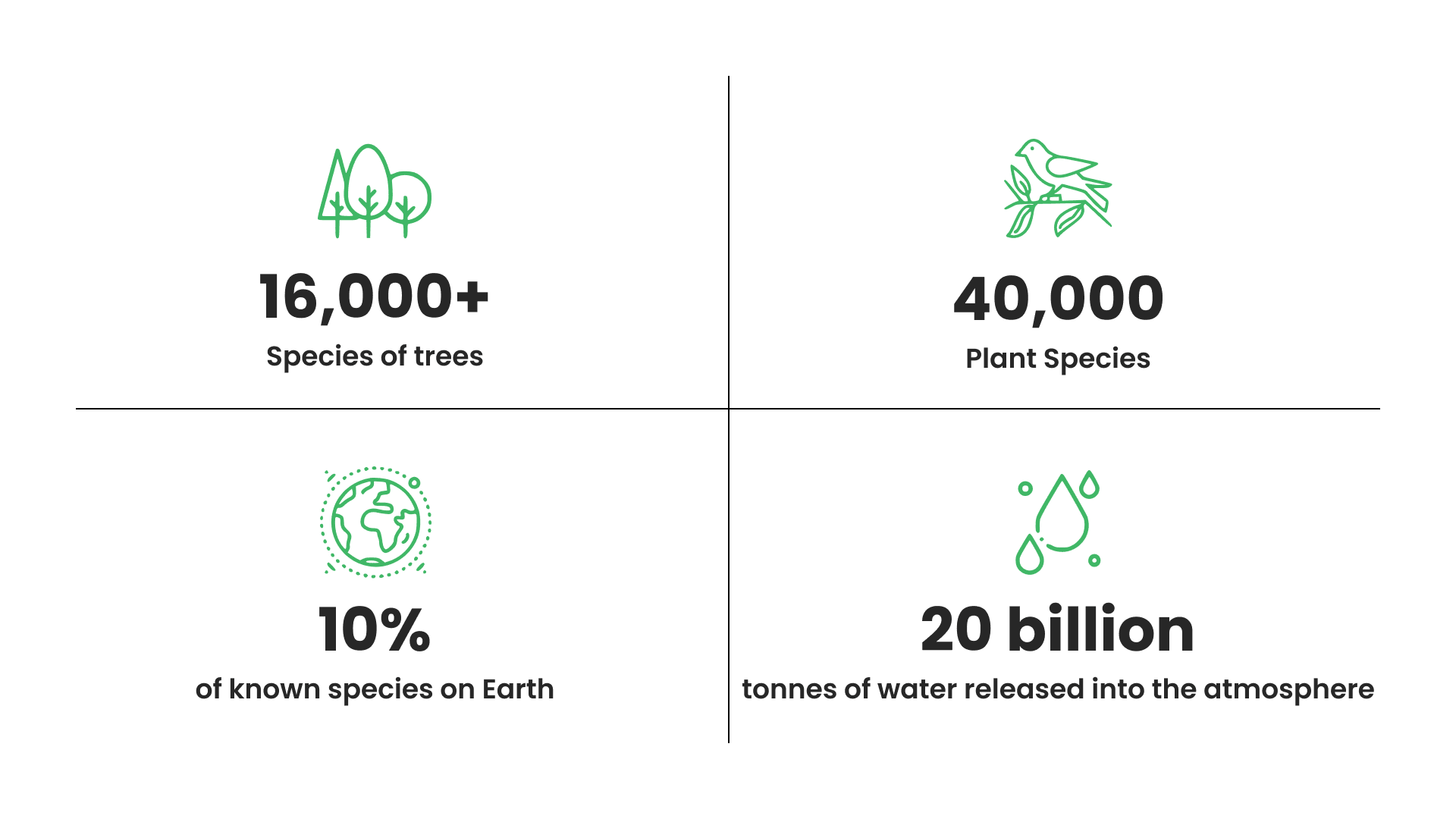
It’s hard to grasp just how rich and complex the Amazon Rainforest is until you start to look closer. Home to more than 16,000 species of trees and over 400 billion individual trees, it’s one of the most biologically diverse places on the planet. From towering canopy giants like the Brazil nut tree to tiny medicinal plants tucked deep within the undergrowth, this forest is alive in ways most of us will never fully see.
The Amazon isn’t just a forest; it’s a vast web of life. You’ll find rare plants in the Amazon Rainforest, vibrant plants from the Amazon River basin, and ecosystems that have evolved over millions of years without external interference.
Scientists estimate the Amazon houses about 10% of all the species known on Earth, and a new plant or animal is discovered in its depths nearly every other day. With around 40,000 plant species, over 2,000 birds, almost 430 mammals, nearly 380 reptiles, plus thousands of insects and amphibians, it’s one of the most biodiverse places in the world.
That’s not all, these forests release an estimated 20 billion tonnes of water into the atmosphere each day, enough to fill roughly ten bathtubs from a single large tree in 24 hours. This also helps regulate rain patterns across South America and beyond, which makes it vital to farming, drinking water, and regional stability.
And while much of the world’s attention focuses on what the Amazon gives us, it’s easy to overlook just how fragile it has become. That’s why planting trees in the rainforest isn’t just about putting trees in the ground. It’s about carefully restoring these native ecosystems with the right trees. And along the way, we uncover countless fun facts about trees that remind us just how extraordinary these ecosystems truly are.
The Impact of Deforestation and Fires
In 2019, thick smoke from fires in the Amazon darkened the skies over São Paulo, more than 2,000 miles away from where the fires were burning. It wasn’t an isolated event. That year alone, tens of thousands of fires swept across the rainforest, many of them set intentionally to clear land. It made global headlines, but this kind of destruction has been happening quietly for decades.
In 2022, Brazil recorded the highest deforestation rates in the Amazon since 2016, just in the first nine months of the year. Most of this clearing was driven by cattle ranching, farming, illegal logging, mining, and road construction. In many areas, forest is cut not just for production, but also for land speculation, cleared and held, waiting to be sold or developed.
Trees are cut, burned, and cleared at a rapid pace to make way for open land. But when you remove tree cover on that scale, it doesn’t just change the local landscape. It changes rainfall patterns, dries out the soil, and increases the risk of future fires.
The consequences ripple outward. When trees are lost, the carbon they’ve stored is released into the atmosphere. At the same time, fewer trees remain to absorb new carbon. This not only accelerates climate change, but also undermines the Amazon’s natural ability to cool the air and produce rain.
Over time, this can tip entire areas of the rainforest into what scientists call a “dieback”—a point at which the forest can no longer sustain itself and begins to turn into a dry savanna. Some regions of the Amazon are already exhibiting signs of this shift, with longer dry seasons and declining humidity making it more challenging for trees to regrow naturally.
The effects are also felt by the people who live there. Indigenous communities lose access to clean water, food sources, and sacred lands. Wildlife is displaced or wiped out. That’s why reforestation in the Amazon isn’t just about planting new trees; it’s about helping an entire system recover before the damage becomes irreversible.
Why Planting Trees in the Rainforest Helps the Planet
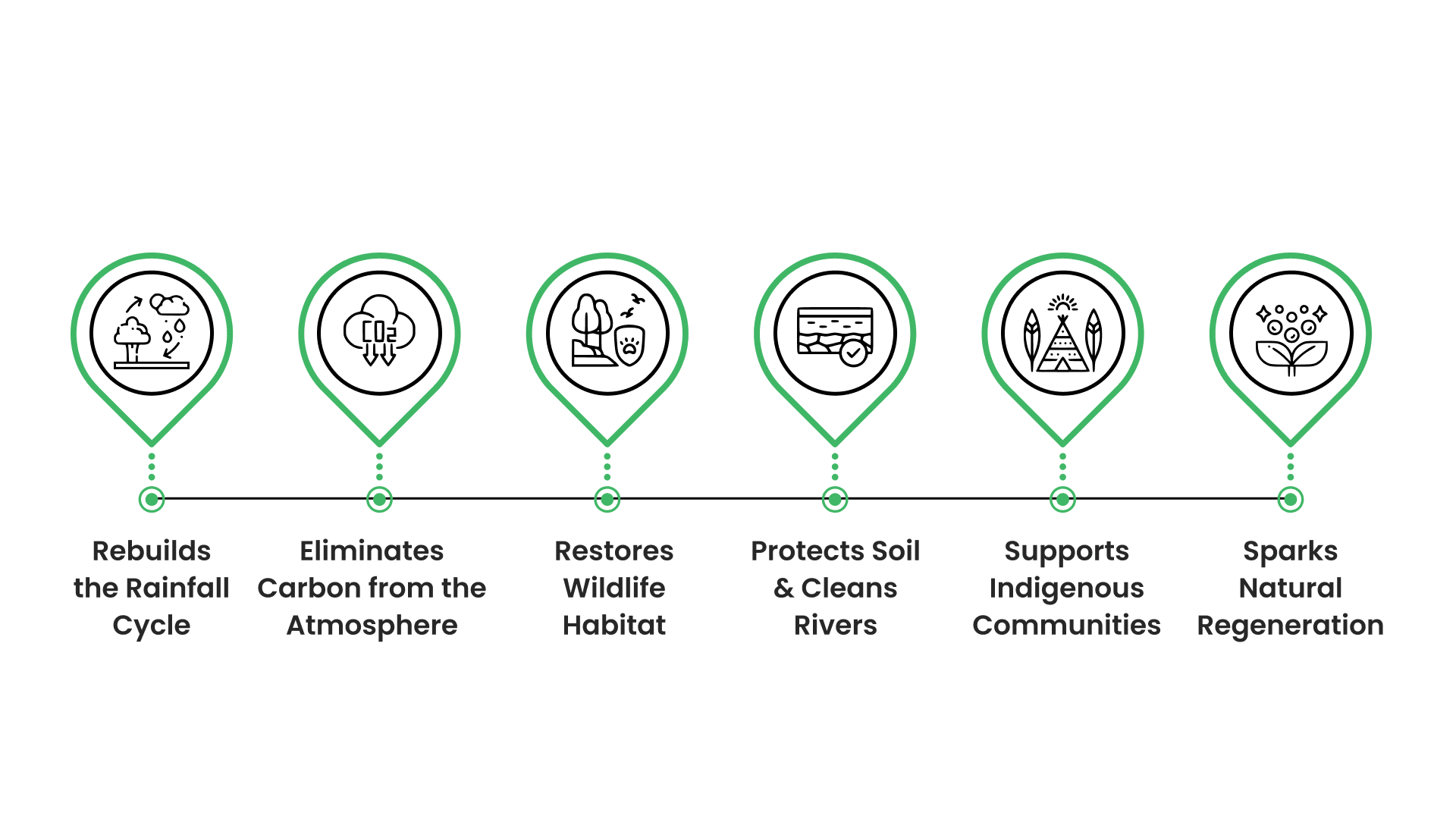
Planting trees in the rainforest plays a crucial role in repairing the damage caused by deforestation. Here’s how:
Rebuilds the Rainfall Cycle
The Amazon Rainforest plays a crucial role in initiating the rainfall cycle. How? Trees release water vapor into the atmosphere through transpiration, which then returns to the Earth's surface as precipitation, often referred to as rainfall. This process doesn’t just water the forest; it feeds rivers, supports nearby farms, and stabilizes the climate across much of South America. But when tree cover disappears, so does this natural cycle. Rainforest tree planting helps restore the vegetation necessary to restart this process and support the life cycle of trees. It helps restore consistent rainfall, cool the air, and maintain healthy humidity levels across the Amazon River basin.
Eliminates Carbon from the Atmosphere
Trees in the Amazon are some of the most efficient carbon sinks in the world. As they grow, they pull carbon dioxide out of the air and store it in their trunks, roots, and surrounding soil. When we prioritize planting trees in rainforest regions, especially fast-growing Amazonian forest trees, we help offset the carbon emissions from deforestation and fossil fuel use. This makes reforestation one of the most practical nature-based solutions to address climate change.
Restores Wildlife Habitat
Deforestation has left many species with nowhere to go. From howler monkeys to poison dart frogs, animals depend on specific plants in the Amazon rainforest for food, shelter, and breeding grounds. By planting native trees alongside shrubs, vines, and other plants from the Amazon rainforest, we help rebuild these habitats. Reforestation reconnects fragmented forest areas, enabling species to return, repopulate, and thrive once again.
Protects Soil & Cleans Rivers
Without roots to anchor it, exposed soil washes away during heavy rain, often ending up in rivers. This causes erosion, mudslides, and sediment pollution that harm aquatic life. Amazon rainforest reforestation stabilizes the ground and reduces runoff. Deep-rooted trees and forest plants hold the soil in place, while their canopies buffer the impact of rain. This protects both the land and the health of the plants in the Amazon River.
Supports Indigenous Communities
The Amazon is home to millions of people, including over 400 Indigenous groups. Many depend on the forest not just for survival, but for their culture, medicine, and spiritual traditions. When these communities lead or partner in rainforest tree planting, the benefits multiply. It creates fair jobs, protects ancestral lands, and ensures reforestation is carried out in a manner that respects both nature and people.
Sparks Natural Regeneration
One of the most powerful effects of reforestation is what happens after the initial planting. Birds, bats, and insects return. Seeds are spread. Microbes revive the soil. Within a few years, a growing forest starts to look and function like the one that was lost. By choosing the right types of trees in the Amazon rainforest, we’re not just planting; we’re setting the stage for the forest to heal itself, naturally and over time.
What Kind of Trees Are Planted in Amazon Reforestation Projects?
Not all trees are equal when it comes to reforestation. In the Amazon, planting the wrong species or a limited variety can do more harm than good. That’s why successful Amazon rainforest reforestation projects focus on restoring native biodiversity, rather than simply covering the land with greenery. Here’s what goes into choosing the right trees for the job:
Native Trees First
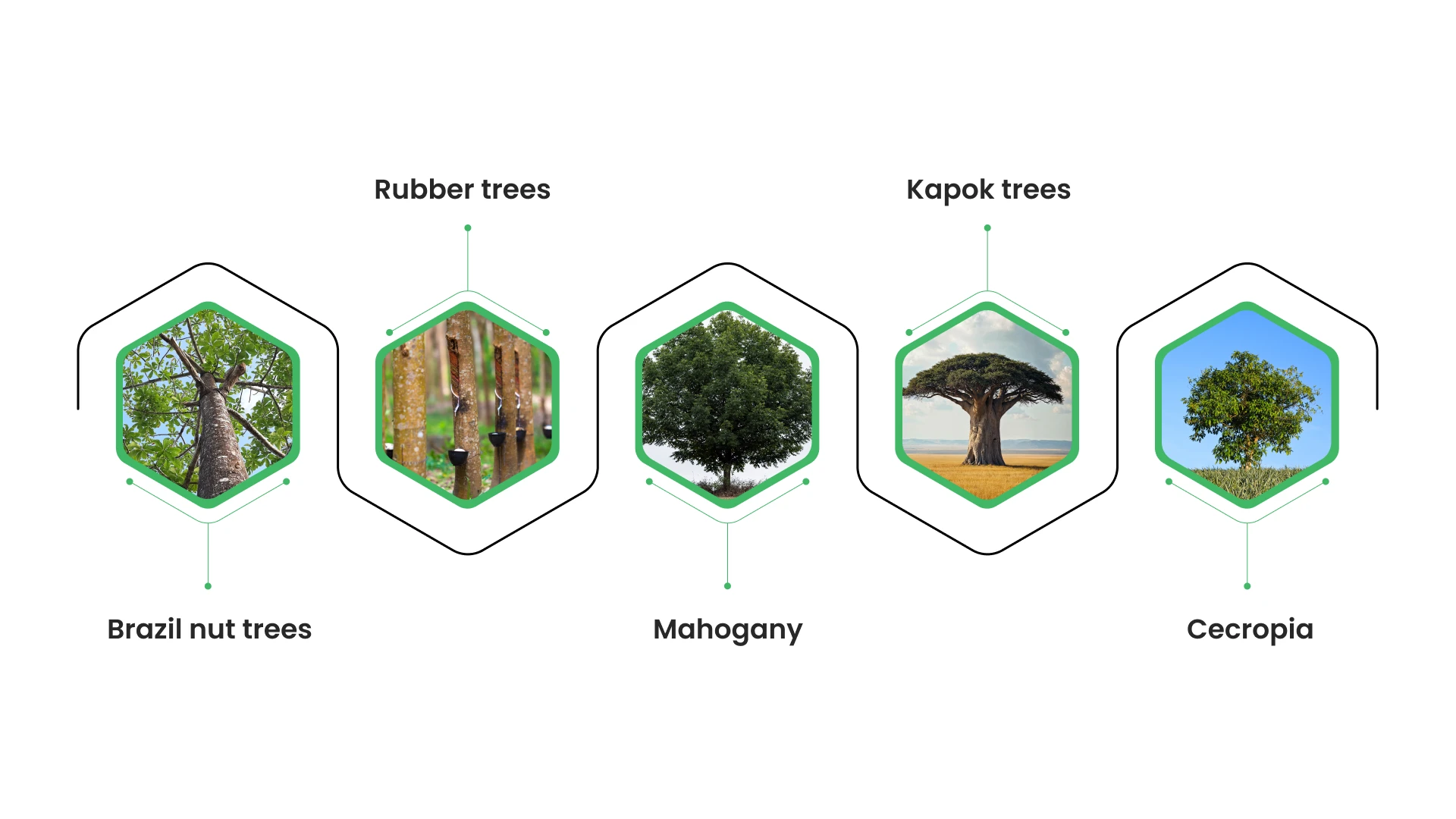
The foundation of every effective Amazon rainforest reforestation project is native species, trees that have grown in the region for thousands of years. Some commonly planted Amazon forest trees include:
-
Brazil nut trees: help support both wildlife and local economies
-
Rubber trees: native and historically significant
-
Mahogany: a towering hardwood, critical for canopy restoration
-
Kapok trees: fast-growing giants that support many bird species
-
Cecropia: fast colonizers that provide shade and food for animals
These trees are chosen not just for their growth potential but for the specific roles they play in the forest’s recovery, from creating canopy cover to attracting pollinators and seed dispersers.
Diversity Over Monoculture
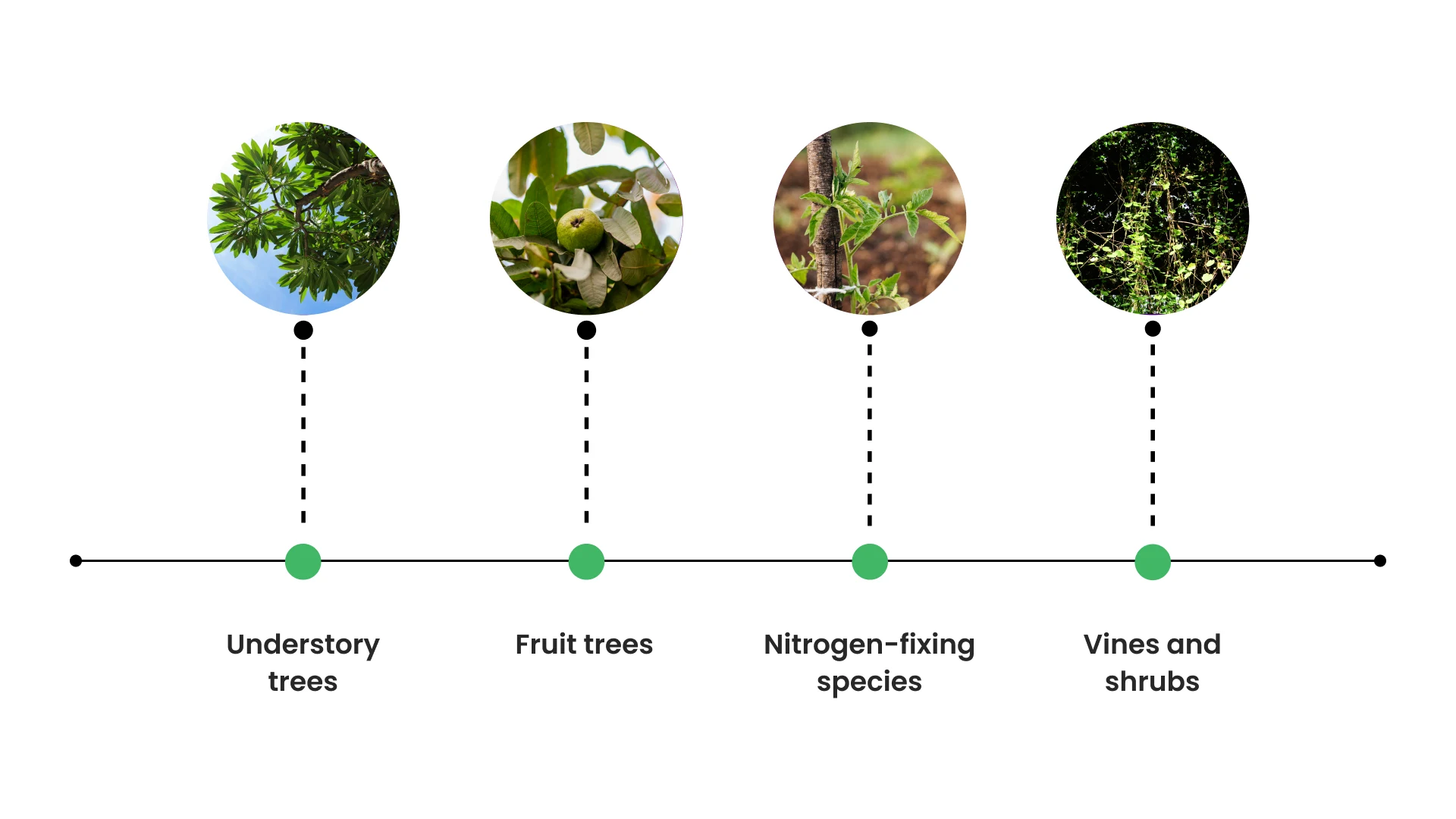
A healthy rainforest is layered and varied, with hundreds of tree and plant species coexisting. Planting a single species, known as monoculture, may look green on the surface, but it doesn’t bring back the forest. That’s why reforestation projects involve a carefully selected mix of plants in the Amazon rainforest, including:
-
Understory trees like Inga, which enrich the soil
-
Fruit trees like guava and palm species, which feed animals
-
Nitrogen-fixing species like acacia that improve soil fertility
-
Vines and shrubs to support lower forest layers
This layered planting style mimics the natural structure of the forest, creating space for a diverse range of plants in the Amazon rainforest to thrive.
Trees That Bring Wildlife Back
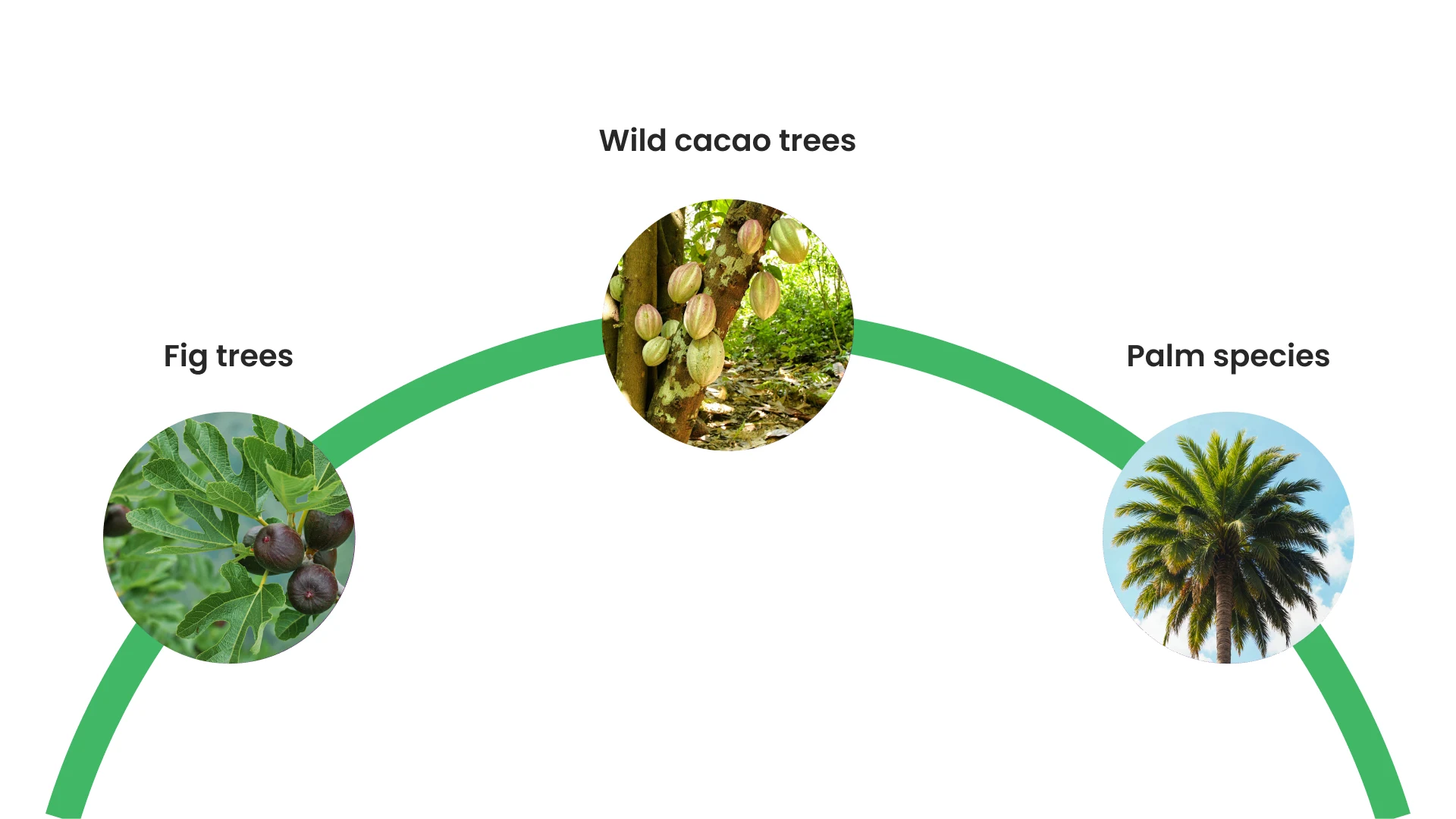
The Amazon is home to thousands of species, many of which rely on specific plants from the Amazon rainforest to survive. Some eat the fruits of one tree. Others nest in its branches. Without those trees, they can’t come back.
Reforestation efforts prioritize trees that attract and support wildlife, such as:
-
Fig trees: offer fruit year-round, critical for birds and monkeys
-
Wild cacao trees: provide food and shelter for insects and mammals
-
Palm species: support everything from toucans to armadillos.
Planting a mix of native species helps rebuild these relationships, allowing wildlife to return and reconnect with their natural habitats.
Locally Sourced Seeds
The success of planting trees in rainforest regions depends heavily on local community knowledge and expertise. Many reforestation projects work directly with Indigenous and local communities who know the forest best. Indigenous and community-led nurseries often supply seeds that are hand-collected from nearby healthy forests.
This ensures:
-
The types of trees in the Amazon rainforest are suited to the local soil and climate
-
The forest that grows back reflects what was originally there
-
Local communities are directly involved in the work of protecting and restoring their land
When tree planting is guided by people who know the land best, the forest that returns is stronger, more diverse, and more resilient.
How You Can Support Amazon Rainforest Reforestation
You don’t have to live in South America or be a conservation expert to make a difference. One of the most direct ways to help the Amazon is by supporting verified Amazon Rainforest reforestation projects. Look for organizations that:
-
Plant native Amazon forest trees: Projects should focus on species that naturally grow in the region, not fast-growing monocultures. This ensures long-term forest health and biodiversity.
-
Work with local and Indigenous communities: The most effective reforestation efforts are rooted in local knowledge. When communities lead the work, the forest is more likely to be protected and maintained for years to come.
-
Monitor and maintain what they plant: The best ones share updates, map progress, and work with indigenous communities to ensure long-term impact. Choose organizations that track tree survival, share progress openly, and commit to long-term forest recovery.
Many reputable groups offer options to sponsor trees, restore acres, or support nursery operations, all of which contribute to lasting impact. By backing these efforts, you’re helping rebuild a forest that can sustain itself and everything that depends on it.
Find Your Way to Support Rainforest Recovery with Plantd

You don’t need to be in the rainforest to help restore it. With Plantd, you can support high-impact reforestation projects that are rebuilding native forests, supporting biodiversity, and strengthening local communities.
With verified planting partners, real-time impact tracking, and a mission rooted in ecosystem renewal, Plantd makes it easy to take meaningful climate action, one tree at a time.
Every forest starts with someone who decides to plant.
Start planting with Plantd