
Where Are the Oldest Forests in the World?
Forests cover nearly one-third of the Earth’s land surface, but only a fraction of that remains in its original, ancient form, untouched by large-scale logging or land conversion. About one-third of the world’s forests are classified as old-growth or primary forest, meaning they have developed over long periods without significant human disturbance.
Amid widespread forest loss and fragmentation, these ancient stands are rare survivors. In a time when deforestation continues worldwide, old forests serve as reservoirs of biodiversity, carbon storage, and ecological history. Some stand deep within remote wilderness, while others are tucked into accessible parks or quiet corners of public land, often unnoticed by passersby.
In this blog, we explore where some of the oldest forests in the world still grow, what makes them ecologically unique, and why preserving them matters for biodiversity, climate stability, and future generations.
What Makes a Forest Truly Ancient?
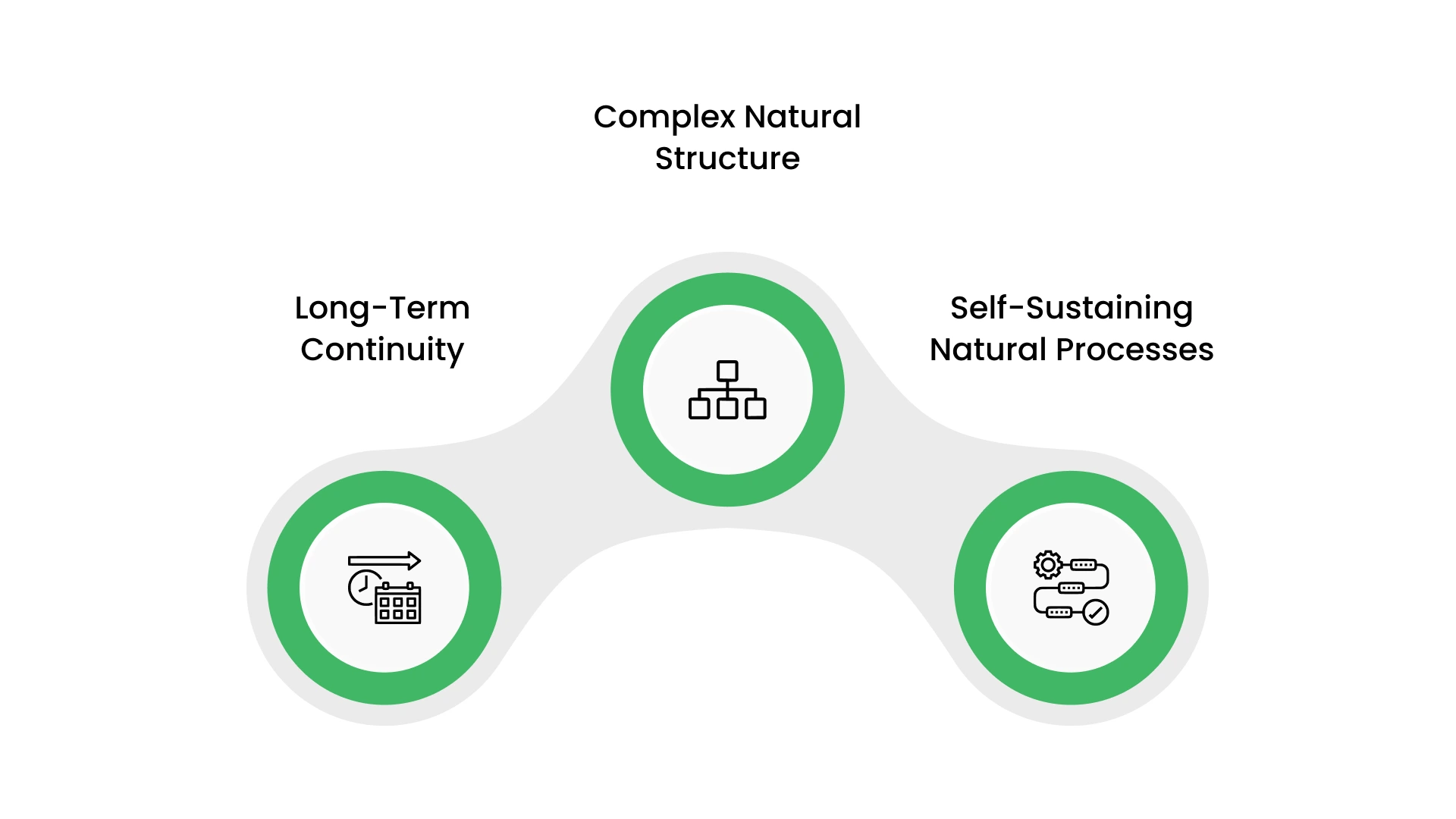
Old forests are often described as “old-growth,” but the term refers to more than tree age alone. A truly ancient forest reflects time, continuity, and limited human disturbance.
Long-Term Continuity
Ancient forests develop over extended periods without being cleared or converted. The ecosystem updates as a whole, not just individual trees.
Complex Natural Structure
Uneven tree ages, layered canopies, standing dead trees, fallen logs, and deep, undisturbed soils create rich and varied habitats.
Self-Sustaining Natural Processes
Fires, storms, insects, and disease occur naturally and contribute to ecological balance rather than resetting the forest, allowing complexity to build over time.
Why Old Forests Are Rare
Most forests across the world have experienced logging, agriculture, mining, or infrastructure development. Even when trees regrow, the ecological clock does not simply reset. Soil structure, species composition, and forest dynamics take centuries to recover.
Climate stress adds another layer of pressure. Warming temperatures, invasive pests, and shifting rainfall patterns make it harder for forests to persist long enough to return to their ancient status. As a result, remaining old forests are increasingly valuable and increasingly vulnerable.
Top 15 Oldest Forest Ecosystems in the World
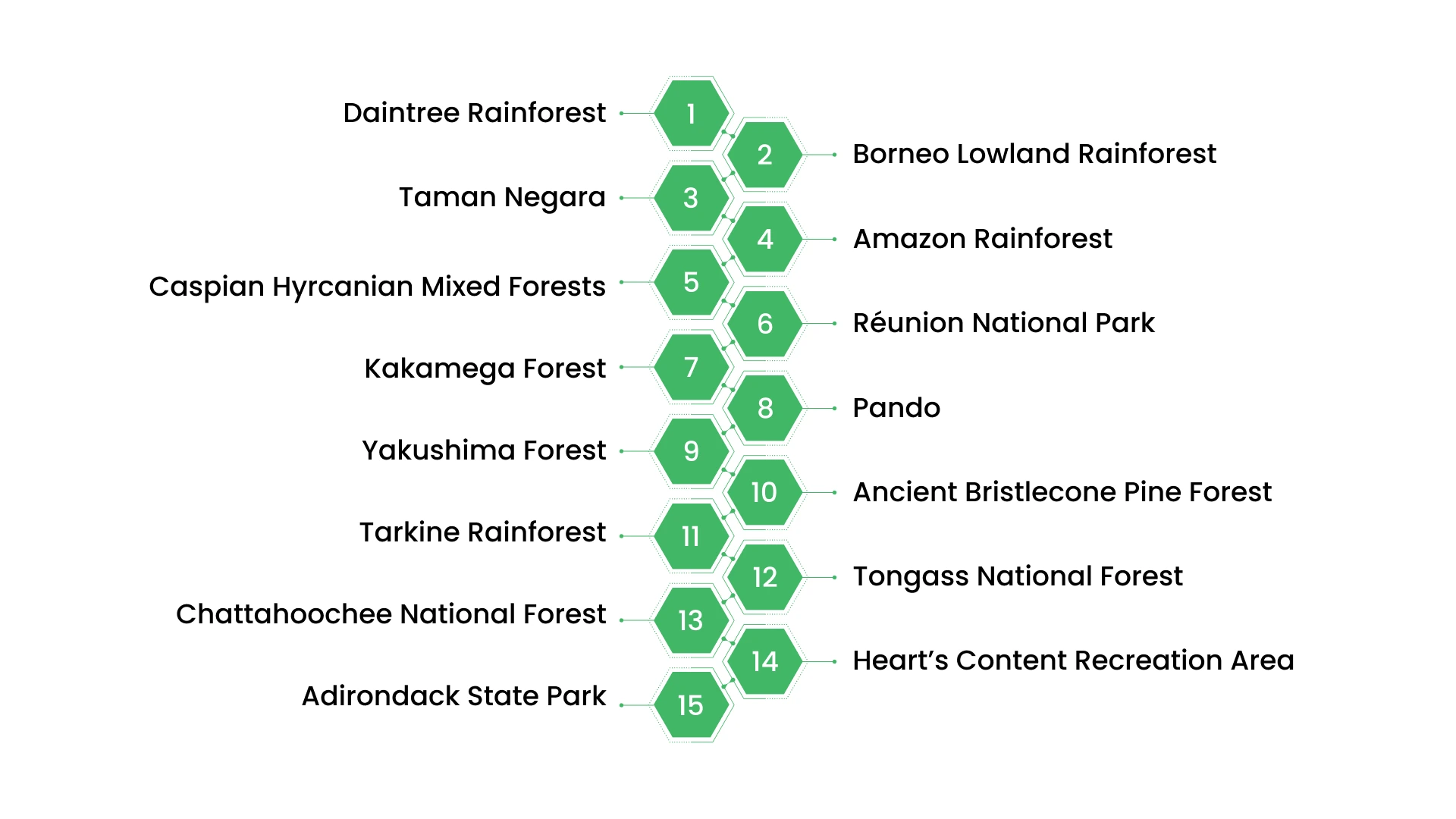
Here is a list of old forests that are still standing tall.
-
Daintree Rainforest
The Daintree Rainforest is widely regarded as the oldest rainforest on Earth, with scientific estimates placing its age at around 180 million years. This forest has existed continuously through continental drift and major extinction events, making it a living record of early plant evolution.
Its biological significance is extraordinary. The Daintree contains plant families that predate flowering plants as we know them today, including species that link ancient conifers to modern flowering trees. This long evolutionary continuity supports an unusually high concentration of endemic species. A significant portion of Australia’s frogs, reptiles, birds, and marsupials rely on this forest for habitat.
Despite its resilience across geological time, the Daintree is not immune to modern threats. Development pressure, invasive species, and climate shifts pose ongoing challenges, reinforcing the importance of careful land management and long-term protection.
-
Borneo Lowland Rainforest
The Borneo Lowland Rainforest is estimated to be about 140 million years old and once covered nearly the entire island of Borneo. Its age and size have allowed complex ecosystems to develop, supporting thousands of plant species and a remarkable range of wildlife.
This forest plays a critical role in regional climate regulation and water cycles. Its layered canopy structure helps control rainfall distribution and soil moisture, while deep root systems stabilize land in a region prone to heavy precipitation. Borneo is also one of the last strongholds of the Bornean orangutan, along with numerous endemic birds, mammals, and insects.
Over the past several decades, large portions of the lowland rainforest have been lost to logging and agricultural conversion. This loss fragments habitats and disrupts ecological processes that took millions of years to develop.
-
Taman Negara
Taman Negara is often described as the world’s oldest tropical rainforest, with estimates placing its age at more than 130 million years. Located in Peninsular Malaysia, the forest has remained relatively stable despite dramatic global environmental changes.
The forest’s age is reflected in its structure. Tall emergent trees rise above dense understory layers, creating complex habitats that support diverse plant and animal life. Many species found here have ancient evolutionary origins, adapted to warm, wet conditions that have persisted for millions of years.
Taman Negara was designated as a protected area in the early twentieth century, helping preserve its ecological integrity. Today, it serves as a site for scientific research, conservation, and carefully managed public access.
-
Amazon Rainforest
The Amazon Rainforest is estimated to be over 55 million years old and remains the largest tropical rainforest on Earth. It spans multiple countries and contains an unparalleled concentration of biodiversity, with millions of species still undocumented.
This forest functions as a global climate stabilizer. Trees and soils store vast amounts of carbon, while evapotranspiration influences rainfall patterns far beyond South America. Indigenous communities have lived within the Amazon for thousands of years, managing land in ways that supported long-term forest health.
Modern deforestation has disrupted these systems. Clearing forests releases stored carbon, alters rainfall, and weakens the resilience of remaining ecosystems, increasing the risk of long-term degradation.
-
Caspian Hyrcanian Mixed Forests
Stretching along the southern edge of the Caspian Sea, the Caspian Hyrcanian Mixed Forests date back 25 to 50 million years. These forests survived multiple ice ages that eliminated similar ecosystems elsewhere in the Northern Hemisphere.
Their survival has resulted in exceptional plant diversity, including many relict species that no longer exist outside the region. Broadleaf trees dominate the landscape, forming dense canopies that support rich understory growth and wildlife habitats.
UNESCO recognition in 2019 highlighted the global importance of these forests, which continue to face pressure from land use change and infrastructure development.
-
Réunion National Park
Réunion National Park protects forests that developed alongside the volcanic island itself, which emerged more than 3 million years ago. The park spans steep volcanic slopes, creating varied microclimates that support high levels of endemism.
Most of the island’s native plant species are found within the park, many adapted to specific elevation ranges. Forest cover plays a critical role in preventing erosion, regulating water flow, and protecting coastal ecosystems downstream.
Although some agricultural activity exists within limited areas, the majority of the park remains in a natural state due to strict conservation measures.
-
Kakamega Forest
Kakamega Forest is believed to be more than 2 million years old and represents the last remnant of a once-continuous equatorial rainforest across Africa. Its isolation has led to the development of unique plant and animal communities.
The forest contains hundreds of tree and plant species, many of which are endemic. It plays an important role in regional climate moderation and water regulation while supporting local livelihoods through tourism and research.
Despite its ecological value, Kakamega faces ongoing threats from surrounding land pressure, highlighting the need for sustained conservation efforts.
-
Pando
Pando is a clonal colony of quaking aspen trees connected by a single root system and estimated to be over 80,000 years old. Although it appears as a forest, it functions as one living organism.
Its longevity is remarkable, but modern pressures have disrupted natural regeneration. Grazing by deer and livestock prevents young shoots from maturing, putting the entire organism at risk. Pando illustrates how even ancient systems can decline rapidly when ecological balance is disturbed.
-
Yakushima Forest
Yakushima Forest contains ancient cedar trees known as yakusugi, with some individuals believed to be over 7,000 years old. Heavy rainfall and mountainous terrain have shaped a dense, moss-covered forest environment.
These conditions support a unique mix of plant and animal life, including endemic deer and macaques. The forest’s cultural significance is also strong, influencing art, literature, and conservation values in Japan.
-
Ancient Bristlecone Pine Forest
The Ancient Bristlecone Pine Forest is home to some of the oldest individual trees on Earth, with ages exceeding 5,000 years. These trees survive in extreme conditions marked by cold temperatures, high winds, and nutrient-poor soils.
Slow growth and dense wood contribute to their longevity. The forest demonstrates that harsh environments can sometimes protect ecosystems by limiting human access and competition.
-
Tarkine Rainforest
The Tarkine Rainforest is the largest remaining Gondwanan cool-temperate rainforest in Australia. While its precise age is unknown, its oldest trees are estimated to be at least 3,000 years old, and the ecosystem itself dates back much further.
The forest supports rare species and ancient plant lineages linked to Gondwana. Although logging once threatened large areas, conservation agreements have protected significant portions, allowing the Tarkine to remain one of the most intact temperate rainforests in the Southern Hemisphere.
Some of the most well-documented ancient forests are found in North America, where geography and conservation have allowed pockets of old growth to persist.
-
Tongass National Forest
Located in southeast Alaska, the Tongass is one of the largest remaining temperate rainforests on Earth. Many trees here, including spruce, cedar, and western hemlock, exceed 800 years in age. Some rise more than 200 feet tall, with massive trunks that reflect centuries of slow, steady growth.
The Tongass supports an extraordinary range of wildlife, including bald eagles, bears, wolves, and migratory birds. Its rivers and coastal systems play a major role in regional carbon cycling and marine productivity. Despite its scale, the forest faces ongoing pressure from logging and development, making protection efforts critical.
-
Chattahoochee National Forest
In the southeastern United States, ancient forest remnants survive in the Chattahoochee region. Massive hemlocks, hardwoods, and pines tower over steep slopes and river corridors. Some trees in these stands are estimated to be up to 600 years old.
These forests survived largely because their wood was difficult to harvest or commercially undesirable at key moments in history. Today, invasive insects such as the hemlock woolly adelgid threaten remaining stands, showing how even long-standing forests can decline quickly under modern pressures.
-
Heart’s Content Recreation Area
Heart’s Content is a small but striking example of preserved old growth. Covering roughly 120 acres, it contains towering white pines, hemlocks, and beech trees that have grown undisturbed for centuries. Some trees exceed 300 years of age.
What makes Heart’s Content notable is its accessibility. A short trail allows visitors to walk through a forest structure that closely resembles pre-industrial conditions, offering a rare glimpse into what much of the eastern United States once looked like.
-
Adirondack State Park
The Adirondacks contain scattered pockets of ancient forest spread across a vast protected landscape. In remote valleys and along secluded waterways, large hardwoods such as sugar maple, hemlock, and yellow birch have reached ages approaching 400 years.
While much of the region experienced logging in the past, difficult terrain and early conservation decisions helped preserve certain stands. Today, the Adirondacks balance recreation, research, and protection across one of the largest protected areas in the eastern United States.
Protect Ancient Forests & Restore the Future with Plantd
Ancient forests show what ecosystems can become when they are given time, stability, and protection. Many of the forests highlighted here have survived for thousands or even millions of years, yet they now face pressures that did not exist for most of their history. Once these systems are lost, they cannot be replaced within any human timeframe.
Protecting remaining old-growth forests is essential, but restoration plays an equally important role. Restoring degraded land helps reduce pressure on ancient forests, supports biodiversity, strengthens water systems, and builds long-term climate resilience. Thoughtful tree planting and land stewardship create the conditions future forests need to grow and mature.
Plantd supports forest restoration projects that prioritize ecological integrity, native species, and long-term impact. These projects help rebuild healthy forest systems while supporting communities that depend on them.
Ancient forests remind us that nature works on long timelines. By restoring forests today, we help ensure that future generations inherit landscapes capable of standing for centuries to come. Support forest restoration with Plantd.