

A forest can look full and still be losing its ability to support life.
Across Michigan, years of land-use change, habitat fragmentation, and the spread of invasive species have quietly weakened many native ecosystems. The trees may still be standing, but the diversity beneath them, the understory plants, pollinators, soil organisms, and wildlife that depend on connected habitats, has often declined.
Biodiversity is not sustained by tree cover alone. It depends on native species, healthy soil, layered vegetation, and spaces where animals can safely move, feed, and reproduce.
That is where Michigan Terrestrial Restoration becomes critical. By converting degraded land into native, functioning forest systems, restoration brings back the structure and ecological relationships that biodiversity needs to recover.
In this blog, we explore how terrestrial restoration in Michigan strengthens biodiversity, and how Plantd’s work is helping rebuild habitats that can support life for decades to come.
Protecting large forested areas is important, but size alone does not guarantee biodiversity. What determines whether wildlife returns and survives is the quality of the habitat inside that space.
Here’s how habitat quality directly shapes the return and survival of different species:
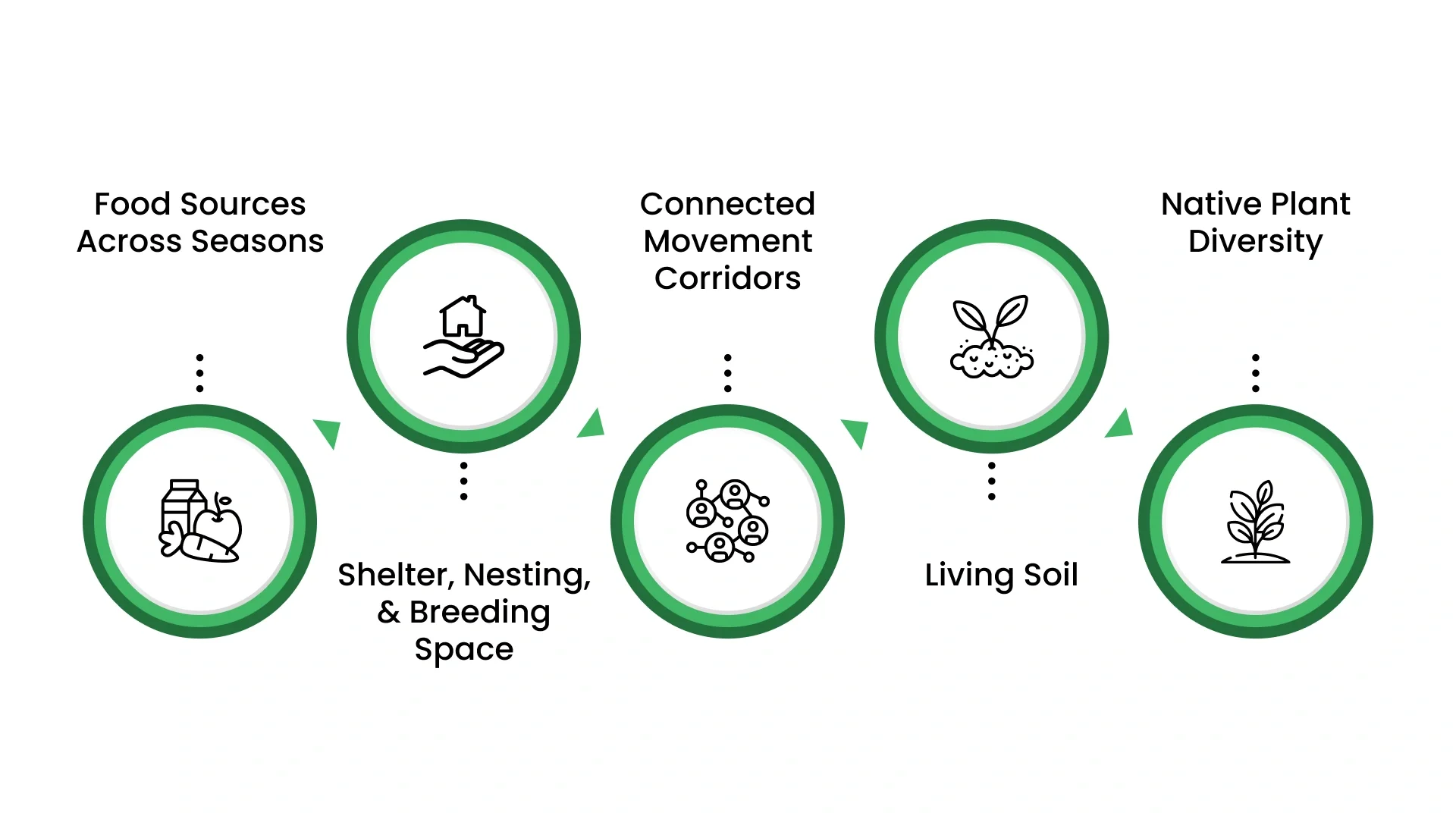
Different species rely on different plants at different times of the year. Native trees, shrubs, and ground vegetation provide nectar, seeds, fruits, and foliage that sustain insects, birds, and mammals throughout changing seasons. When this diversity is missing, the food chain weakens from the ground up.
Wildlife does not just need space. It needs safe places to live and reproduce. Layered vegetation, fallen logs, leaf cover, and dense understory growth create microhabitats where species can nest, hide from predators, and raise their young.
Isolated green patches cannot support healthy populations for long. Animals need to move between areas to find food, mates, and new territory. Restoration helps create continuous habitat, reducing stress on species and improving long-term survival.
Biodiversity begins below the surface. Healthy soil contains fungi, microorganisms, and insects that recycle nutrients and support plant growth. These organisms feed birds, amphibians, and small mammals, forming the base of a stable ecosystem.
Local wildlife evolved alongside native plant species. When those plants return, the insects and animals that depend on them return as well. This is one of the most direct ways restoration strengthens biodiversity.
Because these conditions determine whether species can return and thrive, biodiversity conservation ultimately depends on habitat quality. This is the ecological foundation that Michigan Terrestrial Restoration is designed to rebuild.
As restoration begins to repair soil, reintroduce native vegetation, and rebuild forest structure, the change in biodiversity is not theoretical. It shows up in the return of species, the increase in plant variety, and the growing stability of the ecosystem itself.
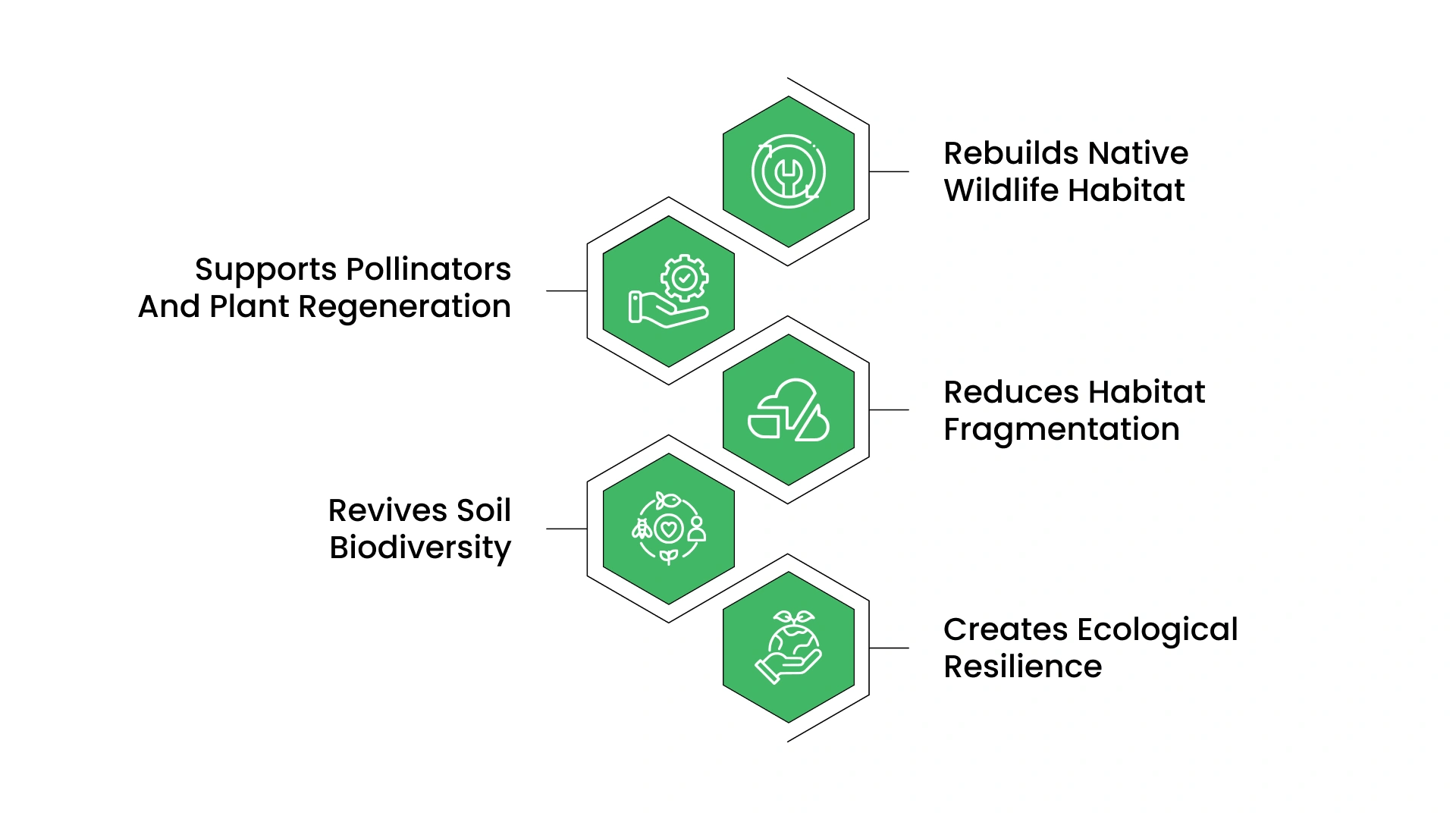
One of the earliest signs of recovery is the reappearance of wildlife that depends on a layered habitat. Birds find nesting space in the canopy and midstory, small mammals move through protected ground cover, and amphibians return to areas where moisture and leaf litter create suitable microhabitats. What was once a simplified area of tree cover starts to function as a complete living environment.
Pollinators are another major indicator. When native flowering plants and shrubs establish themselves, bees, butterflies, and other insects gain a consistent food source. Their activity allows natural regeneration, gradually increasing plant diversity without the need for repeated intervention. This self-sustaining cycle is one of the strongest signs that biodiversity is recovering.
Restoration also reduces species isolation. Larger, more connected forest areas allow animals to move in search of food and breeding space, thereby strengthening genetic diversity and making populations more resilient over time. Instead of surviving in small, disconnected pockets, species begin to use the forest as a continuous habitat.
Below the surface, soil life becomes active again. Fungi, microorganisms, and insects rebuild nutrient cycles that support long-term plant growth. This underground recovery feeds directly into the food web above it, making the entire system more stable.
The long-term result of restoring terrestrial ecosystems is resilience. A biodiverse ecosystem is better able to adapt to environmental stress. A biodiverse forest is better able to withstand environmental stress, whether from changing temperatures, pests, or extreme weather. Because multiple species share ecological roles, the system does not collapse when one element is disturbed.
Restoration works best when it reflects the ecological character of the place where it happens. Michigan is not a single forest type. Its terrestrial environments range from dry, sandy soils to moisture-rich lowlands, and each supports a different mix of native species. Planting without considering these conditions can produce tree cover, but it will not rebuild a stable habitat.
Site-fit restoration begins with understanding what naturally belongs in that location. Soil composition, drainage patterns, seasonal temperature shifts, and existing vegetation all influence which tree species will survive and how the forest will develop over time.
When native species that are adapted to these conditions are planted, they require less intervention, establish stronger root systems, and support the insects and wildlife that evolved alongside them.
This local alignment is what allows biodiversity to recover in a meaningful way. Native trees host native insects. Those insects become food for birds and small mammals. Ground vegetation returns under the right light and moisture conditions, creating shelter and foraging space. Instead of a uniform plantation, the result is a diverse, layered ecosystem that mirrors the region’s natural forests.
In Michigan, this approach also improves long-term resilience. Forests that are matched to their environment are better able to handle seasonal extremes, pests, and disease. They grow at a natural pace, regenerate more successfully, and continue to provide habitat without the need for repeated replanting.
By working with local ecological conditions rather than against them, Michigan Terrestrial Restoration ensures that the forest that grows back is not only green but capable of supporting life for generations.
Plantd works with verified restoration partners to rebuild ecosystems through high-impact, biodiversity-focused projects.
By combining native tree planting, long-term carbon capture, and local participation, it is helping rebuild an ecosystem that can support life above and below the forest floor. Here is a quick glance at what the Michigan Terrestrial Restoration project involved:
Plantd’s work begins by converting underperforming land into a native forest system. Instead of remaining a low-diversity space, the area is replanted with regionally native species that can develop into a layered habitat over time. As the canopy forms and ground vegetation returns, the site starts to provide shelter, food sources, and movement corridors for wildlife.
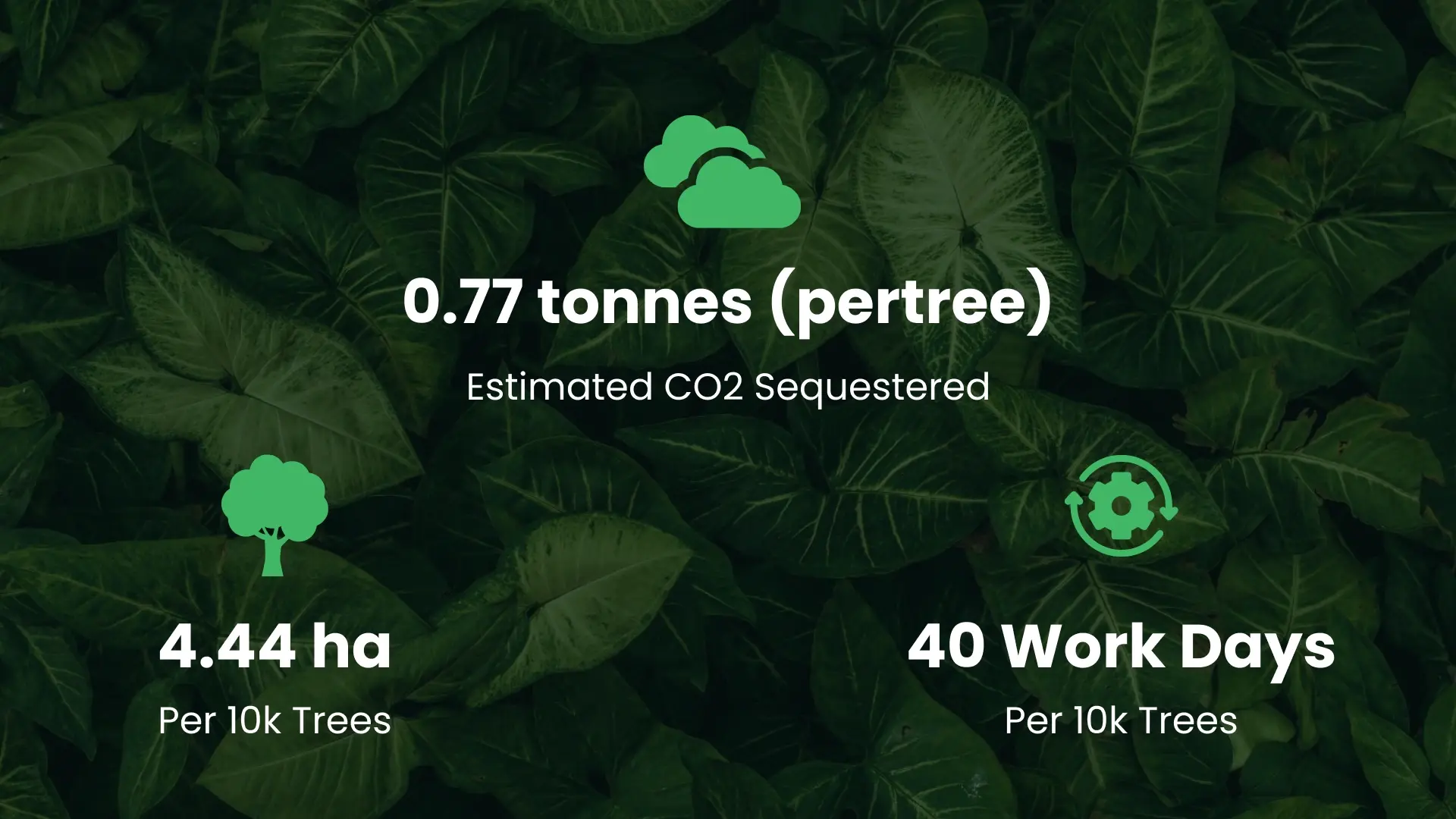
With 20,000 trees planted across 150 hectares, the restoration creates continuous, usable space for species that depend on stable forest cover. Larger restored areas reduce fragmentation, allowing birds, small mammals, insects, and amphibians to move safely, establish populations, and find breeding space.
The projected 6,000+ tonnes of CO₂ sequestration is not only a climate benefit. As the forest grows, improved soil structure, moisture retention, and temperature regulation create the microconditions that native plant and animal communities need in order to return and thrive.
The project also creates local workdays, ensuring the restored forest is not left unmanaged after planting. Community involvement supports long-term care and protection, ensuring that the biodiversity gains are sustained and not reversed over time.
These efforts move the site beyond tree planting into full ecological recovery. The result is a forest that can regenerate naturally, support diverse species, and remain resilient for decades.
This is how Michigan Terrestrial Restoration translates into measurable biodiversity impact on the ground.
Biodiversity recovery is not limited to conservation groups or governments. When individuals and teams choose to support restoration, degraded land turns into a living forest, and long-term ecological change becomes possible.
Support Verified Projects: Choose restoration initiatives that focus on native ecosystems, long-term monitoring, and measurable impact so your contribution leads to real habitat recovery.
Fund Native Tree Planting: Each tree planted helps rebuild food sources, shelter, and movement corridors for species that depend on healthy forests.
Track Your Impact: Follow the progress of the land you help restore and see how your support contributes to biodiversity, carbon capture, and ecosystem growth over time.
Make It Collective: Turn restoration into a shared effort by involving your workplace, community, or personal network and multiplying the ecological impact.
When more people take part in restoration, biodiversity recovery shifts from a distant goal to an active, growing reality.

Restoring forests is one of the most direct ways to restore biodiversity. Every tree planted helps rebuild habitat, strengthen ecosystems, and create space for species to return and thrive.
Through Plantd, you can support verified restoration projects like the Michigan Terrestrial Restoration initiative and see the impact of your contribution over time.
When restoration is sustained, degraded land becomes a living forest again, wildlife returns, and ecological balance is restored.