
How Do Trees Improve Water Quality Across Different Ecosystems?
Water is something we all depend on, yet its quality is under constant threat. Across the globe, only a fraction of rainfall reaches the ground in a form usable by plants; fortunately, trees provide a critical shield. Urban trees alone can reduce stormwater runoff by 15-27% of annual rainfall, easing the burden on waterways and lowering pollution levels.
Runoff carries soil, nutrients, chemicals, and debris into rivers, lakes, and even groundwater. Without vegetation to slow and filter that flow, water quality drops. You may notice it as murky water, sudden algae blooms, or reduced fish populations. In communities where trees have been removed, those signs become the norm.
Why does this matter for you? Clean water supports drinking supplies, safe recreation, strong ecosystems, and healthy economies. Understanding how trees improve water quality reveals one of the most effective methods we already have to protect our watersheds. In this blog, we’ll discuss exactly how trees intercept rainfall and safeguard water for today and future generations.
What Water Quality Challenges Do We Face?
Before we look at how trees improve water quality, it helps to understand the problems they’re working against. Many of the issues affecting groundwater start on land, usually with how water moves across the surface and what it picks up along the way.
When rain falls on hard surfaces or bare soil, it carries pollutants, sediments, and excess nutrients straight into nearby waterways. Over time, this disrupts ecosystems, harms wildlife, and increases the cost of providing clean drinking water.
Here are some of the most common challenges communities face today:
-
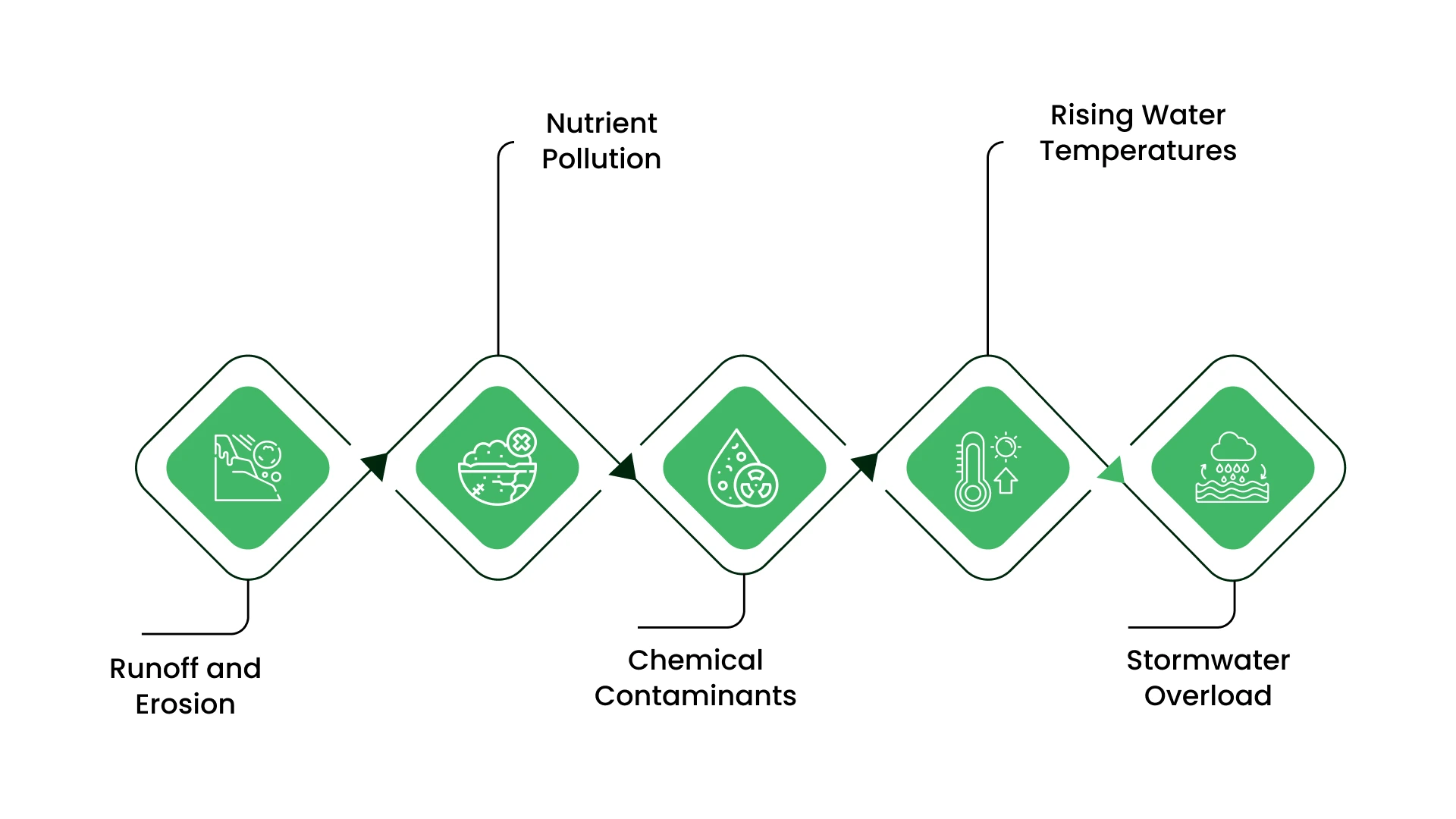
Runoff and Erosion: Rainfall rushing over bare ground or concrete lifts soil and sediments into streams, making water cloudy and damaging aquatic habitats.
-
Nutrient Pollution: Fertilizers, pet waste, and lawn chemicals wash into water bodies, fueling harmful algal blooms and decreasing oxygen levels.
-
Chemical Contaminants: Pesticides, industrial pollutants, oil, and heavy metals enter waterways through stormwater, harming fish and increasing treatment needs.
-
Rising Water Temperatures: Lack of shade around streams leads to warmer water, which stresses fish and accelerates algae growth.
-
Stormwater Overload: Intense rainfall events send large volumes of water into drainage systems, overwhelming infrastructure and pushing polluted water directly into rivers and lakes.
These challenges create real consequences, from unsafe drinking water to dying fish populations, and they highlight why trees play such an important role in protecting the water we rely on.
How Do Trees Improve Water Quality?
Trees improve water quality in several different ways, and most of these benefits happen quietly in the background. From the moment rain hits the canopy to the point where water moves through the soil, trees are constantly slowing, filtering, and cleaning it. These processes help protect streams, lakes, groundwater, and entire watersheds without the need for mechanical systems or chemical treatments.
Below are the major mechanisms that explain how trees improve water quality in practical, measurable ways.
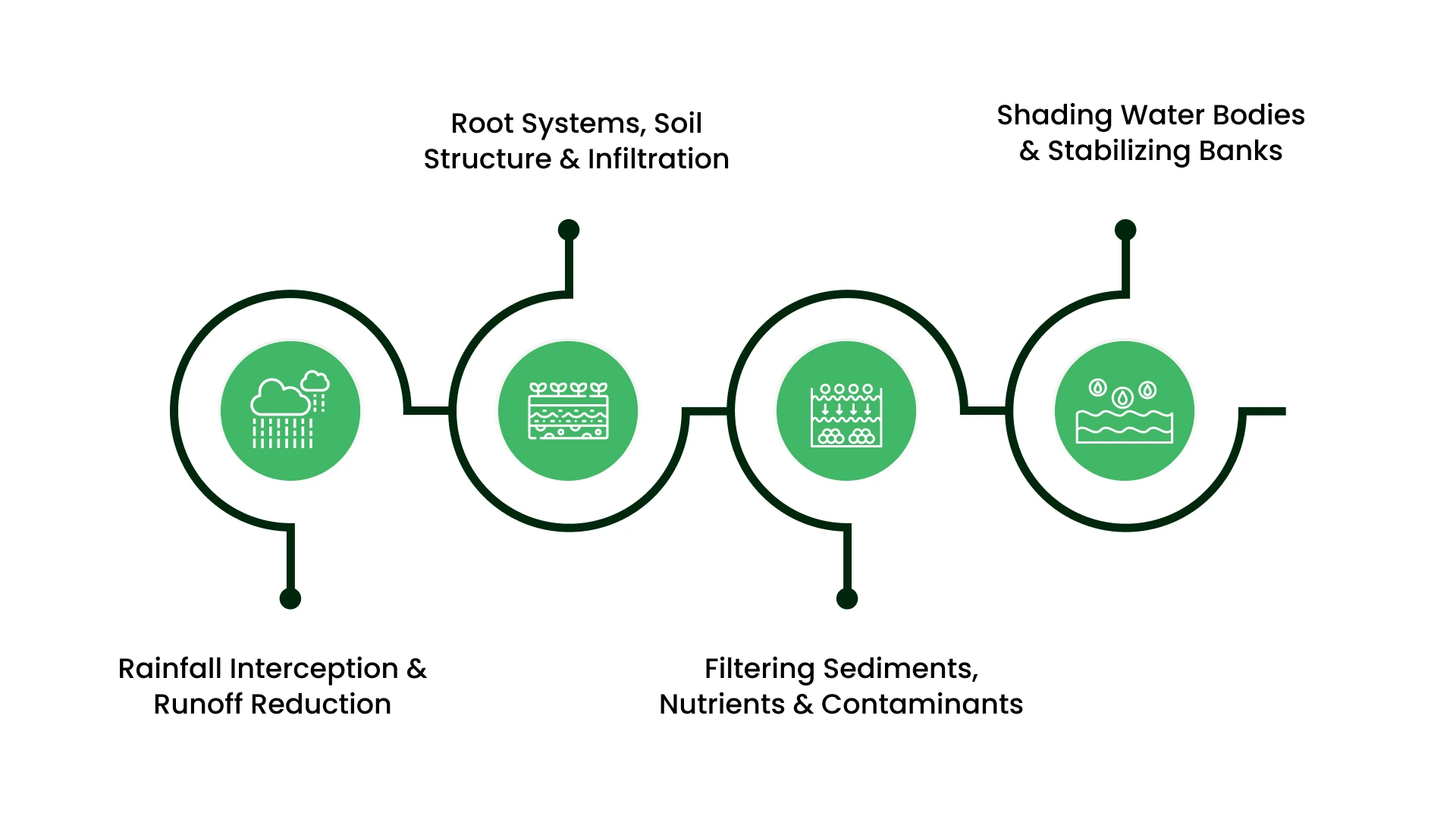
Rainfall Interception & Runoff Reduction
When rain falls onto a tree canopy, a portion of that water is intercepted by leaves, branches, and bark. Some of that water evaporates before it ever reaches the ground, and the rest drips down slowly rather than hitting the soil all at once. This delay matters. It reduces rainfall intensity, significantly lowering erosion and surface runoff.
Trees also spread out the timing of water entering a watershed. Instead of a sudden rush of stormwater flowing over pavement or compacted ground, the rain reaches the soil gradually. That gives the ground more time to absorb water, rather than letting it wash over roads, parking lots, and bare soil, carrying pollutants in its wake.
During heavy storms, this interception can help prevent drainage systems from being overwhelmed. Neighborhoods with more tree cover often experience fewer flash-flooding issues because the canopy acts like a natural buffer that slows the storm’s impact. The more rainfall a tree intercepts, the less polluted runoff ends up in streams, lakes, and local drinking water supplies.
Root Systems, Soil Structure & Infiltration
Tree roots hold soil firmly in place and create pathways that help water soak into the ground rather than flow across the surface. As roots grow, they create small channels throughout the soil. These channels act as pathways that help rainwater soak in quickly rather than run off the surface. The more water that infiltrates the ground, the less polluted the runoff reaching nearby streams and storm drains is.
Leaf litter and organic matter underneath trees also play a big role. As leaves break down, they form a soft, sponge-like layer that increases the soil’s ability to absorb and hold water. This cushion reduces soil compaction, improves structure, and makes it harder for erosion to start during storms.
Healthy root systems can even help recharge groundwater. When water moves steadily through soil rather than rushing across it, some seeps deeper into the ground, replenishing aquifers. This process supports wells, springs, and drinking-water sources, especially in areas where water shortages are becoming more common.
Filtering Sediments, Nutrients & Contaminants
As water moves through soil and root systems, trees help filter out harmful substances. Sediment gets trapped, roots absorb excess nutrients such as nitrogen and phosphorus, and certain chemicals break down in the soil. This natural filtering of trees improves water quality and reduces the risk of algal blooms in nearby water bodies.
Shading Water Bodies & Stabilizing Banks
Trees along streambanks, often called riparian buffers, regulate water temperature by providing shade. Their shade helps keep water cool during warm months, which is crucial because cooler water holds more oxygen. Fish, insects, and other aquatic species rely on these oxygen-rich conditions to survive. In streams without tree cover, water can heat up quickly, stressing wildlife and accelerating algae growth.
Tree roots also act as a natural reinforcement system for the banks of a water body. They bind soil together, making it far less likely to wash away during storms or high-flow events. When banks remain intact, less sediment enters the water, helping maintain clarity and protecting downstream habitats. This stability also reduces the maintenance or restoration work communities need after heavy rains.
Factors That Influence Tree-Driven Water Quality Benefits
Trees improve water quality, but not every tree or every landscape provides the same level of protection. The benefits depend on a mix of biological, environmental, and placement factors. Understanding these helps communities choose the right trees for the right locations and get the most out of their water-protection efforts.
Here are the primary factors that shape how effectively trees protect and clean water:
-
Tree Species: Some species absorb more nutrients, grow deeper roots, or develop denser canopies, all of which improve water-quality performance.
-
Tree Size and Age: Mature trees usually provide far greater benefits because they intercept more rainfall, stabilize more soil, and support better infiltration.
-
Health of the Tree: Trees under stress from pests, drought, or poor soil can’t filter water or support soil structure as effectively.
-
Location in the Landscape: Trees near streams, steep slopes, agricultural fields, or paved areas have the highest impact on reducing runoff and filtering pollutants.
-
Soil Conditions: Healthy, well-structured soil allows roots to spread and water to infiltrate; compacted or disturbed soil reduces these benefits.
-
Surrounding Land Use: Urban development, agriculture, and construction all influence how much runoff and pollution trees need to manage, and how well they can keep up.
-
Maintenance Practices: Proper pruning, mulching, and protection from soil compaction help ensure long-term water-quality benefits from each tree.
These factors work together to determine just how much a tree can help protect local waterways. Planting the right species, preserving mature trees, and maintaining healthy soil all strengthen the impact trees have on clean water.
Practical Actions You Can Take
Knowing how trees improve water quality is only useful if it leads to action. Individuals, neighborhoods, and organizations can all contribute in meaningful ways. Some steps involve planting new trees, while others focus on protecting the ones already doing the work. Even small changes in how we care for our yards, streets, and shared spaces can support healthier waterways.
Below are practical ways you can make a real difference in your local watershed.
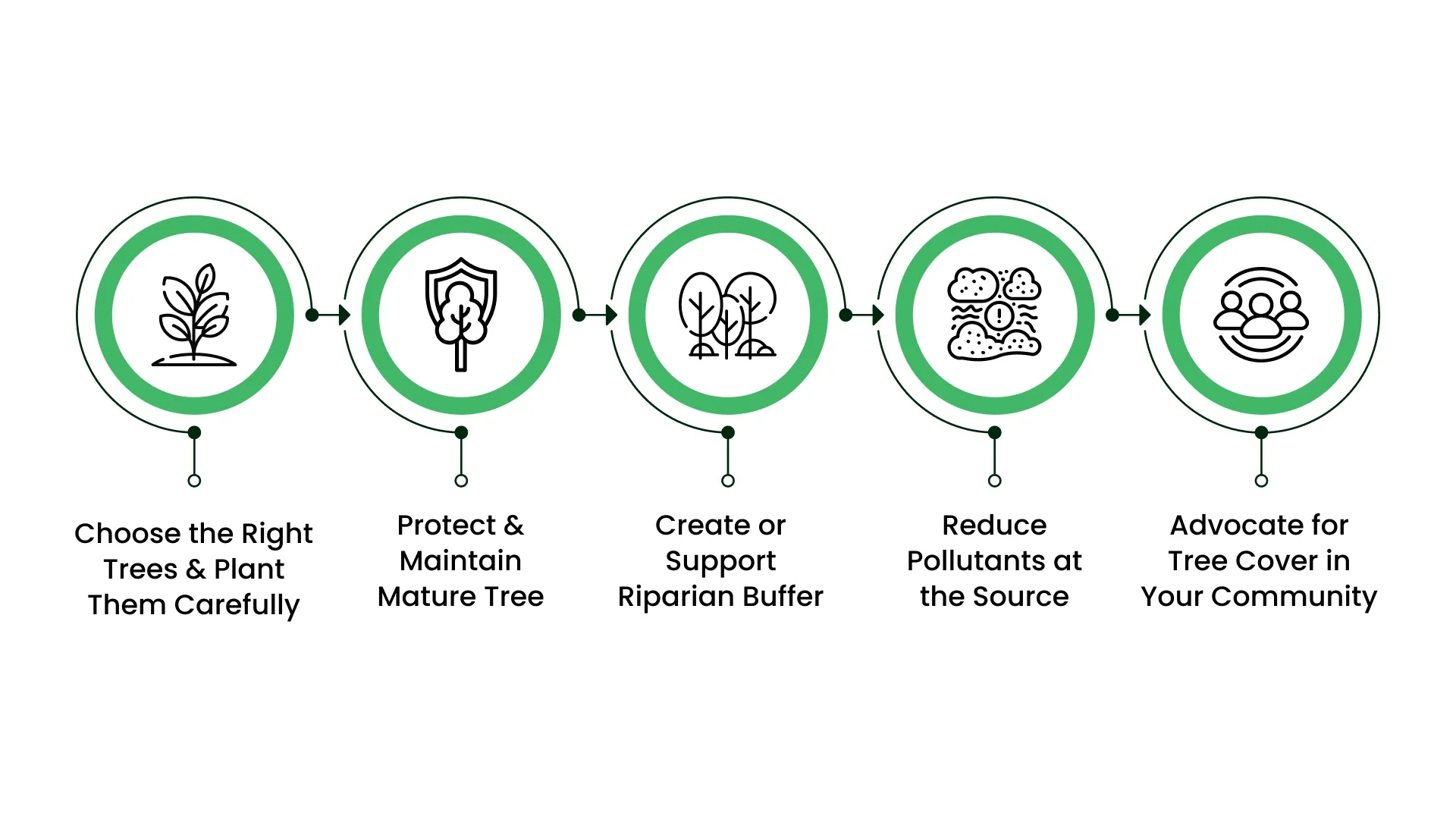
Choose the Right Trees & Plant Them Carefully
Plant native species that thrive in your region’s soil and climate. Focus on spots where trees can intercept runoff or stabilize soil near driveways, downspouts, slopes, or along the edges of streams if you have access to them. Proper placement helps trees provide maximum water-quality benefits.
Protect & Maintain Mature Trees
Older trees deliver the strongest water-protection benefits, so preserving them should be a priority. Avoid compacting the soil around their roots, provide mulch to retain moisture, prune carefully, and prevent damage during construction or landscaping projects.
Create or Support Riparian Buffers
If you live near a stream or wet area, planting trees along the bank creates a natural buffer that filters pollutants and keeps water cool. Even a narrow strip of vegetation can make a noticeable difference in water clarity and erosion control.
Reduce Pollutants at the Source
Trees can filter a lot, but they can’t handle everything. Limit fertilizer use, manage stormwater responsibly, clean up pet waste promptly, and avoid washing chemicals into storm drains. Reducing pollution before it enters the landscape makes tree-based filtration far more effective.
Advocate for Tree Cover in Your Community
Support local policies that protect tree canopy, encourage green infrastructure, and integrate trees into urban planning. Whether it’s asking your city to plant more street trees or joining a watershed group, community advocacy helps expand tree cover where it matters most.
Help Restore Forests and Preserve Water with Plantd

Understanding how trees protect our water is important, but turning that knowledge into action is what creates lasting change. Healthy forests and tree-filled landscapes naturally filter pollutants, stabilize soil, and keep waterways clean, and with Plantd, you can directly support the projects that make this possible.
Plantd focuses on restoring and protecting tree-rich ecosystems that strengthen water quality and watershed health. These projects reduce runoff, prevent erosion, support groundwater recharge, and help communities access cleaner, safer water. Every contribution supports on-the-ground work that benefits both people and the environment.
Every action you take helps protect freshwater sources, support healthy ecosystems, and build resilience against future water challenges. Plantd makes it simple to turn concern into measurable impact.
Support cleaner water. Support healthier forests.