
How Can We Plant Trees Correctly to Support Strong, Lasting Forests
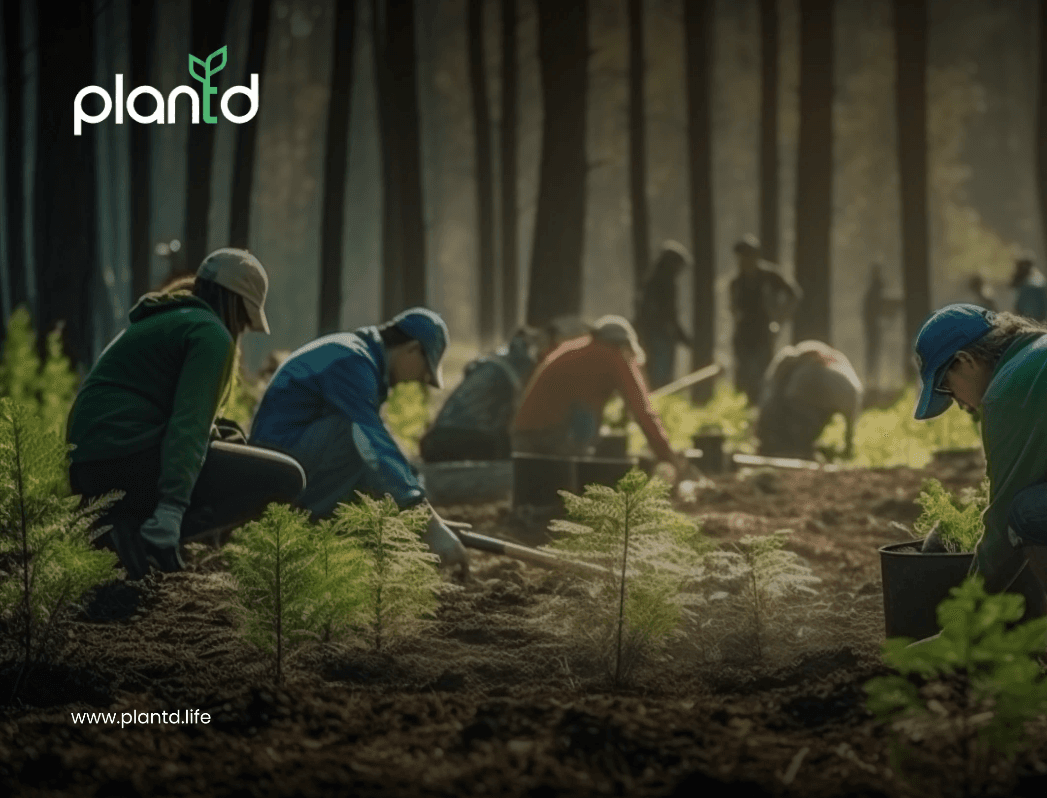
When someone plants a tree and walks away, sometimes it survives. More often, it struggles. The difference between a tree that merely survives and one that thrives for generations comes down to technique.
Trees have been called the lungs of the Earth, and for good reason. Without them, life as we know it wouldn’t exist. They filter the air we breathe, cool our cities, provide homes for countless species, and anchor the soil that feeds us. Yet despite their importance, most people don’t know how to plant trees properly.
Research from the U.S. Forest Service shows that urban trees planted using proper techniques have a survival rate above 90% after five years, compared to just 50-60% for trees planted without following best practices.
However, anyone can learn how to plant trees the right way. It doesn’t require special equipment or advanced horticultural knowledge. What it does require is understanding seven critical steps that give every tree the foundation it needs to establish strong roots and grow into its full potential.
The Seven Steps That Make All the Difference
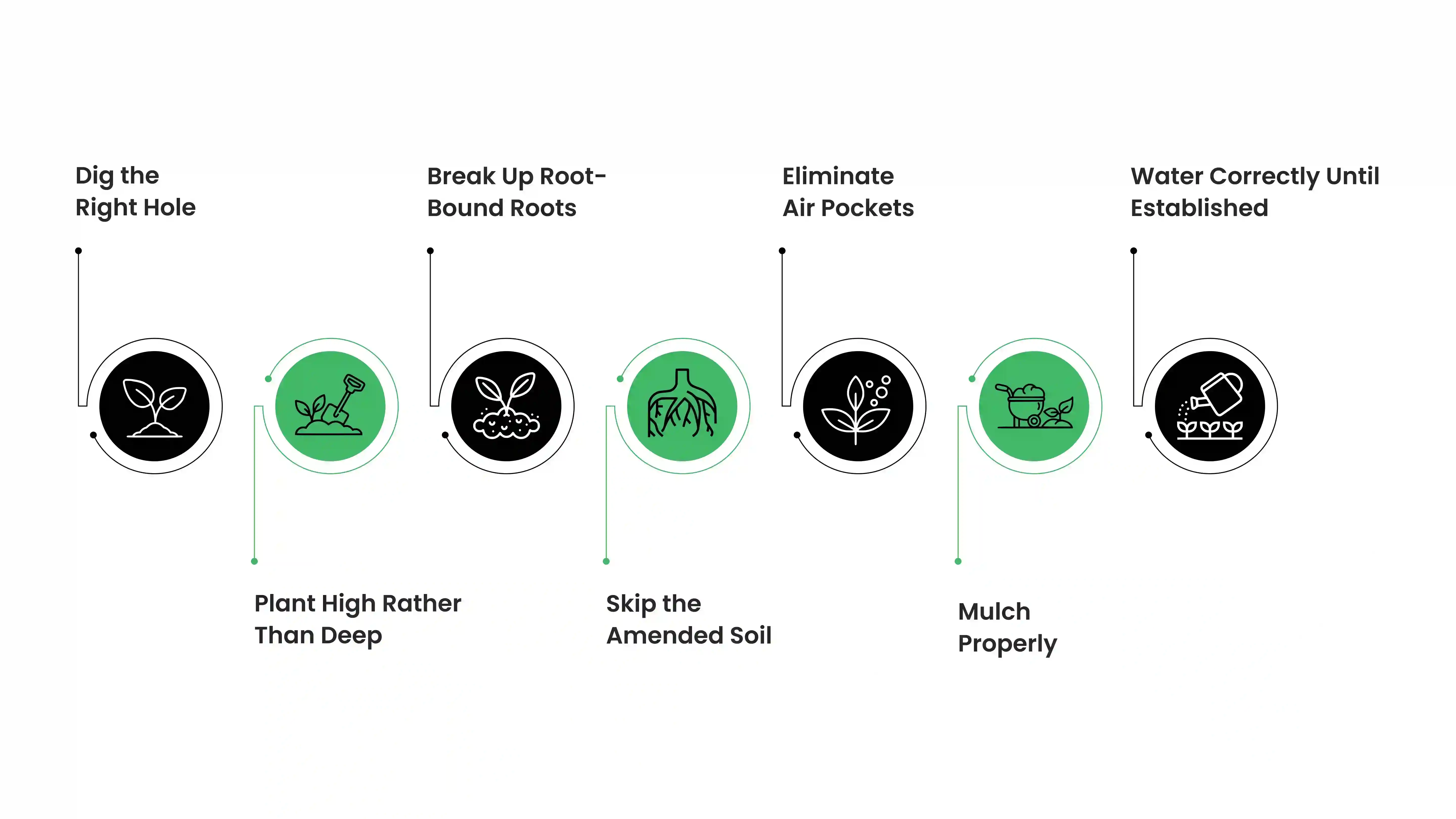
Planting trees successfully depends on following a clear, research-backed process that supports root development and long-term survival.
1. Dig the Right Hole
Most people dig holes that are too deep and too narrow. The correct approach flips both assumptions.
Width matters more than depth. The hole should be three times wider than the root ball, but never deeper than the height of the root ball itself. This creates a wide zone of loosened soil that new roots can penetrate easily while keeping the tree at the proper height.
Here’s where many plantings go wrong from the start: trees sitting too deeply. Even nurseries sometimes plant trees too deeply in their containers. Before the tree goes in the ground, find the trunk flare, that spot where the trunk widens slightly as it meets the roots. This flare must sit at or slightly above ground level. Sometimes that means pulling away several inches of excess soil from nursery containers to find where the trunk actually begins.
A simple check involves laying a shovel handle across the hole. The top of the root ball should align with or sit slightly above the handle.
2. Plant High Rather Than Deep
Here’s a counterintuitive truth: trees planted slightly high almost consistently outperform trees planted at grade or below.
Positioning the root ball so that approximately 25% sits above the surrounding soil level, then tapering soil up to cover exposed roots, creates a subtle mound. This approach accounts for settling. Freshly dug and backfilled soil compacts over time. A tree planted at grade in fresh soil often ends up below grade within a year or two, sitting in a depression that collects water.
Root rot and disease love these soggy depressions. Trees evolved to grow with their root flares exposed to air, not submerged in saturated soil. Planting high ensures that even after settling, the tree won’t drown.
Better to have a tree sitting on a gentle rise with water draining away than a tree in a bowl collecting every drop.
3. Break Up Root-Bound Roots
Pull a tree from its container, and chances are good the roots have started circling. In severe cases, the outer surface looks like a dense mat of roots following the container’s shape.
This isn’t just cosmetic. Roots that circle around a root ball will continue that pattern underground. They won’t spread outward to anchor the tree and access water and nutrients. Instead, they keep wrapping around themselves, eventually girdling and strangling the tree years down the line. Trees can die a decade after planting from root circling that was never addressed.
The fix feels aggressive, but it’s necessary: break up that root ball. In mild cases, vigorously scratch the sides and bottom of the root mass. For severely bound roots, use a pruning saw to make vertical cuts up the sides, slice off the bottom inch, or even pull the root ball apart into sections.
Yes, roots get damaged in this process. But it’s the tree’s last chance to develop a standard root system. Better to sacrifice some roots at planting than doom the tree to a lifetime of strangled growth.
4. Skip the Amended Soil
For decades, conventional wisdom said to mix compost, peat moss, or other organic matter into the backfill soil. Create a “perfect” environment for roots to grow into, the thinking went.
Contemporary research tells a different story. Studies on tree establishment found that trees planted in amended soil often developed root systems that stopped at the edge of the amended zone. Roots growing in loose, rich soil encountered the harder native soil at the edge of the planting hole and simply refused to venture further. The results were stunted root systems that never properly anchored the tree or accessed the wider soil resources available beyond the hole.
Trees planted in unamended native soil developed more extensive root systems. Their roots, encountering consistent soil conditions, spread naturally into the surrounding area.
So, unless planning to amend the entire area where roots will eventually grow (which for a mature tree can extend 30-40 feet from the trunk), simply use the native soil. Break up clumps, remove rocks, and backfill with the material that came out of the hole.
5. Eliminate Air Pockets
Roots need contact with soil to absorb water and nutrients. Air pockets in the backfill leave roots suspended in space, where they dry out and die.
Tamping soil down by hand or foot creates contact but also risks overcompacting the soil, making it harder for roots to grow. There’s a better method: water.
After backfilling the hole halfway, run a strong stream of water into it for several minutes. The water settles the soil around the roots without compacting it excessively. It reveals any significant voids, provides initial moisture, and helps establish good soil-to-root contact. Once the water drains, finish backfilling, then water thoroughly again.
6. Mulch Properly
Mulch does several critical jobs. It keeps soil moisture from evaporating, moderates soil temperature, suppresses weeds, and gradually decomposes, adding organic matter to the soil.
But mulch misapplied causes problems. The classic mistake is piling mulch against the trunk in a “volcano” shape. Mulch touching the bark holds moisture against it, inviting rot and disease. Rodents love burrowing into these mulch piles and gnawing on bark. Bark that stays constantly wet can’t breathe and begins to break down.
The correct approach: leave a 2-3-inch gap around the trunk, with no mulch touching the bark. Then spread a 2-3 inch layer of organic mulch (shredded leaves, wood chips, or bark) extending at least to the tree’s drip line (the outer edge of the canopy). Further is better. That mulch layer protects the developing root system that will spread well beyond the original planting hole.
7. Water Correctly Until Established
This step determines whether all the previous steps were worth the effort. More newly planted trees die from watering mistakes (both too much and too little) than from any other cause.
Establishment takes time, more time than most people assume. Small trees might establish in a few months. Large trees with substantial root balls can take a full year or more. During this entire period, the tree depends on supplemental watering to survive.
The main thing is consistency. Not occasional soakings. Not daily sprinklings. Consistent deep watering that keeps the root zone moist but not waterlogged.
Hand watering doesn’t work. It’s inconsistent, it’s easy to skip when busy, and it’s nearly impossible to water deeply enough. The water runs off before penetrating more than a few inches.
Soaker hoses or drip irrigation systems solve this problem. They deliver water slowly, allowing it to soak deep into the soil where roots are growing. Connect them to a battery-operated timer, and the whole system runs automatically, delivering consistent moisture whether you’re home or traveling.
You Do Not Have to Plant Trees Yourself to Make a Real Difference
Understanding how to plant trees properly is valuable. Actually doing it at scale is something else entirely.
Most people do not have access to suitable land, long-term monitoring systems, or the resources needed to ensure trees survive years after planting. That does not mean they cannot contribute meaningfully to forest recovery. It means that specialists are best suited to handle the work.
This is where trusted digital reforestation partners like Plantd play an important role. Instead of worrying about site selection, species choice, planting depth, or ongoing care, individuals and businesses can support verified projects and let experienced teams handle the whole process.
Put Proper Tree Planting Into Practice With Plantd
Plantd connects people who care about forests with verified restoration and conservation projects, making measurable on-the-ground differences. These aren’t feel-good initiatives with vague promises. They’re real efforts employing proper planting techniques, tracking survival rates, protecting existing forests, and creating jobs in local communities.
Every action through Plantd supports projects with measurable outcomes, transparent reporting, and local job creation. It turns concern into concrete results that strengthen the natural systems supporting all life on Earth.
The trees planted today using proper techniques will filter water, store carbon, regulate rainfall, and support biodiversity for generations yet unborn. That’s the kind of investment that compounds over decades and centuries in ways short-term thinking never will.
Start making a difference today. Support verified forest restoration through Plantd and be part of rebuilding the living infrastructure that makes human civilization possible.