
Do Trees Provide Oxygen? Here's Exactly How | Plantd

Some neighborhoods simply feel easier to breathe in. Not because the traffic disappears or the city gets quieter, but because the streets are lined with trees.
In New York, researchers noticed something interesting during afternoon rush hour. Even as traffic picked up and emissions rose, the air did not worsen as quickly as they expected. The surrounding vegetation was absorbing a surprising amount of it. In fact, trees and plants were taking in up to 40 percent of the city’s afternoon emissions, sometimes balancing out what cars were putting into the air.
You do not need scientific jargon to understand what is happening here. Trees constantly take in carbon dioxide and release oxygen as they grow. So when people ask whether trees provide oxygen, the answer is right there in the air quality itself. Their presence helps create cleaner, more breathable spaces, even in cities known for congestion and heat.
In this blog, we look at how trees produce oxygen, what shapes their contribution, and why their role is more far-reaching than most people realize.
How Trees Actually Produce Oxygen
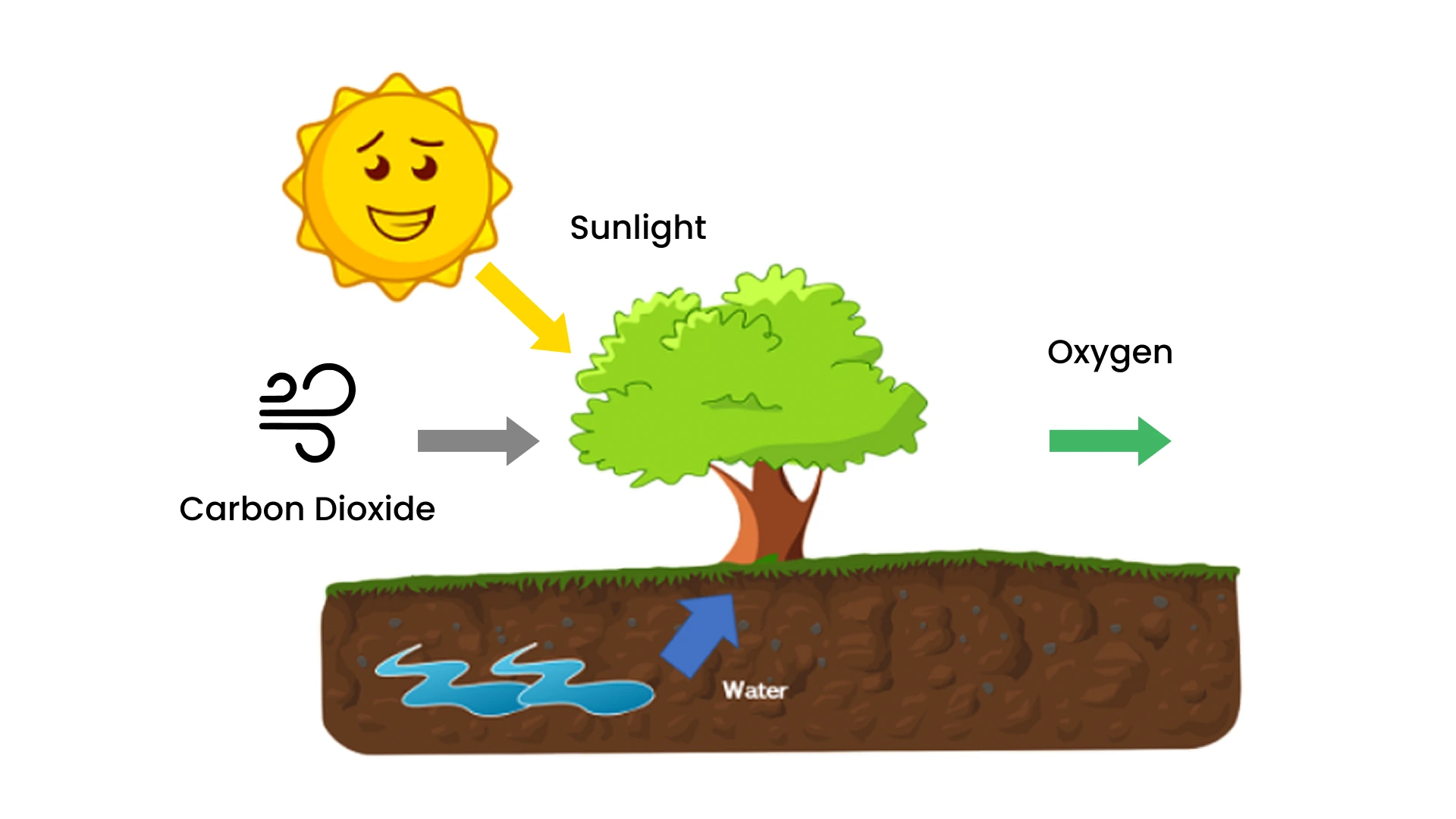
Trees produce oxygen through photosynthesis. It is a steady rhythm that begins as soon as sunlight reaches their leaves. Small pores on each leaf, called stomata, pull in carbon dioxide from the surrounding air. At the same time, the roots draw water from the soil and move it upward through the tree.
Inside the leaf, sunlight activates chlorophyll, the green pigment that allows the tree to convert carbon dioxide and water into the sugars it needs for energy and growth. Oxygen is released during this process. It moves back out through the same tiny pores that collected the carbon dioxide in the first place.
A tree with more leaves has more surface area for this exchange, which means it can release more oxygen over the course of the day. Healthy leaves, strong roots, and good sunlight all support the cycle. Even though each reaction is small, the combined effect across an entire tree and a whole forest makes a meaningful difference to the air around us.
What Influences How Much Oxygen a Tree Produces
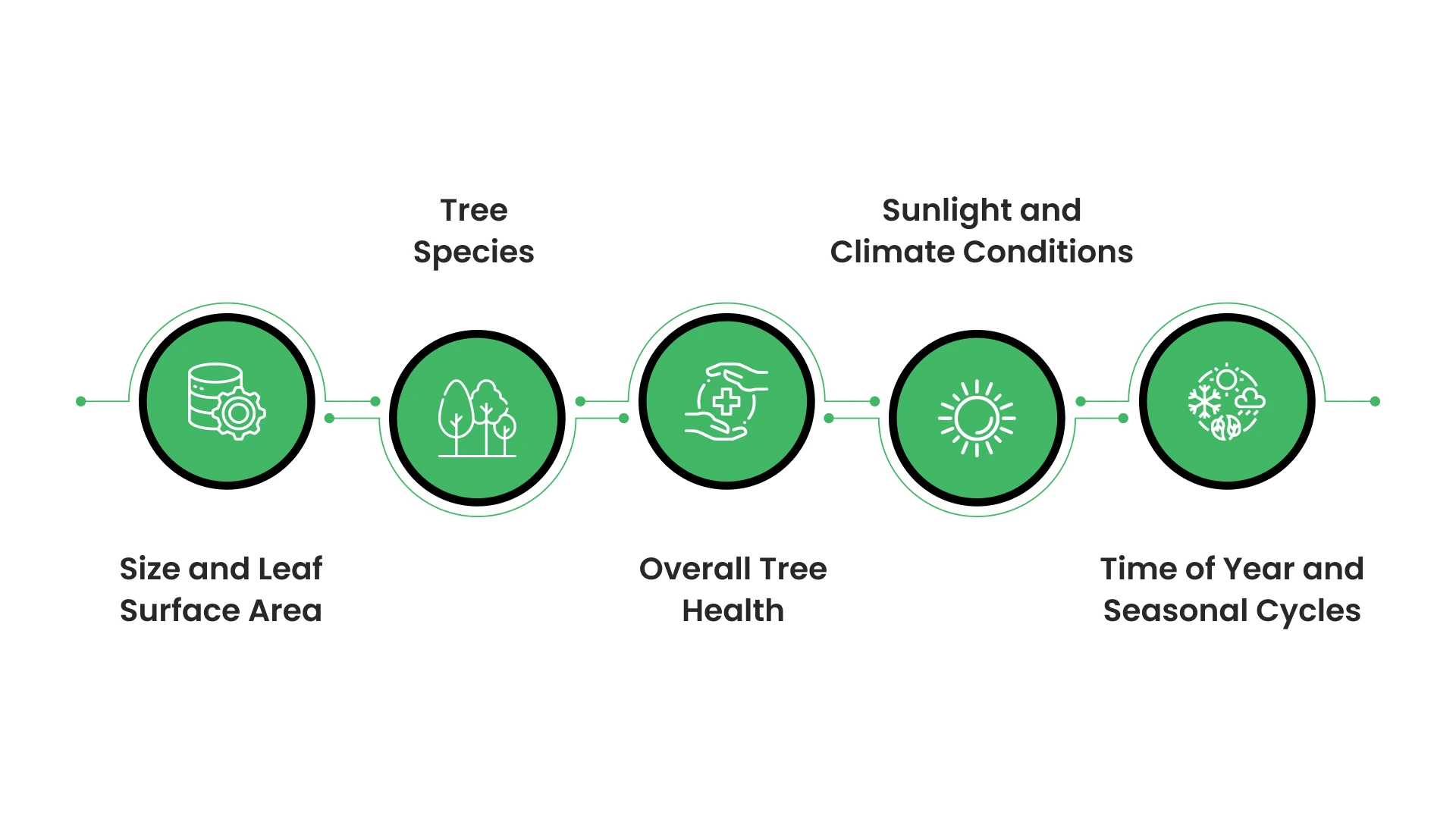
Not all trees release oxygen at the same rate. Their contribution depends on several natural factors that shape how efficiently they can carry out photosynthesis.
-
Size and Leaf Surface Area
Larger trees naturally release more oxygen because they have more leaves working throughout the day. Each leaf contains tiny pores that absorb carbon dioxide and release oxygen during photosynthesis, so a broad, mature canopy has far more active surface area than a young sapling. This is why older, established trees often play a much bigger role in supporting local air quality.
-
Tree Species
Some species simply produce more oxygen because of how they grow. Trees with broad leaves, dense canopies, or fast growth cycles tend to photosynthesize at higher rates. Evergreen trees have an added advantage because they retain their needles through winter, allowing them to continue producing oxygen whenever sunlight is available, even in colder months when deciduous trees are dormant.
-
Overall Tree Health
A healthy tree is far more efficient at producing oxygen. Adequate sunlight, regular water supply, and nutrient-rich soil all support steady photosynthesis. When a tree is stressed by drought, pest,s or poor soil conditions, this process slows down. Damaged or dehydrated leaves cannot carry out photosynthesis effectively, which lowers the amount of oxygen the tree can release.
-
Sunlight and Climate Conditions
Photosynthesis depends heavily on sunlight, so trees growing in open, well-lit environments tend to produce more oxygen than those shaded by buildings or other plants. Climate also plays a role. Very hot or frigid temperatures can limit how efficiently a tree processes carbon dioxide and water. Seasonal changes in daylight also influence this, which is why oxygen production is naturally higher in warmer, brighter months.
-
Time of Year and Seasonal Cycles
Deciduous trees show the most evident seasonal pattern. They produce significant oxygen in spring and summer when their canopies are full and active. Once autumn arrives and leaves begin to fall, their oxygen output tapers off. Production remains low through winter until new growth emerges in the following spring. Evergreen trees, by contrast, maintain a more consistent contribution because they retain their foliage year-round.
How Do Trees Contribute Beyond Oxygen Production
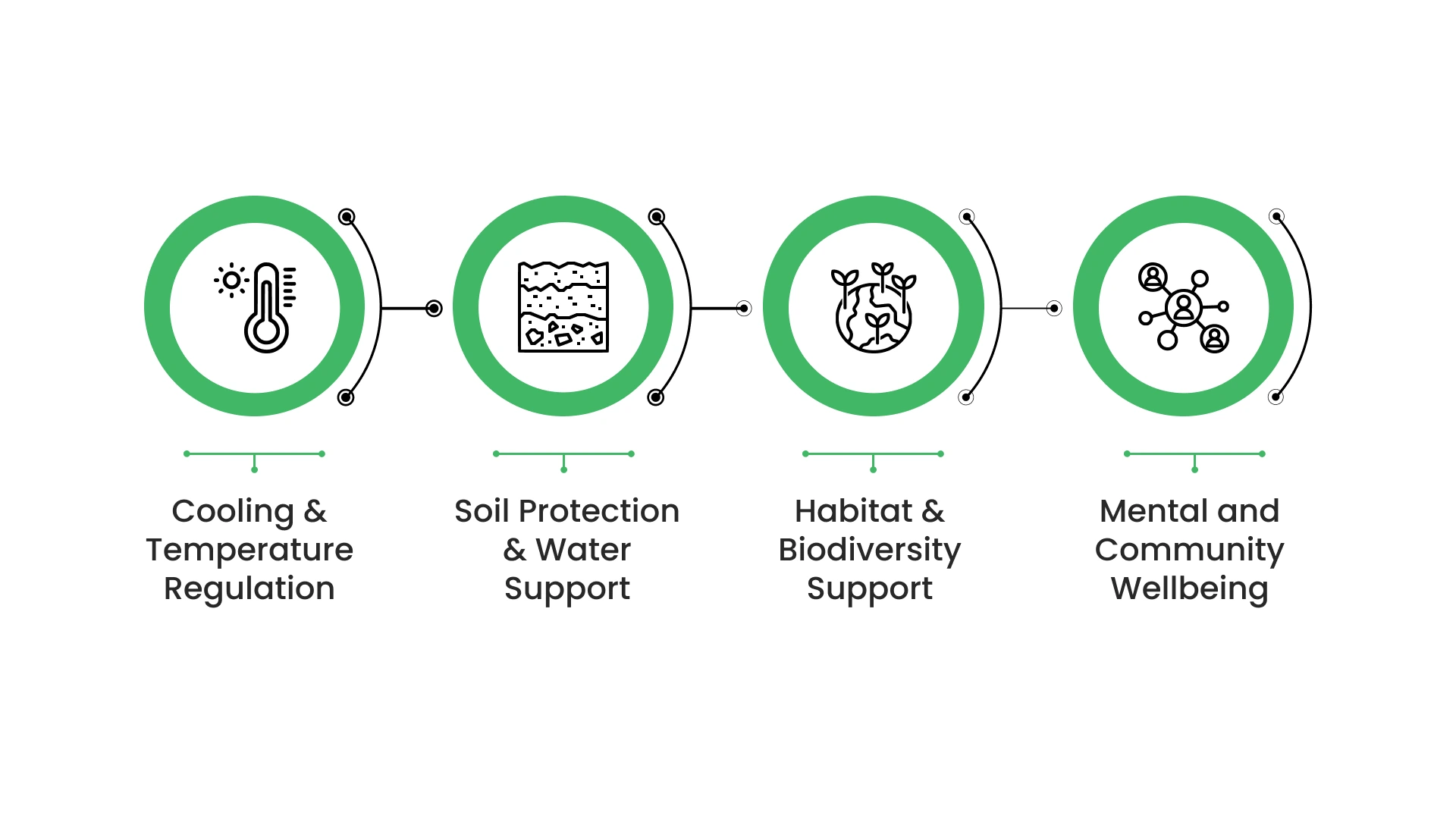
Trees do far more than release oxygen. Here are the many ways trees support the planet beyond oxygen production:
Cooling & Temperature Regulation
Trees cool their surroundings in two ways. Their shade blocks direct sunlight, lowering surface temperatures, and their leaves release water vapor through transpiration, which naturally cools the air. Together, these effects can bring down temperatures by several degrees, making heat waves easier to withstand. Neighborhoods with strong tree cover often feel noticeably more comfortable and even rely less on energy-intensive cooling systems during hot months.
Soil Protection & Water Support
Tree roots anchor the soil, reducing erosion and preventing nutrient loss during heavy rain. This root network also helps water move deeper into the ground rather than running off the surface. As moisture reaches lower layers, it supports healthier soil structure and feeds the microorganisms that keep ecosystems functioning. In this way, trees stabilize the land while improving its long-term fertility.
Habitat & Biodiversity Support
A single tree can support an entire community of living things. Birds use branches for nesting, insects rely on bark and leaves for food and shelter, and small mammals find protection in the tree’s structure. When many trees grow together, they create valuable pockets of biodiversity that help ecosystems stay resilient. Even in urban settings, one mature tree can become an essential refuge for wildlife.
Mental and Community Wellbeing
Trees also shape how people experience their surroundings. Green spaces lower stress levels, encourage people to spend more time outdoors, and create environments that feel more welcoming. Communities with tree-lined streets or accessible parks often report higher well-being and stronger feelings of connection. The presence of trees can improve mental health in quiet, consistent ways that add up over time.
What to Know About Trees and the Oxygen They Produce
People often have similar questions about how trees interact with oxygen through the day and across seasons. Understanding these details helps clarify how trees support the air we breathe and what affects their contribution.
Do trees produce oxygen at night?
Trees release oxygen only when photosynthesis is active, which requires sunlight. At night, photosynthesis pauses, slowing oxygen production. However, trees continue breathing through a different process called respiration, which takes in oxygen and releases a small amount of carbon dioxide. Over a full day, though, trees produce far more oxygen than they use.
Do trees consume some of the oxygen they create?
Yes, but only a small portion. All living organisms, including trees, use oxygen for energy through respiration. The amount they consume is much lower than what they release during sunlight hours, so their overall contribution to the atmosphere remains positive.
How much oxygen does one tree produce?
There is no single number because oxygen output depends on species, size, age, and climate. A mature, healthy tree can produce enough oxygen to support several people for part of the day, while younger or smaller trees contribute less. What matters most is the combined effect across forests, parks, and green corridors.
Do most oxygen supplies come from land trees or the ocean?
A large share of Earth's oxygen comes from oceanic plants such as phytoplankton. Still, land trees play a crucial role in balancing local air quality, absorbing carbon dioxide, and creating healthy environments for people and wildlife. Their importance goes far beyond oxygen alone.
Does planting more trees always increase oxygen levels
Planting more trees benefits the overall atmosphere, but the most significant benefits often occur at the local level. More trees mean cleaner air, cooler temperatures, and stronger ecosystems. The global oxygen balance shifts slowly, but community-level improvements can be both immediate and significant.
While trees may not be the only source of oxygen on Earth, their influence on the air around us is direct, steady, and critical.
Why Our Future Depends on the Trees We Protect Today
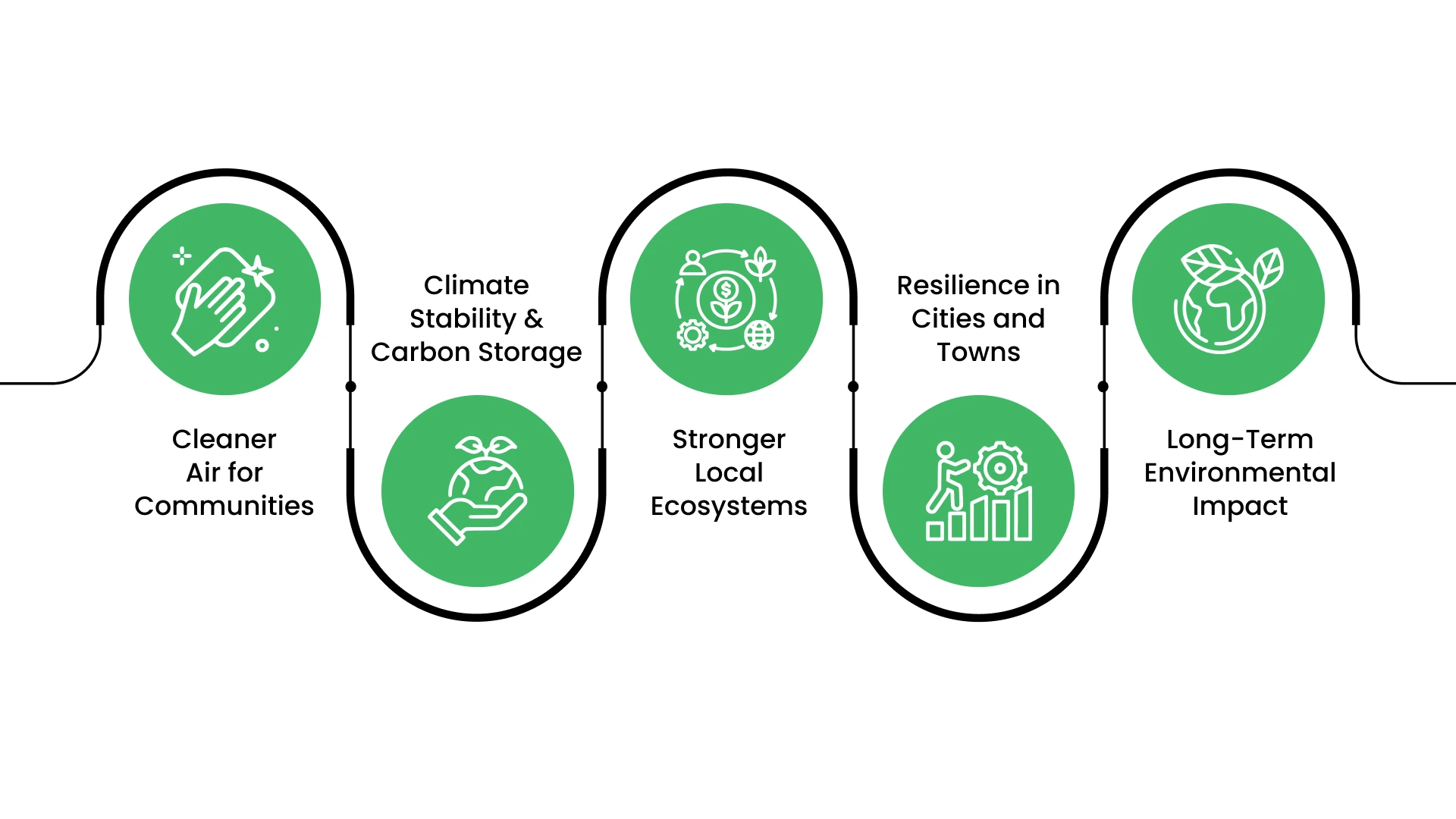
Trees shape healthier environments over time, and their impact only grows as they mature. Here is the impact of protecting existing trees and planting new ones:
Cleaner Air for Communities
Trees filter pollutants, absorb carbon dioxide, and release oxygen, improving the air around homes, schools, and public spaces. Areas with strong tree cover often experience fewer respiratory issues and a more comfortable microclimate, which makes urban planting especially valuable in dense cities.
Climate Stability & Carbon Storage
Throughout their lives, trees store carbon in their trunks, branches, and roots. This helps slow the buildup of greenhouse gases in the atmosphere. Planting new trees ensures that this essential carbon storage continues as younger trees grow and take on that role.
Stronger Local Ecosystems
Trees support a vast network of insects, birds and plants. By protecting forests and increasing green spaces, we strengthen ecosystems that rely on these connections. Healthy ecosystems offer services like pollination, soil health, and natural pest control, benefiting both nature and people.
Resilience in Cities and Towns
Tree cover makes urban areas more livable. It cools streets, reduces stormwater runoff, and helps soften the effects of extreme weather. Mature trees provide benefits that young saplings take years to match, which is why protecting existing canopies is so essential.
Long-Term Environmental Impact
Tree planting is not only about adding greenery. It builds long-term environmental stability by strengthening air quality, soil health, and ecosystem function. As each tree grows, its benefits expand and compound over decades.
Grow Cleaner Air for Communities with Plantd

If trees can remove pollutants, cool our surroundings, and enrich the air we breathe, planting more of them becomes one of the most practical ways to improve community health. With Plantd, contributing to this work is simple, transparent, and rooted in real impact.
Each tree you help plant adds to the network of forests that filter air, hold carbon, and support biodiversity. Whether you are planting as an individual, a family, a classroom, or a business, Plantd connects your action to verified reforestation projects that create measurable change.
With global reforestation projects, transparent tracking, and real community benefits, Plantd turns everyday action into lasting impact. Together, we can create a future where more people have access to the healing power of trees, not just today, but for generations to come.
Grow cleaner air. Grow stronger forests.
Start Planting with Plantd