
10 Hidden Effects of Deforestation That Deserve Your Attention
It begins with a clearing in the forest.
A single tree falls, sunlight floods the open space, and life shifts in ways that no one standing there can fully see. Over time, that clearing grows. The forest breathes a little less. The soil drinks a little less. And somewhere far away, the rain stops coming when it should.
Deforestation often feels like a distant issue, something happening in remote rainforests, far removed from daily life. But its effects travel silently across borders and generations. When forests disappear, so does their ability to hold soil, cool the air, protect wildlife, and balance the rhythm of our planet’s water and carbon cycles. What appears to be a patch of cleared land today can slowly transform the way an entire region lives and grows.
The obvious outcomes, fewer trees, lost habitats, and increased carbon, tell only part of the story. The real damage hides in the background, where small, connected systems begin to fail. Crops struggle. Rivers flood or dry up. Communities lose the cultural roots that once tied them to the land.
In this article, we’ll explore the lesser-known effects of deforestation on our planet. By understanding how deeply these hidden changes impact us, we can begin to see why protecting and restoring forests is not just an environmental goal, but a shared human responsibility.
What Is Deforestation and Why Does It Matter
Deforestation is the large-scale clearing or thinning of forests, usually to make space for farming, grazing, logging, mining, or development. In many cases, this land is permanently converted for human use, preventing forests from recovering naturally.
Each year, around ten million hectares of forest are lost worldwide. This loss weakens the natural systems that regulate our climate, store carbon, and protect biodiversity. Forests play a crucial role in maintaining balance within the environment. They absorb carbon dioxide, hold soil in place, influence rainfall patterns, and provide food and shelter for numerous species.
For people, forests offer much more than environmental stability. They provide livelihoods, clean water, medicine, and a source of cultural and spiritual identity for many communities. When forests disappear, these essential resources and connections disappear too.
The effects of deforestation reach well beyond the areas where trees are cleared. They alter weather patterns, reduce soil fertility, increase the risk of flooding, and threaten long-term food and water security. Understanding these impacts helps us see deforestation not only as an environmental issue, but also as a social and economic one.
10 Hidden Lesser-Known Effects of Deforestation
The most visible deforestation effects, such as habitat loss and rising carbon levels, tell only part of the story. They extend into two areas: environmental and social, revealing how forest loss reshapes ecosystems, communities, and the planet itself.
Environmental Effects of Deforestation
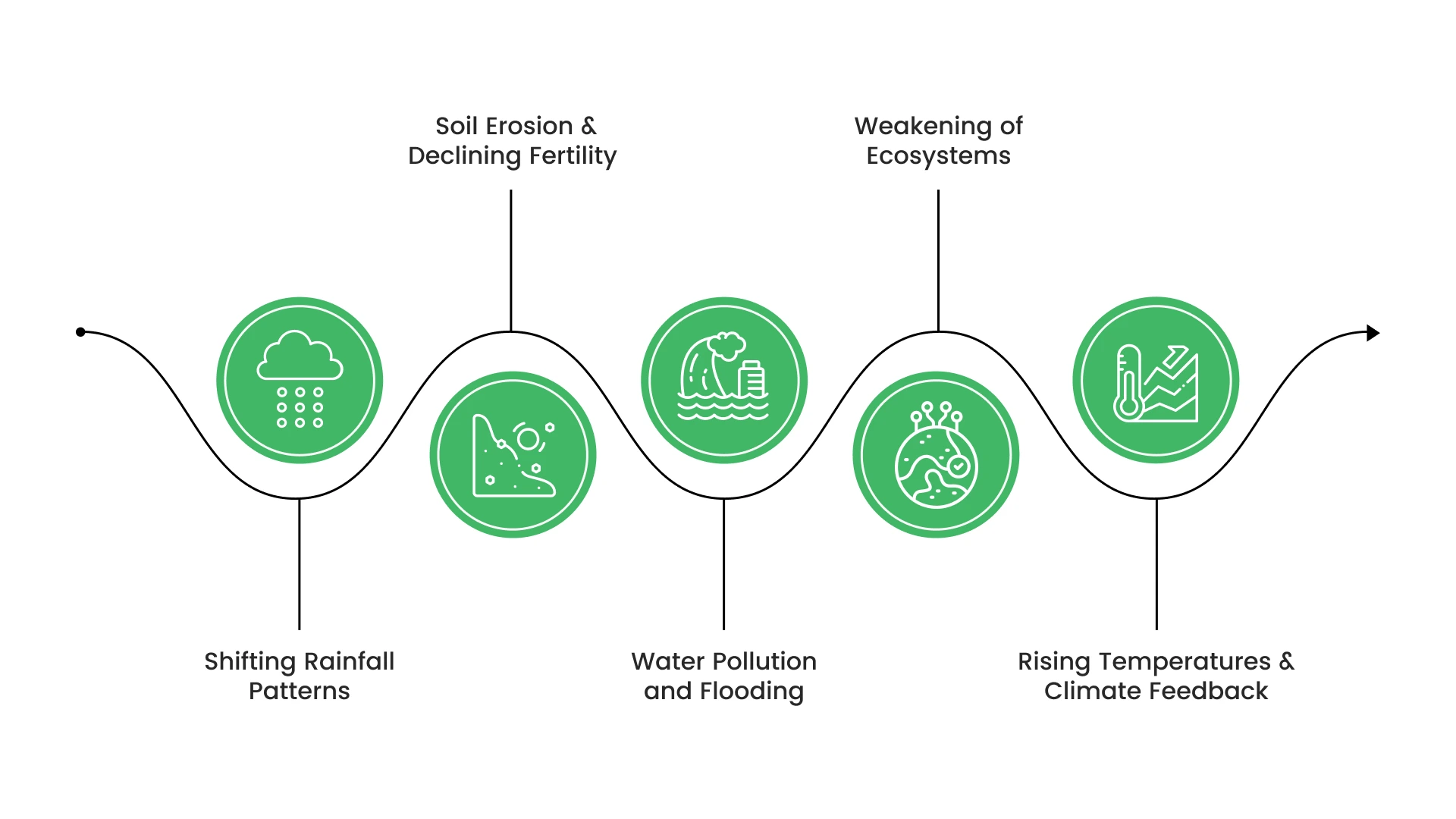
When forests are cleared, the disruption doesn’t stop at the forest’s edge; it spreads through the air, soil, and water, quietly reshaping the environment that sustains life. Here are some of the most significant deforestation effects that often go unnoticed:
1. Shifting Rainfall Patterns
Forests play a crucial role in creating and regulating local and regional rainfall. Through transpiration, trees release moisture into the atmosphere, which forms clouds and influences precipitation cycles. When forests are cleared, that natural moisture source disappears, leading to less frequent rain in some areas and intense storms in others. Over time, the loss of forest cover can lead to entire regions shifting toward drier climates, disrupting agriculture and freshwater availability.
2. Soil Erosion & Declining Fertility
Tree roots bind the soil, keeping it stable and rich in nutrients. Once trees are gone, the ground is left exposed to wind and rain, which wash away the topsoil: the most fertile layer. Without organic matter from fallen leaves and roots, the soil loses its ability to retain moisture and nutrients. What follows is a gradual decline in crop productivity, often forcing farmers to clear more land in search of fertile ground, creating a destructive cycle.
3. Water Pollution and Flooding
Forests act as natural water filters and sponges, absorbing and purifying water. They slow the flow of rainwater, allowing it to seep into the ground and replenish aquifers. When trees are removed, rainfall flows rapidly over the surface, carrying sediment, fertilizers, and pollutants into rivers. This not only increases the risk of flash floods but also degrades water quality and harms aquatic ecosystems. Communities downstream often bear the brunt of the cost through contaminated water and unstable river systems.
4. Weakening of Ecosystems
A forest is an intricate web of interdependent species, plants, animals, fungi, and microorganisms that maintain balance within the ecosystem. Deforestation breaks these relationships. The loss of even a few keystone species can lead to population collapses, pest outbreaks, and the disappearance of pollinators essential for food crops. As ecosystems weaken, their ability to recover from natural disturbances, such as droughts and storms, declines dramatically.
5. Rising Temperatures & Climate Feedback
Trees absorb carbon dioxide and release oxygen, helping cool the planet. Removing them not only releases stored carbon but also changes how land interacts with sunlight. Deforested land reflects less light and absorbs more heat, raising surface temperatures. These warmer conditions can intensify droughts and wildfires, leading to even greater forest loss. This self-reinforcing cycle contributes to long-term climate instability, both locally and globally.
These environmental shifts demonstrate that deforestation is not a single event, but rather a chain reaction. Each effect, from altered rainfall to degraded soil, builds on the next, threatening the resilience of ecosystems and the security of the communities that depend on them.
Social Effects of Deforestation
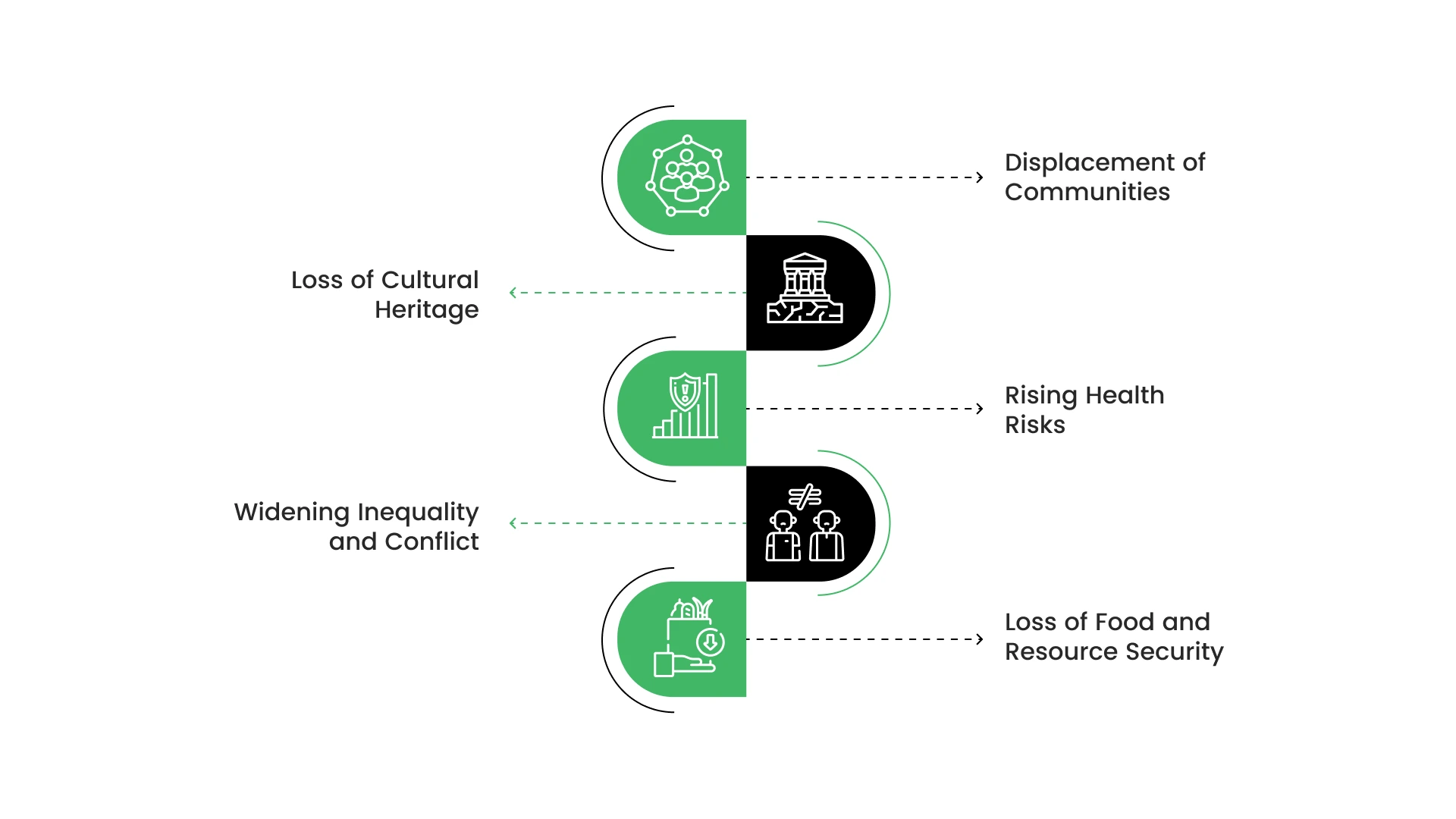
Deforestation doesn’t only reshape terrains, it changes lives. Forests are home, livelihood, and identity for millions of people. When they disappear, the loss extends beyond the environment; it disrupts social structures, cultural continuity, and human health in ways that often go unseen. Here are some of the most significant social deforestation effects that rarely receive attention:
1. Displacement of Communities
When forests are cleared for large-scale agriculture, mining, or logging, entire communities lose their homes and livelihoods. Indigenous groups and rural families who have lived in these areas for generations often have no legal claim to the land they occupy. Once the forest is gone, they are forced to migrate, sometimes to overcrowded urban centers where work is scarce and living costs are high.
Displacement doesn’t just remove people from their land; it severs the connection between culture and environment. For many, forests are more than just shelter; they represent safety, food security, and a sense of belonging. Losing them often means starting over without the social networks or resources that once sustained them.
2. Loss of Cultural Heritage
Forests are deeply intertwined with human history. They shape traditions, languages, and worldviews. Indigenous knowledge systems, from sustainable farming practices to herbal medicine, are built on generations of close observation of forest ecosystems. When deforestation destroys these ecosystems, it also erodes this knowledge.
The loss is not only environmental but cultural. Rituals, oral histories, and spiritual practices rooted in forest life disappear as communities are displaced or assimilated. What’s lost is irreplaceable: a living record of how people have coexisted with nature for centuries. Preserving forests, in this sense, also preserves culture and collective memory.
3. Rising Health Risks
Deforestation brings people closer to the edge of new health threats. As forests shrink, the boundaries between human settlements and wildlife habitats become increasingly blurred, creating conditions that facilitate the spread of zoonotic diseases, those transmitted from animals to humans. Research has linked outbreaks of malaria, Ebola, and other infectious diseases to deforested regions where ecological balance has been disrupted.
The problem doesn’t end there. Slash-and-burn clearing releases smoke and fine particles that harm respiratory health, especially among children and the elderly. Meanwhile, the disappearance of forest plants used in traditional medicine reduces access to affordable, natural treatments for rural communities.
4. Widening Inequality and Conflict
The benefits of deforestation rarely reach those who live closest to the forests. Industrial agriculture, mining, and timber extraction are often driven by external interests that prioritize profit over people. Local communities bear the cost through pollution, soil degradation, and the loss of land.
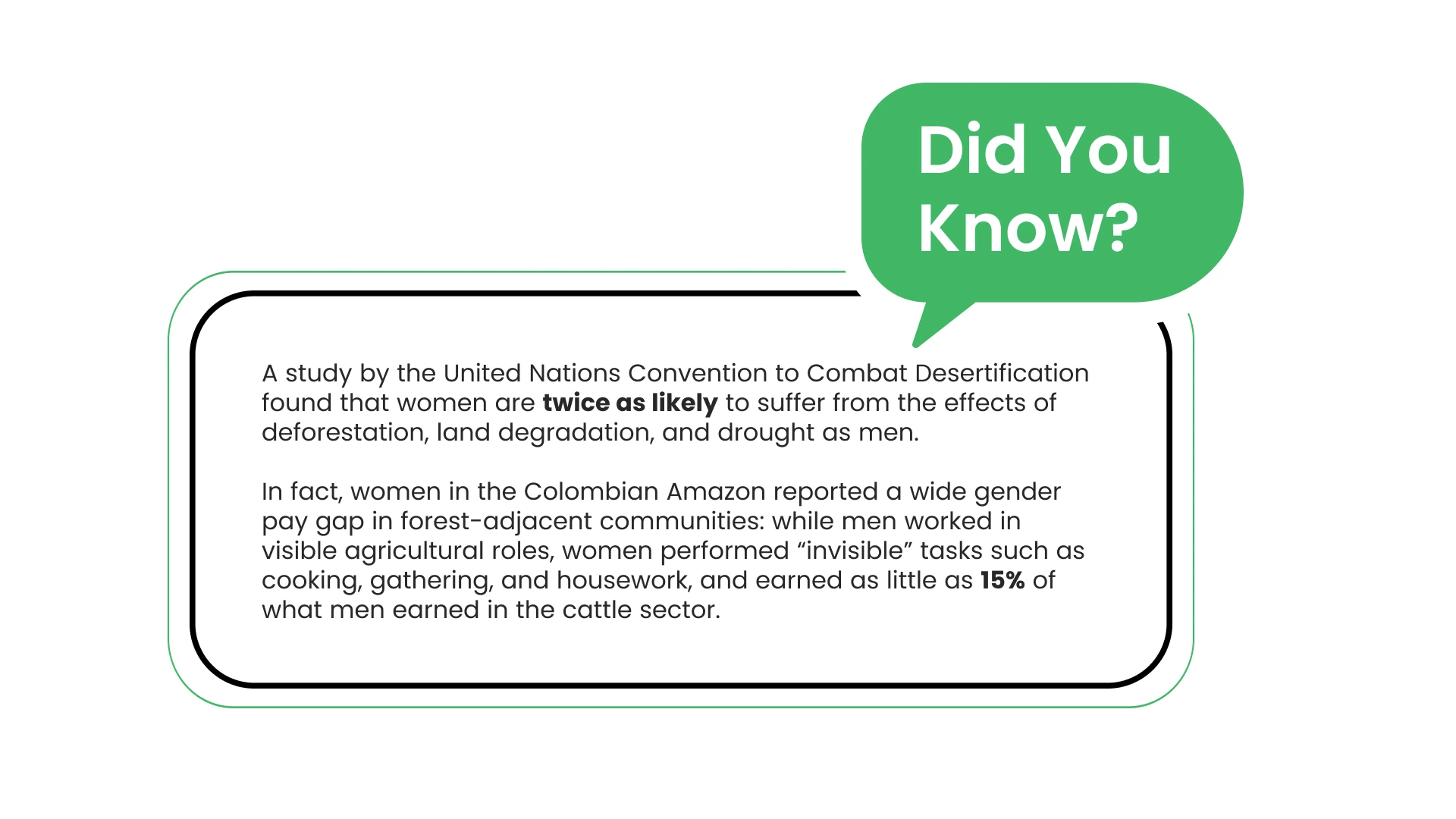
This imbalance widens inequality and fuels social tension. In some regions, disputes over land rights have escalated into violent conflict. Deforestation also deepens gender inequality, as women, often responsible for gathering food, firewood, and water, face greater hardship when these resources disappear. Protecting forests isn’t just an environmental act; it’s a step toward social justice and equitable resource sharing.
5. Loss of Food and Resource Security
For many communities, forests are a direct source of sustenance. They provide fruits, nuts, roots, fish, and wild game, along with essential materials like wood, honey, and fibers. When deforestation strips these resources away, families lose both their food supply and a significant source of income.
This shift often forces communities to rely on imported goods or unstable markets, thereby increasing the cost of living and reducing dietary diversity. The decline in forest-based food also threatens local nutrition, particularly for children. What begins as an environmental loss soon becomes a humanitarian one, weakening the very systems that keep people nourished and self-reliant.
The social impact of deforestation determines how people live, work, and preserve their culture, which is why protecting forests means ensuring that communities can thrive without losing the natural systems that sustain them.
What Can Be Done to Reverse These Effects
The damage caused by deforestation is severe, but it’s not beyond repair. Forests can recover if they are given protection, time, and care. With the right mix of conservation, restoration, and community action, the balance between people and nature can be rebuilt.
1. Replant and Restore Forests
Reforestation helps bring life back to damaged ecosystems. Planting trees improves soil health, restores wildlife habitats, and stabilizes the water cycle. Reforestation platforms such as Plantd have demonstrated that coordinated replanting can make a measurable difference. However, local reforestation often has the most significant impact. When communities are involved in planting and maintaining trees, forests grow back stronger and remain protected for generations to come.
2. Protect Existing Forests
Safeguarding remaining forests is just as important as restoring those already lost. Strong policies, transparent land management, and better monitoring can prevent illegal logging and land clearing. Supporting Indigenous and rural communities with clear land rights ensures that conservation is effective in practice, not just on paper.
3. Make Agriculture More Sustainable
Agriculture drives most forest loss, but it can also support restoration. Techniques such as crop rotation, tree planting on farms, and soil conservation reduce the need for new land while maintaining productivity. Responsible forestry certifications and verified supply chains encourage businesses to produce goods without destroying forests. Consumers play a part too. Choosing sustainable products helps shift markets toward long-term responsibility.
4. Support Local Communities
Communities that live near forests depend on them for survival. Giving them access to fair land use, training, and sustainable income opportunities reduces the pressure to clear trees. In many regions, community-led forest management has proven more effective than top-down policies. When local people benefit from healthy forests, conservation becomes a shared priority.
5. Raise Awareness and Take Action
Lasting change begins with awareness. Education programs and public campaigns can help people understand how everyday choices, from food to fuel, are connected to forest loss. As individuals and businesses become more informed, they are more likely to support solutions such as reforestation and sustainable sourcing.
Be Part of the Planet’s Recovery with Plantd
Reforestation isn’t only about planting trees. It’s about restoring balance, bringing back the ecosystems, clean air, and steady climates that make life possible. Each tree planted helps rebuild the natural systems that deforestation weakens.
At Plantd, we make this restoration simple and meaningful. Whether you’re an individual, a team, or a business, you can directly support verified reforestation projects that bring forests back where they are needed most. Every contribution goes toward planting the right trees in the right places, ensuring that every effort has a measurable impact on biodiversity, soil health, and local livelihoods.
With global reforestation projects, real community impact, and verified results you can track, Plantd turns prevention into progress. Together, we can do more than stop fires; we can rebuild what’s been lost and protect what still stands.
Help reforest the future today.
Start Planting with Plantd