

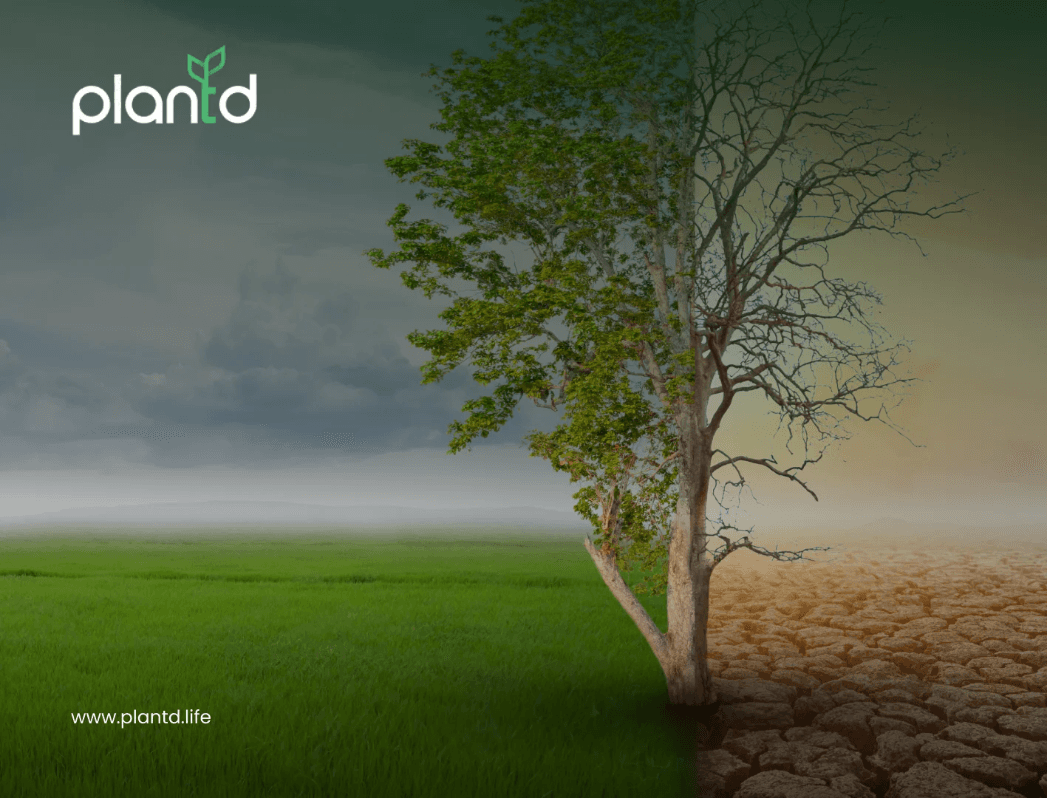
If you ask someone what climate change looks like, most people will mention melting ice or hotter summers. Those things are true, yes, but they are only the surface of a much deeper shift. Over the last few decades, scientists have been tracking changes in temperature, rainfall, oceans, forests, and weather patterns, and together they paint a picture that’s hard to ignore.
Here’s the thing: the warnings aren’t coming from guesswork. They come from decades of measurements like ocean temperatures, atmospheric carbon levels, satellite images, and ice cores pulled from places most of us will never see.
When researchers at NOAA announced that 2024 was the warmest year on record since the 1800s, it wasn’t a dramatic headline. It was simply the data speaking for itself. According to NOAA’s annual climate report, temperatures last year were about 1.29°C higher than the 20th-century average, and 1.46°C above pre-industrial times. It’s the kind of rise that may seem small on paper, but in nature, it’s enormous.
In this blog, we're going to look at climate change effects in a way that connects science to everyday life. Let’s break down the most alarming effects of climate change that everyone should understand.
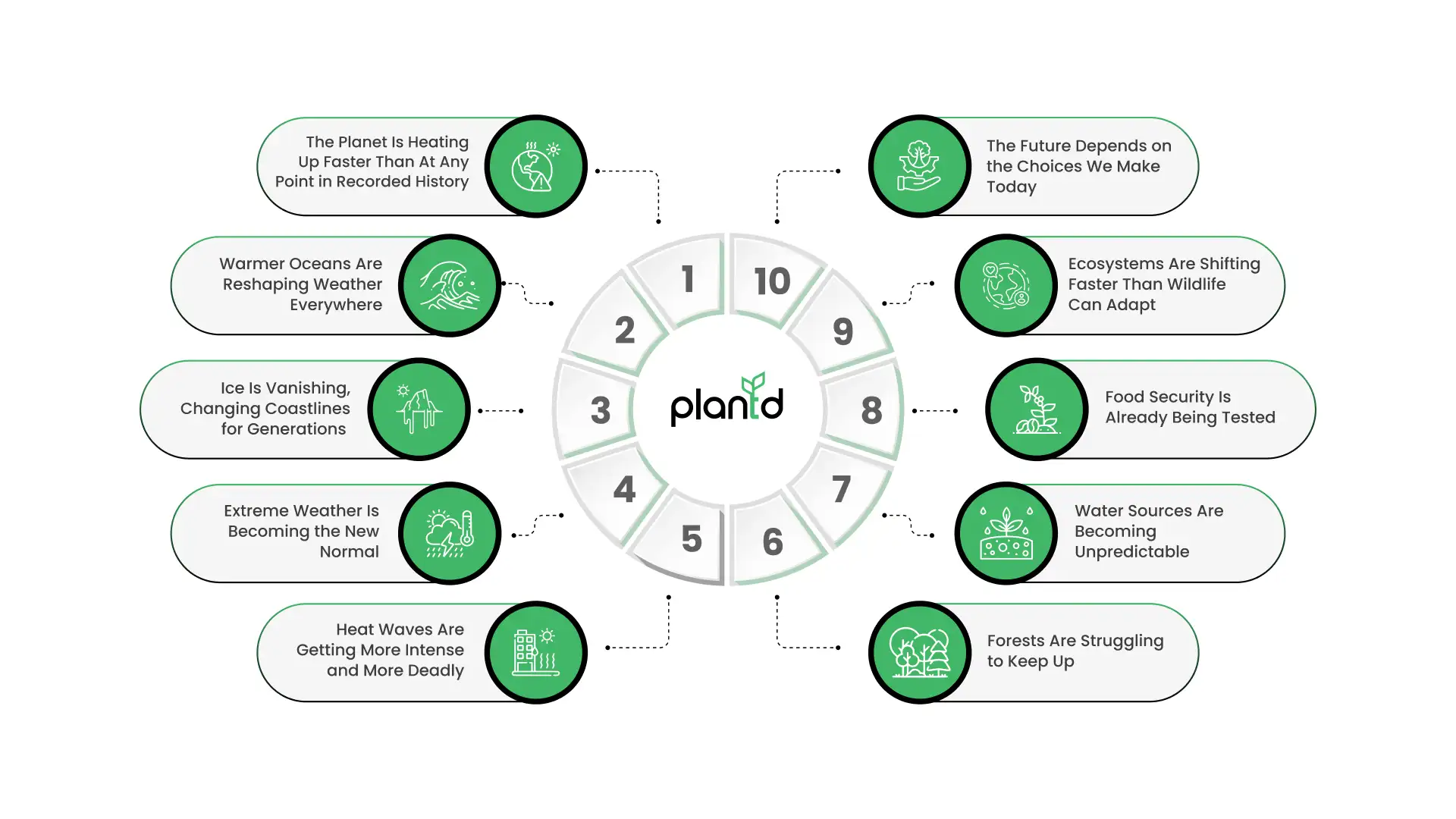
Climate change is taking place all around us. From extreme weather changes to increased health risks, this impact is becoming impossible to ignore. Here are a few climate change effects that show us just how fast the crisis is increasing:
When you look at the graph of global temperatures from 1880 to today, it almost resembles a calm heartbeat that suddenly spikes upward. For nearly half a century now, Earth hasn’t had a single cooler-than-average year. The last one was nearly 50 years ago. What this really means is that we’re not dealing with natural fluctuation anymore.
Scientists talk about “temperature anomalies,” basically how far above or below average a year is. In 2024, the anomaly hit a record high. Even the oceans, which take a massive amount of heat to warm, reached their highest temperatures ever recorded. The upper layers of the ocean now hold more heat energy than at any point in human history.
If you’ve noticed storms becoming stronger, flooding becoming more common, or heat waves hitting harder, you’re not imagining it. Oceans regulate a lot of Earth’s climate. When ocean heat rises, everything gets amplified.
Warm oceans fuel cyclones and hurricanes. They change monsoon patterns. They push heat waves into new regions. They rearrange rainfall so drastically that some places get drenched while others face extreme drought.
For example, heat stored in oceans can move around the globe through currents and change the timing and intensity of rainy seasons. Farmers feel this first. Crops depend on predictable rain, not erratic downpours or dry spells that arrive without warning.
So when you hear “the ocean is warming,” it’s not a faraway problem. It’s linked to rainwater, crops, local weather, and food supply.
You’ve probably seen photos of glaciers melting or huge slabs of ice breaking into the ocean. But what’s happening at the poles goes much deeper than losing scenic white landscapes.
Arctic regions are warming up to four times faster than the rest of the world. When reflective white ice melts, it exposes darker ground or water that absorbs more heat. That warms the region even faster, which is a loop scientists call Arctic amplification.
But the real alarm bells come from what happens next. Melting ice contributes to rising sea levels, which in turn eats away at coastlines, drowns wetlands, and pushes saltwater into freshwater areas. You may have heard of “ghost forests,” where entire stands of dead trees have been affected by saltwater that has crept into land that used to be freshwater. These now line coastlines from the U.S. Atlantic coast to parts of Southeast Asia.
And that’s only one example of how rising seas quietly reshape the edges of continents.
Most people notice climate change not through charts, but through weather that feels unfamiliar. Winters that don’t behave like winters. Storms that seem to come out of nowhere. Summers that feel harsher than they used to.
Climate scientists link this directly to warming temperatures. Here’s why:
A warmer atmosphere holds more moisture. More moisture means heavier rainfall.
More heat means stronger storms.
Drier regions become even drier, creating ideal conditions for wildfires.
Jet streams (those high-altitude winds that guide weather) are becoming unstable due to temperature differences between the poles and the equator.
When those wind patterns wobble, weather systems get stuck. A storm that would usually move in a day stays for a week. A heat wave lingers longer. And those long-lasting events cause the biggest impacts.
Floods, droughts, wildfires, and heat waves are all tied together more tightly than most people realize.
One of the quietest but most dangerous effects of climate change is extreme heat. Unlike storms or floods, heat doesn’t always make headlines, but it kills more people every year than nearly any other type of extreme weather.
The reason is simple: our bodies, crops, and infrastructure are suitable for certain temperature ranges. Push those limits, and systems start to break.
Prolonged heat affects:
Food production
Electricity grids
Water supplies
Human health, especially for the elderly, children, and outdoor workers
Cities feel heat even more aggressively due to concrete, steel, and limited green cover creating “urban heat islands” that trap temperatures long after sunset. It’s one of the clearest cases where climate change meets daily life.
Trees are resilient, but they’re not invincible. Forests around the world are facing a one-two punch: rising heat and shifting rainfall. Add wildfires, pests, and diseases, all intensified by warming, and you get ecosystems under serious stress.
Some forests are growing in unexpected directions. Others are dying back faster than they can regenerate. And when forests fail, carbon storage fails with them. This adds even more greenhouse gases to the atmosphere, speeding the cycle.
Scientists studying long-term ecological data have noticed forests showing signs of “climate fatigue”, slower growth, reduced resiliency, and increased vulnerability to disturbances.
Forests aren’t just nice scenery; they’re global life-support systems.
If you have ever lived in a region with water shortages, you know how quickly life changes when water becomes scarce. Climate change makes the water cycle unpredictable in ways that societies haven’t fully prepared for.
Here’s what is happening:
Snow in mountain regions melts earlier in the year
Rivers run lower during months when they used to be full
Groundwater gets depleted faster during droughts
Rain comes all at once instead of gradually
Some places, like parts of South Asia and Africa, are seeing both flooding and drought in the same year. That’s the paradox of climate change: too much water in one place, too little in another often within the same region.
Farmers everywhere talk about changing seasons. Crops that grew reliably for decades now struggle under new conditions. Heat stress, water shortages, crop diseases, and unpredictable monsoons all hit food production.
Climate models predict that yields for major staples like wheat, maize, rice, and soy could decline in some regions as warming continues.
But it goes beyond yields. Climate change affects:
Soil health
Pollinators
Pests
Storage
Transportation
The entire food chain feels the impact.
Climate zones are moving. Species that once thrived in cool, stable climates are now being pushed uphill or poleward. Coral reefs are bleaching. Marine animals are migrating into new waters. Birds are altering their migration routes.
Some species adapt, some move, and some decline. When enough pieces of the ecological puzzle shift, entire ecosystems reorganize.
It’s a quiet transformation that happens out of sight until one day you realize the landscape, the forests, the coastlines, the wildlife you grew up with have changed.
Every major scientific body from NOAA to NASA to the IPCC says the same thing: we are the cause of the warming, and we still have the ability to shape what happens next.
Human activities release about 40 billion tons of carbon dioxide every year. That’s more than natural systems can absorb. So CO₂ keeps rising. And as long as it rises, temperatures follow.
But the future is not fixed.
Different pathways from rapidly reducing emissions to continuing on our current trajectory lead to very different worlds by the end of the century. Some scenarios show warming kept to manageable levels. Others show a world up to 5–10°F warmer than the last century, which is a level scientists consider extremely dangerous for human civilization.
Reading about climate change can feel overwhelming, but meaningful action begins with small, manageable steps. Individual efforts matter, and when millions of people take them together, they create real, measurable change. The goal isn’t to overhaul your entire life overnight, but to make choices that move us collectively toward a safer future.
Here are ways you can contribute:
Lower your carbon footprint: Choose energy-efficient appliances, cut unnecessary electricity use, and reduce waste where you can.
Choose smarter transportation: Walk, cycle, carpool, or use public transport when possible to reduce emissions.
Shift your diet gradually: Even small reductions in meat consumption can make a measurable climate difference.
Support climate-focused leaders: Vote for representatives who prioritize clean energy, climate resilience, and environmental protection.
Use your voice: Contact local officials, sign petitions, and participate in community planning to push for climate-smart policies.
Advocate for systemic action: Encourage renewable energy expansion, corporate accountability, and green job programs.
Protect natural ecosystems: Support efforts to restore forests, wetlands, and coastal areas, nature’s most powerful climate defenders.
Knowledge is important, but action is what creates change. If you're looking for a concrete way to make a positive impact, consider supporting ecosystem restoration through Plantd.
Plantd focuses on restoring and protecting critical ecosystems, including wetlands, forests, and coastal areas that naturally fight climate change while providing important services to communities and wildlife. These projects don't just store carbon; they filter water, prevent erosion, support biodiversity, create jobs, and strengthen climate resilience.
Every contribution goes toward verified conservation projects with measurable outcomes, local job creation, and tangible environmental benefits. Plantd makes it simple to turn climate concern into climate action. Support verified ecosystem restoration through Plantd and be part of the solution our planet desperately needs.
Protect the ecosystems that protect us.
Support Climate Restoration with Plantd.